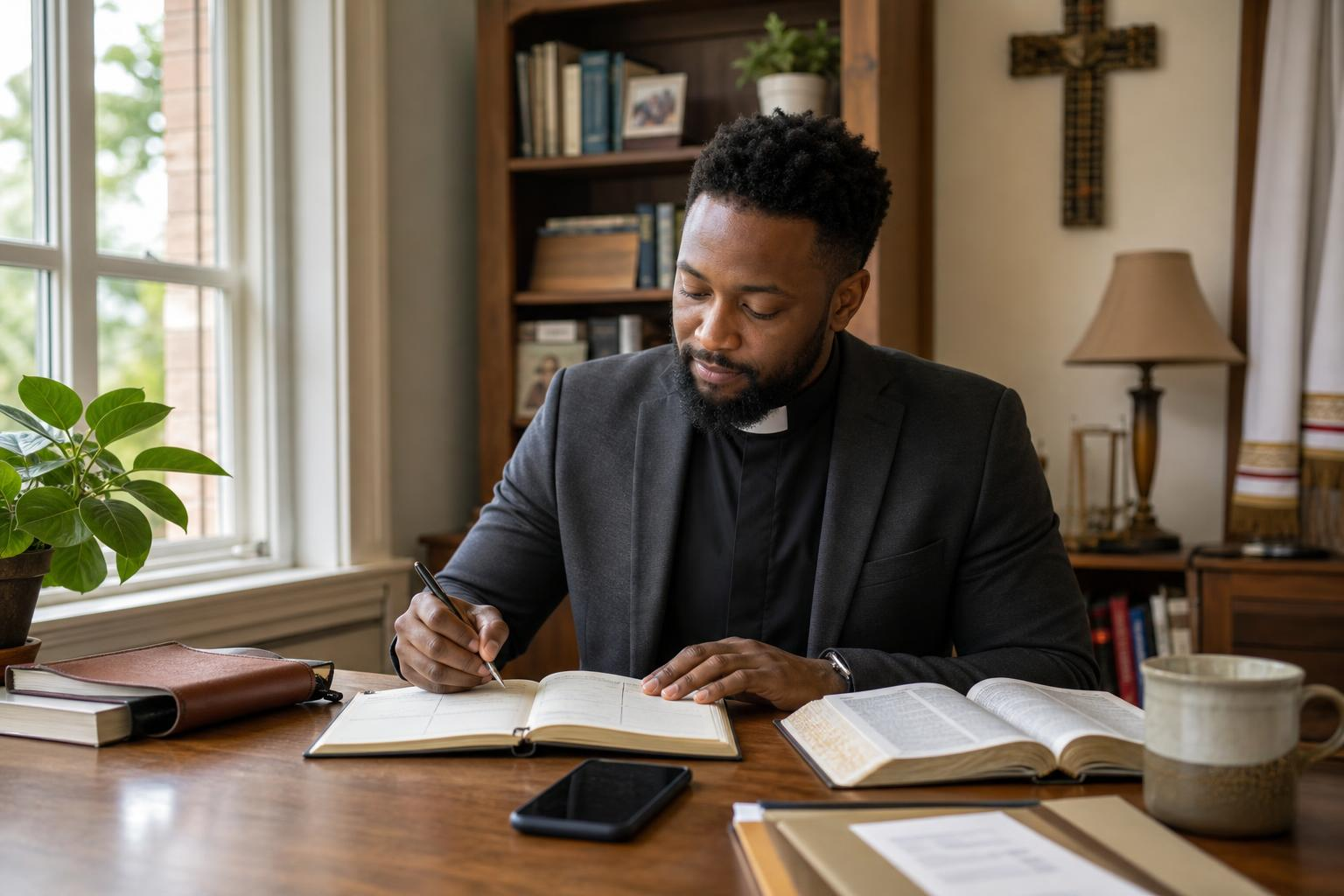
What to do after ordination is not to rush straight into every open door. The best first step is to steady yourself, confirm your legal and denominational responsibilities, and build a small circle of support. In the first 30 days, focus on reflection, local marriage-law research, mentoring, volunteering, and the basics of ceremony preparation. That gives you a grounded beginning instead of a scattered one.
This guide is written for newly ordained ministers, faith leaders, couples, and ministry volunteers who want a practical roadmap. Because marriage and officiant rules vary by location, any state-specific legal step should be checked locally before you assume you are cleared to officiate. For a broader overview of civil ceremony basics, you may also want the Civil Wedding Ceremony Guide.
Start with a quiet, honest check-in
Before you schedule events or accept requests, take stock of your calling, your limits, and your current responsibilities. Ordination is a milestone, but it is also a beginning. A short reflection period helps you serve with clarity instead of drifting into ministry by pressure or habit.
Three questions worth asking yourself
What kind of ministry am I being invited into right now?
Example: You may feel drawn toward wedding officiating, pastoral care, community outreach, or a blend of all three. Naming that clearly helps you avoid saying yes to everything at once.
Short answer: Clarify your first season of service.
What support do I need before I lead others?
Example: You might need a mentor, a prayer partner, a training checklist, or a more experienced officiant to review your first ceremony plan. Those supports are not signs of weakness; they are part of wise preparation.
Short answer: Ask for support early.
What does faithful, sustainable service look like for me?
Example: You may decide to serve only a few weddings a month, volunteer locally, and spend the rest of your time learning from established leaders. That pace can protect your energy and improve your care for others.
Short answer: Set a sustainable pace.
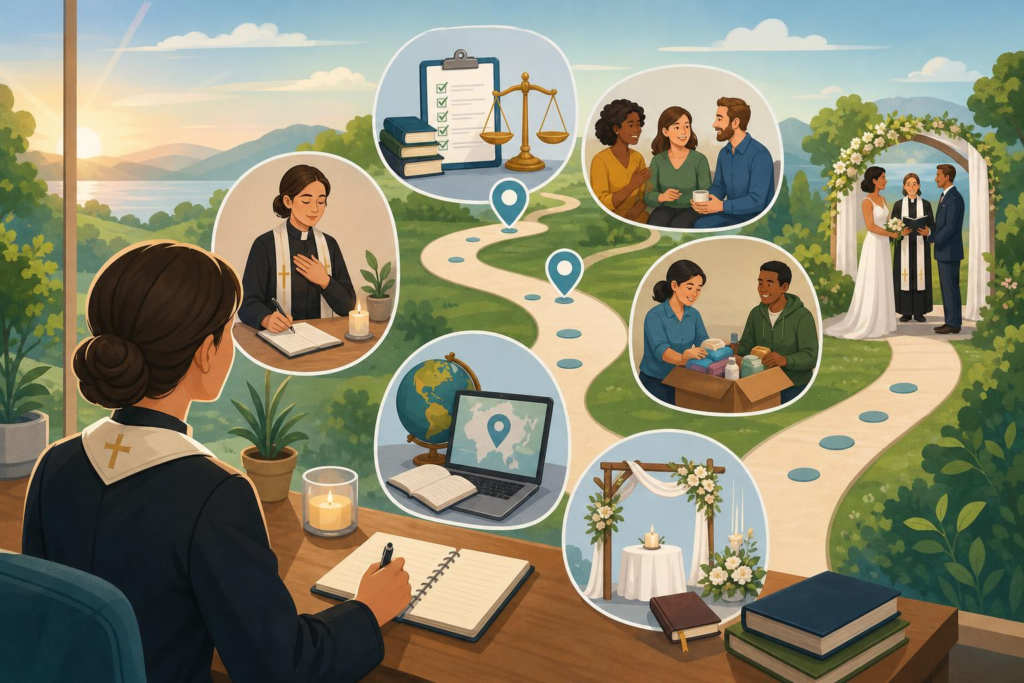
Use a 30-day roadmap instead of guessing
Many newly ordained leaders do better with a simple roadmap than with a long to-do list. The goal is not to do everything in a month. The goal is to do the right things in a thoughtful order.
| Timeframe | Main focus | What to complete |
|---|---|---|
| Days 1–7 | Reflection and grounding | Pray, journal, confirm who is mentoring you, and set boundaries for early requests. |
| Days 8–14 | Local legal research | Check your state or county marriage rules, officiant qualifications, and license return process. |
| Days 15–21 | Community connection | Reach out to a mentor, volunteer with a church or ministry team, and observe a ceremony if possible. |
| Days 22–30 | Ceremony preparation | Practice introductions, review vows, prepare a ceremony outline, and create a first-request intake process. |
First-30-days checklist
- Write down your calling and ministry boundaries.
- Identify a mentor or accountability partner.
- Check local marriage and officiant requirements.
- Volunteer in a setting where you can learn by serving.
- Draft a simple ceremony-prep process.
Research local marriage law before you say yes to officiating
If your ministry will include wedding ceremonies, do not assume ordination automatically means you can officiate everywhere. In the United States, marriage rules are determined by state and sometimes by county or local office. USA.gov directs people to local and state government resources for marriage certificates, licenses, and other legal matters, and it notes that marriage-license processes vary by state. That is why local confirmation matters before you accept a ceremony request. (usa.gov)
For a first pass, check three things:
- Who may officiate: Find out whether your state recognizes ordained clergy, religious leaders, civil officials, or other categories.
- License timing: Learn when the couple must obtain the marriage license and when it must be returned after the ceremony.
- Local filing details: Confirm whether the county clerk, town clerk, or vital records office handles your paperwork.
USA.gov also points readers to state governments, local governments, and attorney general offices as useful places to find official guidance. That is a sensible place to begin when you need the current rule for your specific location. (usa.gov)
For state marriage-law and officiant-requirement research, an internal starting point may also be helpful: OrdainedPro maps. Use that as a navigation aid, but still verify every state-specific detail with a primary government source.
Find a mentor and let your first season be teachable
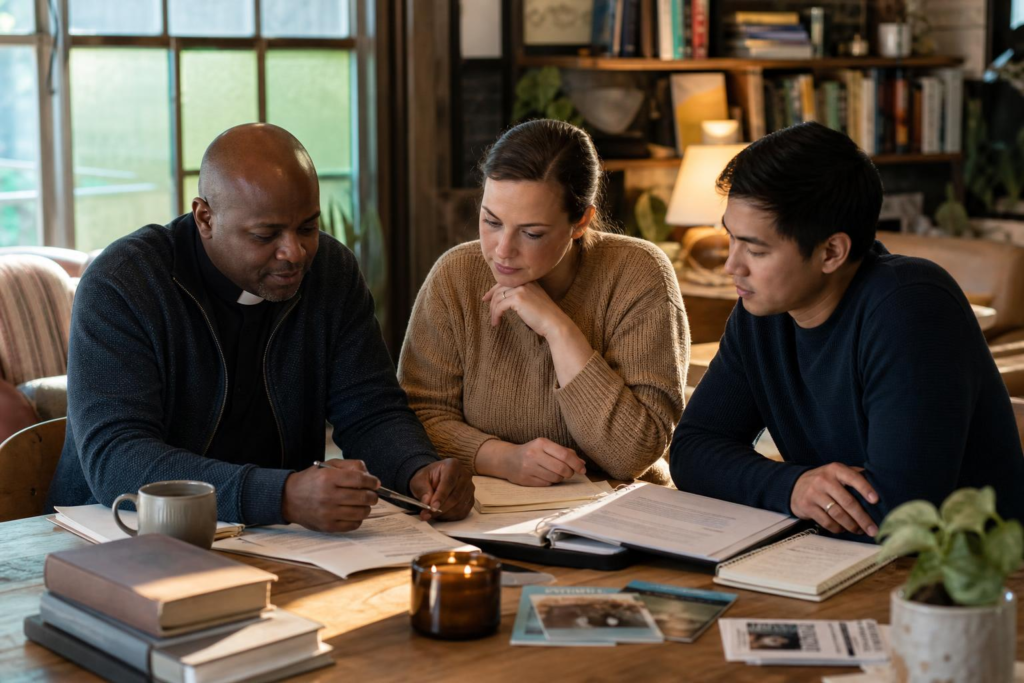
One of the healthiest things you can do after ordination is find someone who can help you think, pray, and practice. Ministry is rarely meant to be lonely. A mentor can help you sort out ceremony questions, pastoral boundaries, tone, and the ordinary realities that do not show up in training manuals.
In some faith traditions, mentoring is a formal part of early ministry development. For example, the Christian Reformed Church describes mentoring expectations for newly ordained ministers, including regular contact with a ministry mentor. That does not mean every tradition handles mentoring the same way, but it does show that guided support is a common and wise practice. (crcna.org)
What should a mentor help with?
- Reviewing your first ceremony outlines
- Practicing introductions and transitions
- Talking through difficult requests or family dynamics
- Helping you reflect on your limits and growth areas
- Encouraging a steady rhythm of prayer and learning
If you do not yet have a formal mentor, start by asking a minister, chaplain, or trusted leader who knows your tradition and your community. A good mentor does not need to impress you. They need to be honest, steady, and willing to help you keep learning.
Volunteer before you build a full ministry calendar
Volunteering is one of the best ways to learn what your calling looks like in real life. It gives you experience, relationships, and humility. It also helps churches and community groups see your character before you take on more responsibility.
Good first volunteer settings include:
- Church hospitality: Welcome teams, event setup, or guest follow-up
- Marriage prep support: Helping with logistics, packets, or ceremony readiness
- Community outreach: Food distribution, care visits, or volunteer coordination
- Wedding support teams: Reading schedules, rehearsal assistance, or setup oversight
If your heart is in wedding ministry, volunteer around weddings before you officiate weddings alone. That may mean shadowing an experienced officiant, helping with a rehearsal, or supporting a couple through the planning process. Ministries of Love exists to encourage that kind of compassionate, practical service and to help make meaningful celebrations more accessible when possible. If you want to explore service opportunities, get involved here.
What to look for while volunteering
Notice how people communicate. Some of the most useful ministry lessons are about clarity, patience, and timing.
Notice what makes people feel cared for. Small details often matter as much as formal words.
Notice where you are strongest. You may be gifted in calm leadership, written communication, or pastoral presence.
Prepare for ceremony work without overcomplicating it
Once you have done your reflection and legal research, you can begin preparing for actual ceremony work. The aim is not to become theatrical. The aim is to become clear, warm, and dependable.
A simple ceremony workflow usually includes:
- Initial conversation: Learn what the couple wants, what their tradition expects, and what the venue allows.
- Document check: Confirm the marriage license steps for the specific jurisdiction.
- Script and flow: Draft the processional, welcome, vows, pronouncement, and closing.
- Rehearsal plan: Decide who will cue the wedding party, what to do if timing changes, and how to keep everyone calm.
- Final review: Recheck names, dates, pronunciation, and any required signatures or filings.
If your ministry includes helping couples with vows or speeches, the Wedding Vows and Speeches Guide is a useful companion resource.
What kind of ceremony preparation feels most needed right now?
Example: You may realize you need more help with writing a ceremony flow than with speaking in public, or you may be comfortable with the script but uncertain about legal paperwork. Knowing that difference saves time and stress.
Short answer: Focus on your weakest link first.
Keep your next step small, useful, and faithful
It is easy to imagine that ordination should immediately turn you into a fully formed leader. In reality, the first month is for learning, confirming, and connecting. You are not behind if you are still asking questions. You are doing ministry the right way when you move thoughtfully.
For communities that want to make weddings more accessible, that can also mean being willing to support rather than to control. Ministries of Love invites people to consider practical service, compassionate wedding assistance, and resource-sharing as ways to bless couples without making love depend on wealth or perfect circumstances. If your next step is support rather than ceremony work, get support here. If your next step is giving, you can also consider cash donation as a way to strengthen community care.
What to do after ordination: a steady conclusion
The best answer to what to do after ordination is simple: root yourself, verify your responsibilities, learn from a mentor, and serve in small faithful ways. That sequence helps you avoid unnecessary mistakes and enter ministry with more peace. If weddings are part of your calling, check your local rules before you officiate, practice with care, and let your first month be about preparation rather than pressure. A calm beginning is a good beginning.
Frequently Asked Questions
What should I do first after ordination?
Start with reflection, mentorship, and local legal research. Those three steps help you understand your call, your support system, and your actual responsibilities before you take on ministry work.
Do I automatically get to officiate weddings after ordination?
No, not automatically. Wedding officiant rules depend on the state or local jurisdiction, so you need to confirm the requirements where the ceremony will happen before you accept the job.
How do I find a mentor after ordination?
Ask a minister, chaplain, church leader, or denominational contact who understands your tradition. A good mentor is someone who can speak honestly, pray with you, and help you think through real ministry situations.
What is a good first volunteer role for a newly ordained minister?
A good first role is one where you can observe, help, and learn without carrying everything alone. Hospitality, outreach support, and rehearsal assistance are often useful places to begin.
How do I prepare for my first wedding ceremony?
Build a simple workflow: meet with the couple, confirm legal requirements, outline the ceremony, rehearse transitions, and double-check names and signatures. The calmer and clearer you are, the better you can serve.
Leave a Reply