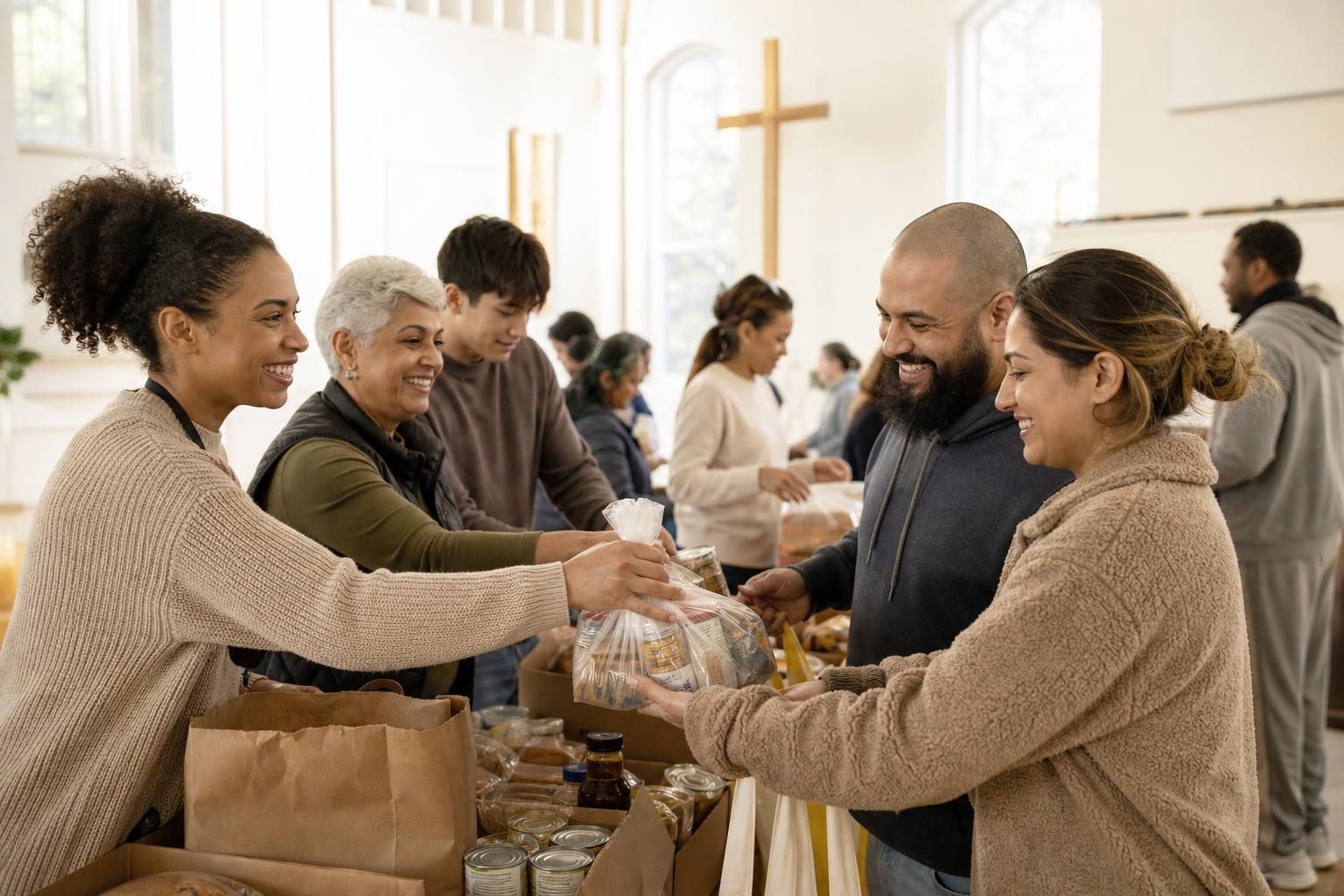
What is community outreach? In plain terms, it is intentional service to people around you—sharing time, resources, information, and care in ways that meet real needs and build trust. Community outreach is not just “doing an event.” Done well, it is a steady posture of generosity, connection, and hope. It may look like food distribution, resource referrals, volunteer care teams, neighborhood listening, or practical help offered with dignity. Ministries of Love approaches outreach through service, generosity, connection, hope, and compassionate action.
If you are trying to understand the idea, the short answer is this: outreach is how a community shows up for neighbors in ways that are practical, respectful, and useful. Some organizations use the word to mean one-way service, while others use it more broadly to include relationship-building and mutual support. University-based definitions often distinguish outreach from deeper community engagement by noting that outreach is typically service or information offered to a community, while engagement is more collaborative and reciprocal. (cresp.udel.edu)
What is community outreach in everyday terms?
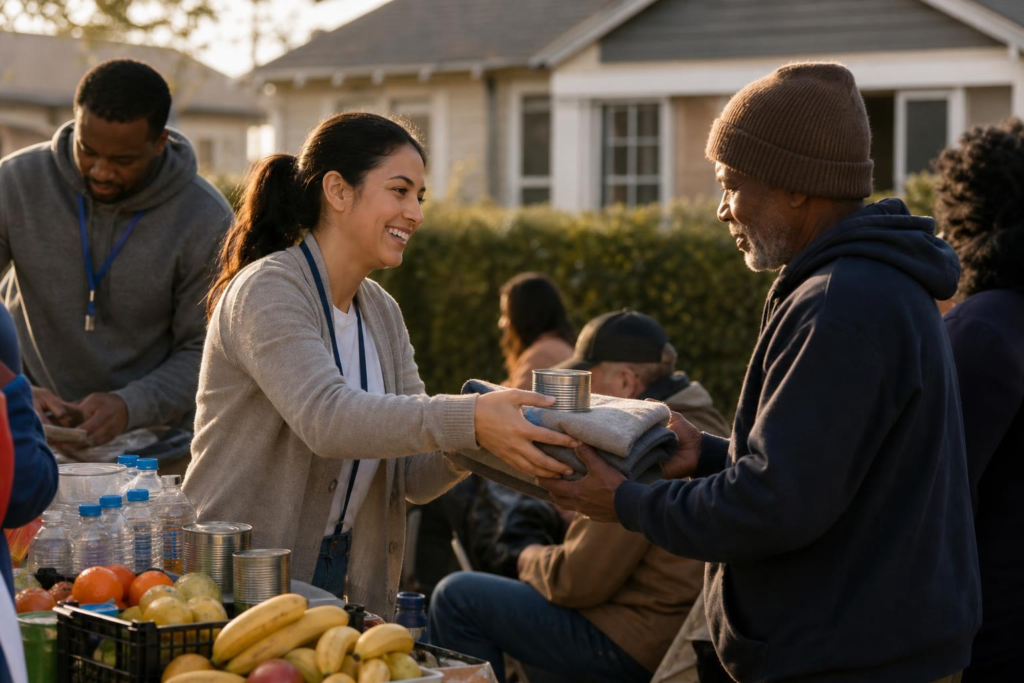
At its heart, community outreach means meeting people where they are. That can mean offering services, sharing information, connecting families to help, or creating a welcoming pathway into support that might otherwise feel out of reach. In many settings, outreach is the first step that helps a person move from isolation to connection. The University of Delaware’s definitions brief describes community outreach as providing services or expertise to a community and notes that it is generally service-oriented rather than collaborative in the full sense of community engagement. (cresp.udel.edu)
For faith-rooted ministries, outreach also carries a spiritual tone: not pressure, not performance, but practical love. The aim is to serve with humility and to treat every person as worthy of dignity. That emphasis fits the Ministries of Love lens of service, generosity, connection, hope, and compassionate action.
Why does community outreach matter?
Community outreach matters because needs are often easier to see than they are to solve alone. A church, ministry, venue, volunteer team, or donor network may not be able to fix everything, but it can reduce barriers, connect people to help, and create moments of relief and belonging. University and nonprofit sources commonly describe outreach as a way to share expertise, extend services, and connect resources with people who may not otherwise have access. (cresp.udel.edu)
Outreach also matters because trust is built over time. When a ministry consistently shows up with honesty and care, people are more likely to ask for help before a situation becomes a crisis. That can be true for a couple trying to plan a meaningful wedding on a tight budget, a church seeking to serve families, or volunteers hoping to make their time count.
What kind of difference can outreach make? Example: A ministry might host a simple resource table after worship, share rental and donation options for wedding basics, and connect couples to practical planning help instead of leaving them to figure everything out alone. Short answer: Lower stress, clearer next steps.
What community outreach is—and what it is not
It helps to draw a clean line. Outreach is not the same as a long-term mutual partnership, and it is not the same as a one-time publicity campaign. Strong outreach is still people-centered, but it is usually organized around a clear service goal. The Oklahoma State University Extension comparison describes outreach as one-way service or information sharing, while engagement is more cyclical and mutually involved. (extension.okstate.edu)
| Term | Plain meaning | Typical focus | Best use |
|---|---|---|---|
| Community outreach | Offering services or information to a community | Access, awareness, practical help | When people need clear support quickly |
| Community engagement | Working with a community in a more reciprocal way | Shared planning, listening, partnership | When the community helps shape the effort |
| Extension | Educational or service work that combines outreach and engagement | Learning, improvement, sustained impact | When long-term community development is the goal |
This distinction is useful because it keeps expectations honest. If your ministry is offering wedding support, for example, outreach may mean collecting items, sharing trusted planning resources, or connecting couples to help. Engagement may mean listening sessions, advisory input, or ongoing community partnership.
How faith-rooted outreach serves people with dignity
Faith-rooted outreach should never feel like a transaction. The best efforts are marked by gentleness, privacy, and respect. That means asking what people need rather than assuming, offering options rather than pressure, and making room for people of every faith and no faith. Ministries of Love can express this through compassionate wedding assistance, volunteer support, and practical community care without shaming anyone for limited means.
In practice, that may include:
- sharing referrals instead of trying to solve every problem in-house;
- offering donated or lower-cost items when available;
- welcoming questions without embarrassment;
- protecting privacy when someone asks for help;
- treating every guest, couple, donor, and volunteer with equal dignity.
Many faith-based organizations describe outreach as service, compassion, and hope. For example, American Baptist Home Mission Societies describes community outreach ministries as thriving through connection and service that meets real needs with dignity and hope. Convoy of Hope describes itself as a faith-based organization centered on feeding people, community outreach, and disaster response. (abhms.org)
What are examples of community outreach?
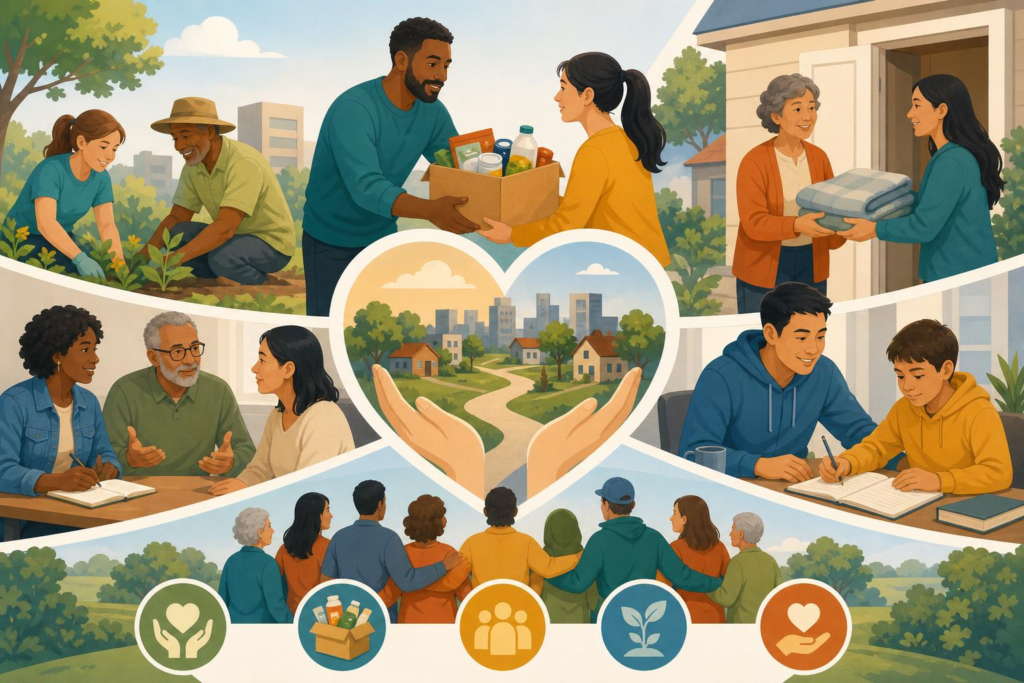
The most useful examples are the ones that are specific and achievable. Outreach can happen in a church foyer, a community hall, a school, an online group, or a neighborhood gathering. It can be weekly, seasonal, or event-based. The form is less important than the usefulness.
Common outreach examples:
- food or clothing distribution;
- wedding item lending or donation support;
- guest resource tables after services or events;
- community cleanups or neighborhood care projects;
- volunteer-led referral help for housing, grief, or crisis resources;
- workshops that teach a practical skill or share trusted information.
When Ministries of Love thinks about outreach, the question is not “What sounds impressive?” It is “What will genuinely help someone this week?” That keeps the work grounded and keeps generosity from becoming performative.
How to plan a simple outreach effort that actually helps
You do not need a large budget to begin. You do need clarity, kindness, and follow-through. A small outreach effort that is well organized is usually more helpful than a bigger one that leaves people confused.
- Choose one need. For example: wedding basics, neighborhood welcome, food support, or volunteer care.
- Define who you serve. Keep the audience focused so the help feels personal and relevant.
- Decide what you can offer. Be honest about items, time, and staffing.
- Make the next step obvious. Use one sign-up form, one contact person, or one simple landing page.
- Protect dignity. Minimize public exposure for people who ask for help.
- Follow up. A thank-you, check-in, or resource handoff matters more than many ministries realize.
For a community that wants to help couples without overspending, this might mean starting with a small support list, a donated-item shelf, or a referral page. If you want a broader framework for building a ministry plan, Ministries of Love’s community outreach plan can be a helpful next read.
How Ministries of Love can fit into outreach work
Ministries of Love is positioned to support community care in a way that feels practical and humane. That may include helping couples find wedding support, guiding ministers in thoughtful service, encouraging churches to serve with care, and inviting volunteers and donors into work that makes celebrations more accessible. The goal is not to create dependency or appearance. The goal is to make room for meaningful, affordable celebration and compassionate connection.
If you are looking for the right next step, consider these pathways:
- Get support if you or someone you love needs practical help;
- Get involved if you want to volunteer, serve, or contribute;
- Make a cash donation if you want to help support future outreach efforts.
If your outreach work is connected to weddings, ceremonies, or officiating questions, you may also want to review the broader civil wedding ceremony guide and the wedding vows and speeches guide so you are not recreating content that already belongs in a more specific resource.
A practical planning question before you begin
What is the one real need your outreach can meet well right now?
Example: A church team may realize that several couples need affordable ceremony support, but what they can offer right now is a modest lending closet, prayerful encouragement, and a referral path for planning help.
Short answer: Start small and serve clearly.
Final thoughts on what community outreach means
So, what is community outreach? It is compassionate action aimed at helping real people with real needs in ways that are practical, respectful, and hopeful. Sometimes that means direct service. Sometimes it means sharing information. Sometimes it means opening a door that was closed before. Done faithfully, outreach makes a community feel less alone and more cared for.
If you are building or joining outreach work, keep the standard simple: serve with dignity, listen carefully, and make the next helpful step easy to find. That is often where hope begins.
Frequently Asked Questions
What is community outreach in simple words?
Community outreach is the act of offering help, information, or resources to people in a community. It usually focuses on practical support and access.
Is community outreach the same as community engagement?
No, it is not the same. Outreach is usually more service-oriented, while engagement is more reciprocal and collaborative.
Why does community outreach matter for churches and ministries?
It matters because it helps churches and ministries meet real needs with dignity and build trust with neighbors over time.
What are some easy community outreach ideas?
Easy outreach ideas include a resource table, a donated-item shelf, a small volunteer drive, or a referral list for local help.
How does Ministries of Love think about community outreach?
Ministries of Love sees outreach as service, generosity, connection, hope, and compassionate action.
Leave a Reply