What Can an Ordained Minister Do in Their Community?
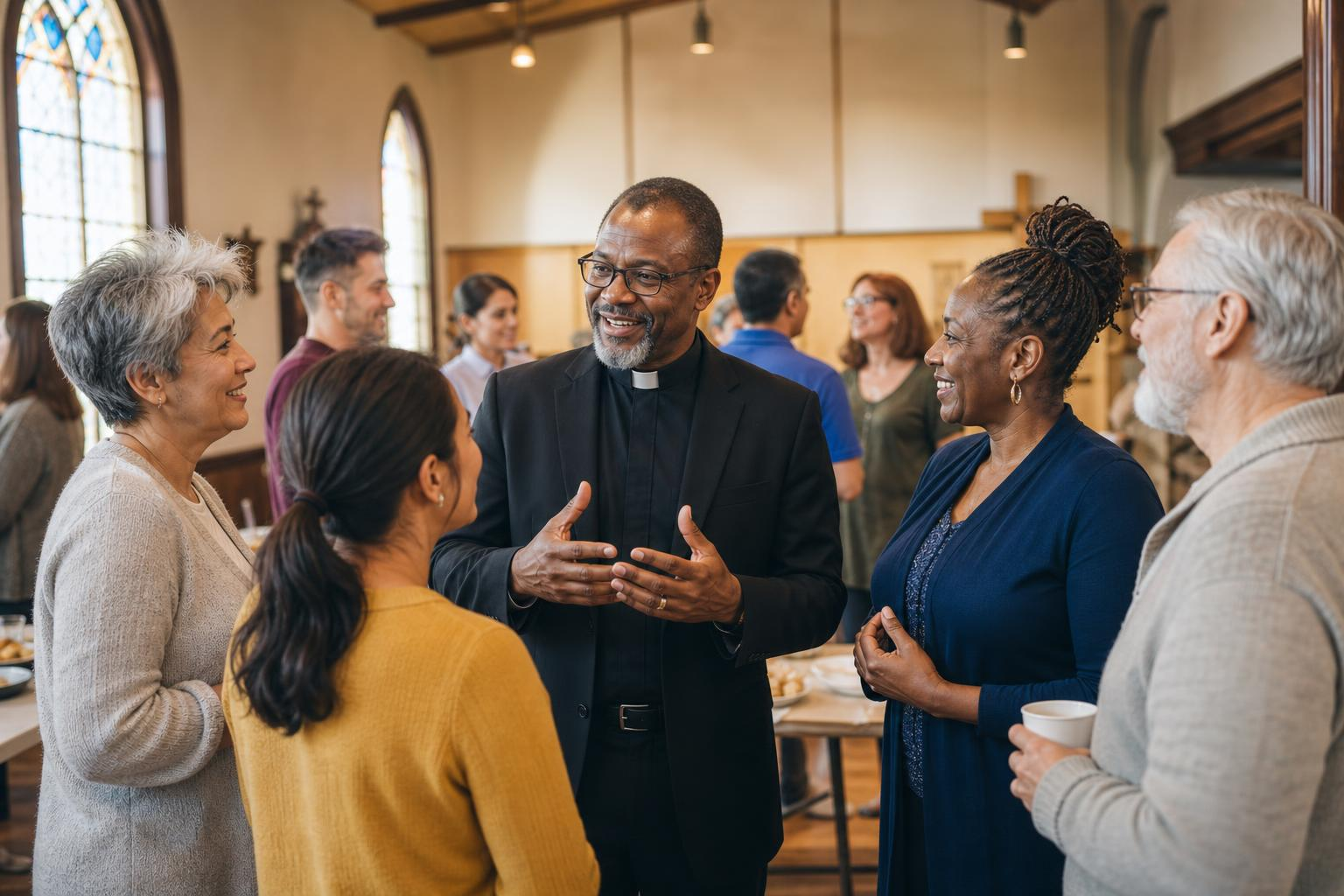
Short answer: an ordained minister can often serve far beyond the pulpit. In many communities, that role may include leading ceremonies, offering blessings and prayer, mentoring people, organizing volunteers, supporting outreach, and helping neighbors feel seen and cared for. What that looks like depends on the faith tradition, the minister’s training, the congregation or organization they serve, and local law. Marriage authority in particular varies by state, so couples and ministers should verify the rules where the ceremony will happen. For marriage-law basics, USA.gov points readers to state-specific guidance, and Ministries of Love offers a broader civil-wedding guide if you are planning a ceremony step next. (usa.gov)
What can an ordained minister do?
At the heart of the question is this: an ordained minister can usually serve as a spiritual caregiver, ceremony leader, encourager, and community connector. In practical terms, that may mean officiating worship services, leading prayers, blessing homes or families, preaching or teaching, walking with people in grief or transition, and helping a church or ministry respond to local needs. Some ministries also use ordained leaders to build volunteer teams, train helpers, and keep outreach organized and steady. University and ministry job descriptions commonly show ordained leaders doing outreach leadership, volunteer coordination, spiritual formation, and community care. (divinity.duke.edu)
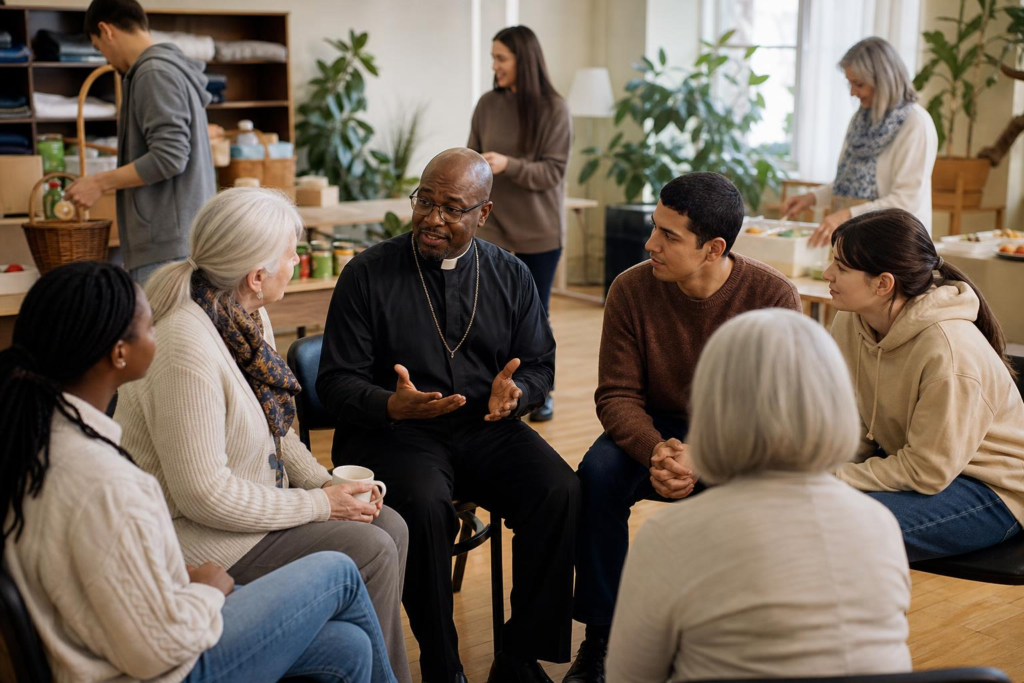
If you are trying to decide whether a ministry role fits a specific need, a good first question is not “What title do I have?” but “What kind of care does this community need?” An ordained minister can be a bridge between spiritual life and everyday support, but the exact responsibilities will differ from one faith community to another. That diversity matters, and it is worth honoring. (chaplaincy.tufts.edu)
Ceremonies, blessings, and pastoral moments
Many people first think of an ordained minister in connection with ceremonies. That is a good instinct. Ministers often lead weddings, funerals, dedications, prayer services, baptisms or blessings, and other moments that mark a family’s major transitions. In a wedding setting, the minister may help shape the vows, guide the order of service, and create a calm and meaningful atmosphere. Ministries of Love’s civil wedding ceremony guide can help readers who want a broader look at ceremony planning and the difference between civil and faith-rooted options. (usa.gov)
What does a blessing do in community life? Example: a blessing can mark a new home, a new child, a recovery, a partnership, or a season of grief with words that offer peace and belonging. Short answer: sacred presence, shared hope, real care.
It also helps to remember that not every faith community treats ceremony the same way. Some traditions expect ordained ministers to lead specific rites; others share responsibility among trained lay leaders, elders, or families. If a ceremony has legal effects, check local law and any denominational rules before you promise anything to a couple or family. (flsenate.gov)
How does an ordained minister support people day to day?
The most important ministry often happens outside the spotlight. An ordained minister may listen to someone who is discouraged, pray with a family in crisis, encourage a teenager finding their footing, or help a volunteer who is tired and unsure they can keep going. Many ministries describe this as pastoral care, spiritual formation, or ministry of presence. In plain language, it means showing up with steadiness and respect. (bu.edu)
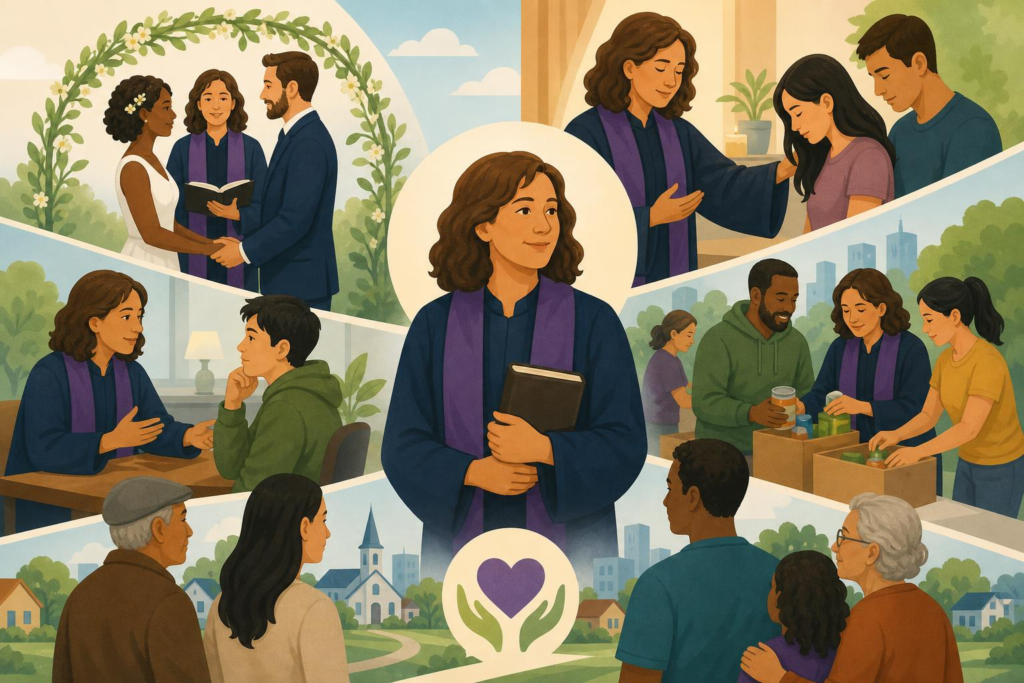
What does supportive ministry look like when no one is asking for a speech? Example: it can be as simple as checking in after a loss, helping someone find the right community contact, or praying briefly when a person says they are overwhelmed. Short answer: listen first, guide gently.
That kind of care is not about fixing people. It is about being available, keeping confidences, and helping people move toward the next wise step. A minister can encourage a person without taking over their choices. That matters in families, churches, schools, shelters, and neighborhood settings alike. If a situation involves mental health, safety, or abuse, the minister should not try to handle it alone; referral to qualified local support is the wiser path. Human review needed for any mental-health, medical, or safety-related claims.
Volunteer leadership and outreach: where ministry becomes visible
Ordained ministers often help people turn good intentions into organized service. That may include recruiting volunteers, training small teams, coordinating prayer walks, supporting food drives, partnering with neighborhood organizations, or guiding a church’s outreach calendar. Some church and campus ministry roles explicitly connect ordained leadership with volunteer development and local outreach. (divinity.duke.edu)
This is where a minister can be especially useful in the community. A congregation may have willing hands but no plan. A minister can help the group decide who is serving, when, and why, so energy does not get wasted. They can also help keep service rooted in dignity, not ego. Good outreach should make neighbors feel helped, not managed.
Quick outreach checklist
- Identify one clear community need.
- Choose one simple action.
- Assign one responsible contact.
- Set one realistic date or rhythm.
- Debrief after serving and learn what changed.
For churches and ministries, this is also a place where Ministries of Love can be a helpful next step. If a reader wants to get involved, volunteer, or explore practical community support, the Get Involved page is a natural fit. If the need is more immediate, Get Support may be the better path. (usa.gov)
What can an ordained minister do in civic and interfaith spaces?
In many communities, ordained ministers also serve as trusted neighbors across lines of denomination, background, and belief. They may take part in community meals, interfaith gatherings, hospital support, campus ministry, neighborhood meetings, disaster response efforts, or public vigils. The useful skill here is not pretending everyone shares the same theology. It is learning how to serve with respect among people who do not. (marquette.edu)
That approach can matter in cities, small towns, and mixed-faith families. A minister who knows how to collaborate can help reduce isolation and build trust. They can also help a congregation understand that compassion is not a performance. It is a habit.
| Role | What it usually includes | Why it helps the community |
|---|---|---|
| Ceremony leader | Weddings, funerals, blessings, dedications | Marks life transitions with care and structure |
| Pastoral caregiver | Listening, prayer, encouragement, referrals | Helps people feel supported in hard seasons |
| Volunteer leader | Training, scheduling, coordinating service | Keeps outreach organized and sustainable |
| Mentor | Guidance for younger leaders or new volunteers | Builds confidence and healthier leadership |
| Community connector | Relationships with churches, agencies, neighbors | Helps people find resources faster |
What should ministers verify before acting in a legal role?
If the minister is being asked to solemnize a marriage, the careful answer is: verify the local law first. U.S. marriage rules are state-specific, and authorized officiants vary by jurisdiction. Some states allow ordained clergy to solemnize marriages; others have additional requirements or different categories of who may officiate. Even within a state, filing steps and timing can differ. USA.gov directs people to state and local marriage-law guidance, and state sources show that the legal details are not identical everywhere. (usa.gov)
What should a couple or minister verify locally before a ceremony? Example: they should confirm who may officiate, whether a license is required before the ceremony, and where any signed paperwork must be returned afterward. Short answer: officiant, license, filing.
For readers who need a starting point, Ministries of Love can link to its civil wedding ceremony guide, and state-specific officiant questions can be checked through official government sources. If the reader is in a state where clergy authority is unclear, a local clerk, county office, or state website is the safest place to confirm the current rule. Human review needed for all legal and state-specific marriage-law claims before publication.
OrdainedPro Maps can be a useful internal starting point for readers looking for practical officiant guidance, but it should not replace official state instructions when legal authority is involved. Human review needed for ordination-validity and officiant-authority claims.
How can Ministries of Love support this kind of ministry?
Ministries of Love is positioned to help people who want ministry to feel practical, dignified, and reachable. That may include couples seeking ceremony support, ministers wanting guidance, churches that want more accessible celebration planning, and volunteers who want to serve in meaningful ways. The organization can speak most usefully where compassion meets real-world logistics: planning a ceremony, understanding ministry basics, connecting to support, and making room for families of different budgets and backgrounds. About Ministries of Love provides a broader look at the organization’s purpose, while the civil wedding and vows guides can support readers who want to plan well. (usa.gov)
For couples, that might mean a gentler path to a meaningful ceremony. For ministers, it might mean clearer next steps and stronger local leadership. For donors and volunteers, it may be a chance to help create practical support without assuming every family wants the same kind of celebration. If giving is the right fit, the Cash Donation page is a natural next step for readers who want to support the mission financially. Human review needed for nonprofit, donation, pricing, and availability claims.
Practical next steps for a minister, couple, or volunteer
- Define the need. Are you planning a ceremony, seeking counseling-style support, or building outreach?
- Check the boundaries. If law is involved, verify state rules before promising officiant services.
- Choose one clear role. Lead, bless, mentor, organize, or connect people to help.
- Keep it human. Use simple words, calm pacing, and realistic expectations.
- Follow up. A short check-in after a ceremony or service effort can matter a lot.
If your main interest is marriage planning, the better next read is the Civil Wedding Ceremony Guide. If you are focusing on vows, speeches, or what to say during a ceremony, the Wedding Vows and Speeches Guide is a good companion resource. (usa.gov)
Conclusion
So, what can an ordained minister do in their community? A lot, when the work is grounded in care and done with clarity. They can lead ceremonies, offer blessings, encourage people, mentor volunteers, strengthen outreach, and connect neighbors to one another. The exact shape of that work depends on the faith tradition and local law, especially when marriage is involved. If you are planning a ceremony or building a ministry role, start with the need in front of you, verify what is legally required, and choose the next faithful step. That is usually where the most lasting good begins. (usa.gov)
Frequently Asked Questions
What can an ordained minister do in a local community?
An ordained minister can often lead ceremonies, offer pastoral care, mentor people, organize volunteers, support outreach, and connect neighbors to resources. The exact role depends on the faith tradition and local law.
Can an ordained minister officiate a wedding anywhere?
No, not everywhere. Marriage authority varies by state and sometimes by local rules, so the minister should verify the law where the ceremony will happen before agreeing to officiate.
Is an ordained minister the same as a pastor?
Not always. Some ordained ministers serve as pastors, but others focus on chaplaincy, teaching, outreach, ceremonies, or specialized ministry work.
What does an ordained minister do besides weddings?
An ordained minister may also preach, bless families, visit the sick, support grieving people, train volunteers, lead outreach, and help people through important life transitions.
How can a volunteer work with an ordained minister?
A volunteer can help with outreach, event setup, guest care, meals, transportation, or follow-up support. Clear roles and simple communication usually make the work smoother.
Leave a Reply