Unity in Faith: Building Bridges Without Erasing Our Differences
When people say unity in faith, they do not always mean the same thing. For some, it means worshiping side by side. For others, it means a mixed-faith family learning how to honor both traditions with care. And for many couples, it simply means choosing peace, respect, and shared purpose over pressure to “just agree on everything.”
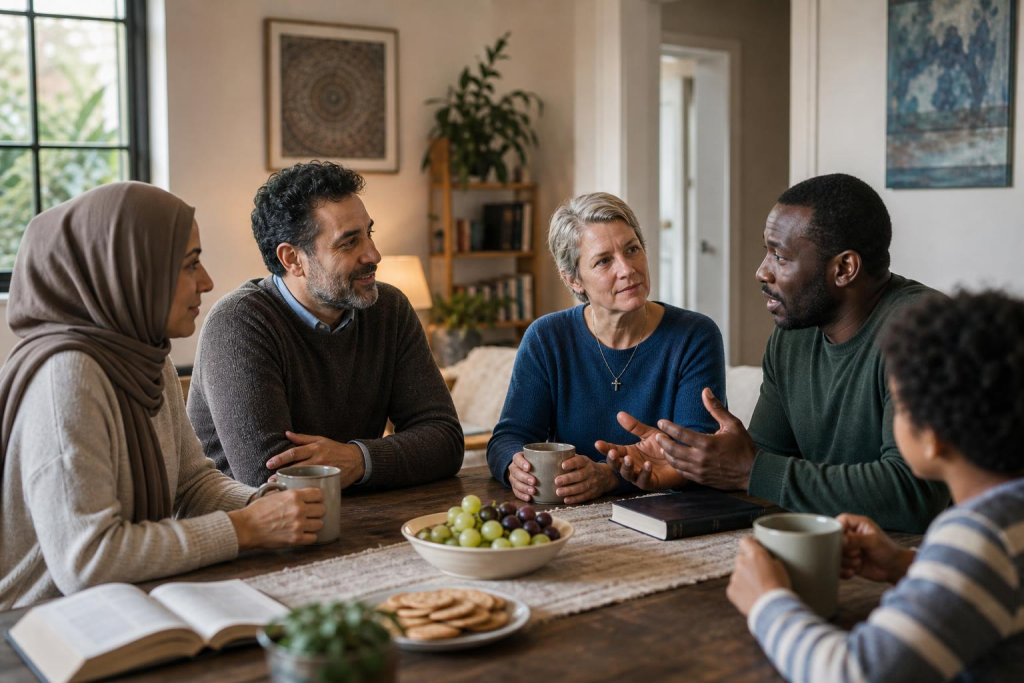
The good news is that unity does not require flattening people into one spiritual shape. In a pluralistic society, meaningful bridge-building grows from honesty, patience, and mutual respect. The Pluralism Project notes that pluralism is more than diversity alone; it is the active engagement with diversity, and it becomes an achievement rather than an automatic outcome. That is a helpful way to think about faith unity too. (pluralism.org)
What unity in faith really means
Unity in faith is not the same as sameness. It does not ask people to erase family traditions, personal convictions, or sacred boundaries. Instead, it invites people to practice respect, listen carefully, and make room for one another’s consciences.
For Christians, the language of unity can be especially familiar. Ephesians 4 speaks of one body, one Spirit, and one Lord, while also calling believers toward humility, gentleness, patience, and bearing with one another in love. Read that closely, and you will notice something important: unity is described as a practice, not a slogan. (biblegateway.com)
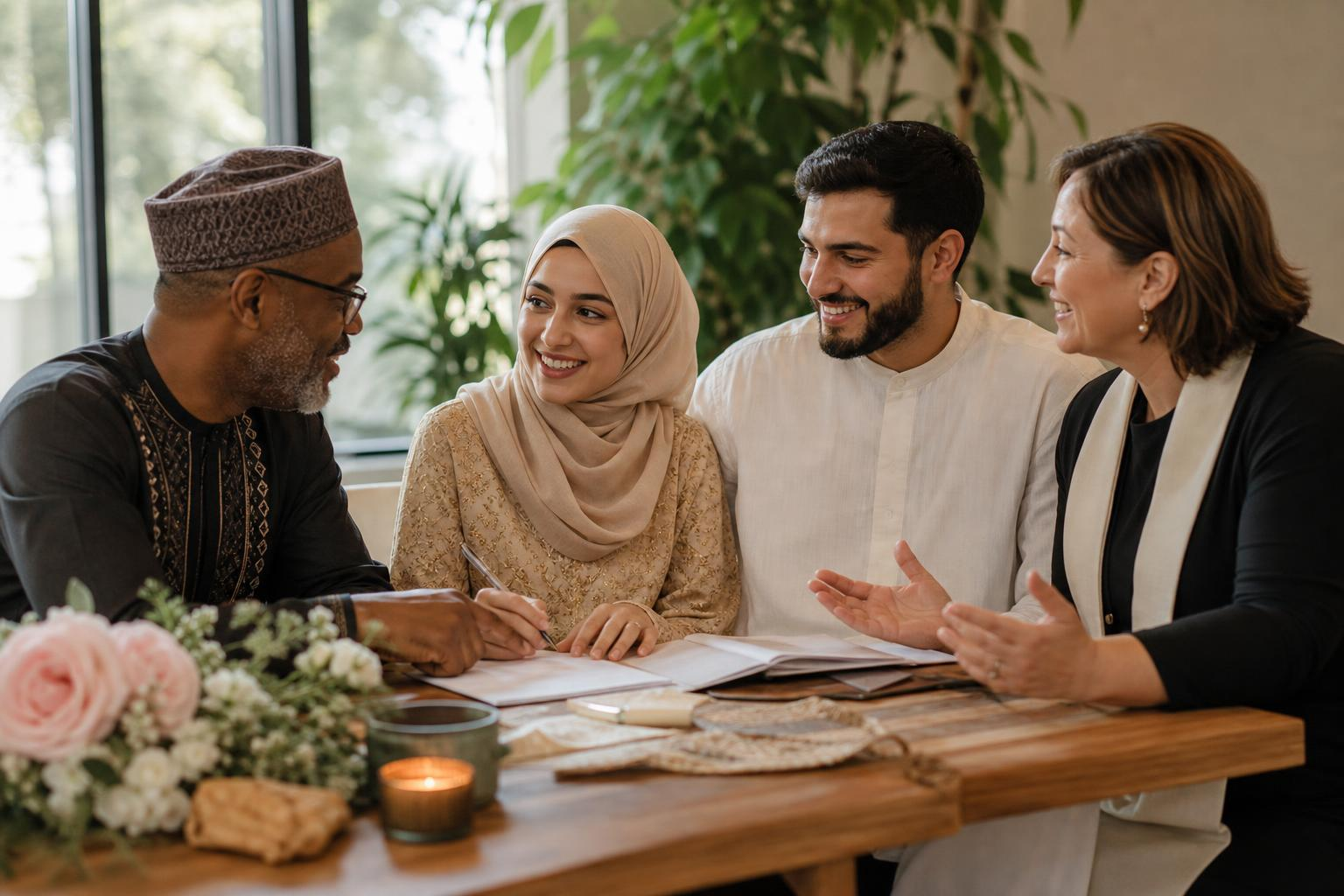
That same principle can support interfaith families, church communities, and wedding celebrations. A bride, groom, officiant, parent, or pastor may not share every belief in the room, but they can still choose honor, order, and peace.
Why respecting differences strengthens relationships
Some people worry that acknowledging differences will create distance. In practice, the opposite is often true. When people feel seen instead of managed, trust has room to grow. The Pluralism Project explains that bridges form when communities move from simple diversity toward real encounter and relationship. (pluralism.org)
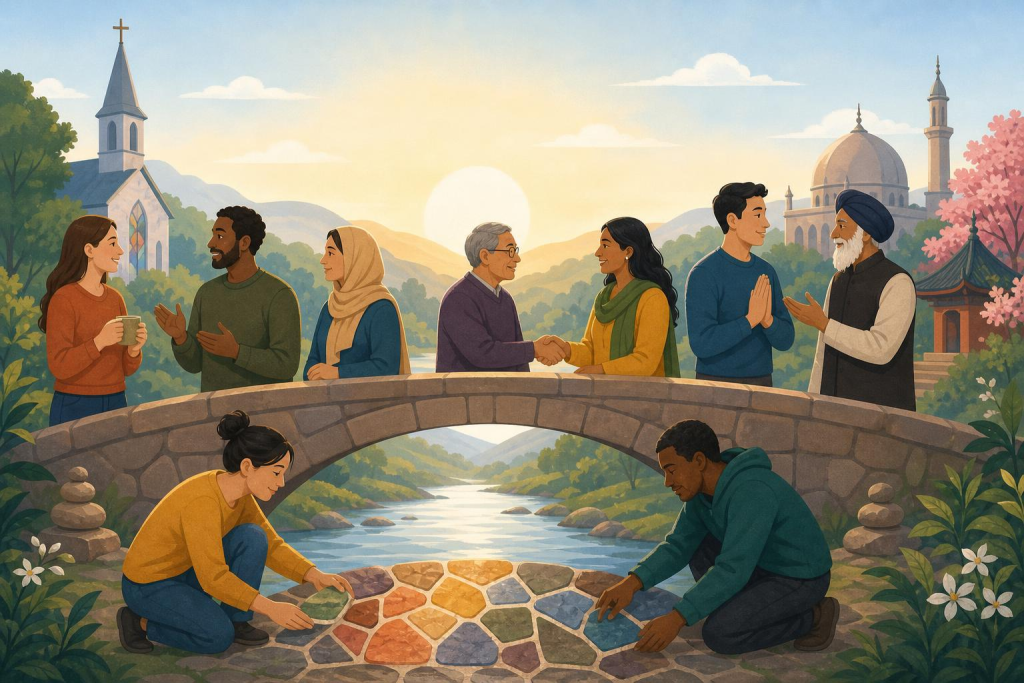
That matters in everyday life:
- In couples: one person may be more publicly expressive in faith, while the other is quieter or differently rooted.
- In families: grandparents, parents, and adult children may hold different beliefs but still want a joyful and respectful event.
- In congregations: people may come from different Christian traditions, or from no faith background at all, yet still seek warmth and belonging.
- In community spaces: churches and ministries often serve people whose stories do not fit a single template.
Respect does not mean pretending all beliefs are identical. It means refusing to treat difference as a threat. That is a sturdy, mature kind of love.
How to talk across faith differences without getting tangled
Good conversations about faith are usually less about winning and more about understanding. A calm, well-timed conversation can prevent a lot of hurt later, especially when a wedding or family milestone is approaching.
1. Name the purpose before the debate
Are you trying to plan a ceremony, decide what prayers to include, or figure out how to introduce two traditions respectfully? Say that clearly. When the goal is visible, the conversation feels less like a test.
2. Ask what is essential and what is flexible
Every person usually has a few “must-haves” and several “preferences.” Knowing the difference can reduce conflict. One partner may need a certain prayer, while another only asks that no one be pressured to participate in words they do not believe.
3. Listen for meaning, not just wording
People often disagree about language while sharing the same underlying hope: blessing, gratitude, peace, family unity, or a sense of God’s presence. If you can identify the hope underneath the words, you may find more common ground than you expected.
4. Make room for silence and grace
Not every conversation ends neatly. Sometimes the next faithful step is simply to pause, pray, consult a pastor or trusted guide, and return later with cooler heads.
Planning question: What kind of unity are you actually aiming for in this conversation or ceremony? Example: We want a celebration where both families feel respected, the couple feels spiritually honest, and no one is asked to betray their conscience. Short answer: Shared dignity, not forced sameness.
Practical ways to build bridges in homes, churches, and weddings
Bridge-building becomes easier when it is concrete. Here are practical ways to help unity grow without asking anyone to disappear.
Use shared values as the starting point
Most faith traditions and many thoughtful nonreligious families value kindness, fidelity, gratitude, service, compassion, and truthfulness. Those shared values can guide vows, welcome messages, readings, and family expectations.
Honor the difference between participation and observation
Some guests may gladly stand, bow their heads, or listen quietly without speaking the words. Others may prefer to observe respectfully from the edge. A good host makes that easy instead of awkward.
Choose language that welcomes rather than crowds out
Instead of using lines that assume everyone worships the same way, consider language that allows room for multiple traditions. A simple blessing of peace, family love, or mutual support may be more inclusive than a heavily coded phrase that unintentionally excludes part of the room.
Keep the ceremony readable for everyone
If a wedding or church service includes multiple faith elements, label them clearly in the program. Guests are usually more comfortable when they know what is happening and how they may participate.
Build in roles that fit different comfort levels
One person may read scripture, another may offer a secular toast, and a third may light a candle, present flowers, or simply stand in support. Not everyone has to do the same job to contribute meaningfully.
When families or congregations disagree, stay close to the relationship
Disagreement does not always mean disunity. Sometimes it means people care enough to speak honestly. The key is to keep the relationship more important than the argument.
Try this approach:
- Lower the temperature. Take breaks before frustration becomes disrespect.
- Acknowledge the fear underneath the objection. Many faith conflicts are really about losing heritage, losing influence, or feeling unseen.
- Separate conviction from control. A person may hold a belief deeply without needing to force it on everyone else.
- Return to the shared purpose. Is the goal to honor God, bless a marriage, protect family peace, or create a welcome space? Keep that purpose in view.
The National Archives’ transcription of the First Amendment reminds us that freedom of religion includes both protection from establishment and protection for free exercise. In ordinary language, that is a strong reminder that people should be free to believe, practice, and differ without coercion. (archives.gov)
That principle is especially helpful in mixed-faith settings: no one should have to surrender conscience in order to belong.
How Ministries of Love can fit into a faith-respectful bridge-building process
Ministries of Love is positioned to support people who want meaningful celebrations without turning love into a contest over who gets the final word. For couples, ministers, churches, venues, donors, and volunteers, that can mean practical guidance, compassionate planning support, and resources that make celebration feel more accessible and less intimidating.
If you are planning a ceremony across different beliefs, Ministries of Love may be a helpful next step when you want a steadier conversation about inclusion, order, and dignity. If your needs touch ordination or officiant questions, the organization’s OrdainedPro resources can be a starting point for further review, especially when state-specific rules may matter. Because marriage-law and officiant-validity details can change and are highly state-specific, those claims should be reviewed by a human before publication or action. (biblegateway.com)
The about page for Ministries of Love was supplied as an admin reference, so readers can be directed there when they want to understand the organization’s broader heart and mission. ([]())
Helpful next step: If your planning needs include officiant guidance, a state-specific marriage question, or a ceremony that has to respect multiple faith backgrounds, start at the OrdainedPro map page and then verify any legal requirements through official state sources before you decide anything final.
A simple decision guide for mixed-faith or multi-background celebrations
| Question | Helpful direction | Why it matters |
|---|---|---|
| Do we want everyone to participate, or only some people? | Distinguish active participation from respectful attendance. | Prevents pressure and keeps guests comfortable. |
| Are we seeking one shared spiritual expression, or a blended format with multiple elements? | Write that down early. | Helps the ceremony feel intentional instead of improvised. |
| Is one tradition required, preferred, or simply meaningful to one person? | Clarify the level of importance. | Turns vague tension into a workable plan. |
| Will family or clergy want advance review? | Share the outline before the event. | Gives people time to respond with grace rather than surprise. |
This kind of planning is not about pleasing everybody. It is about making room for truth, hospitality, and peace in the same room.
Quick checklist before the ceremony or gathering:
- Confirm the core values the event should express.
- List any faith elements that are nonnegotiable.
- Identify what can be adapted for comfort and inclusion.
- Prepare the program with clear labels.
- Review any legal or officiant questions with a qualified human reviewer.
Conclusion: bridge-building is a faithful skill
Unity in faith is not about erasing difference. It is about learning how to stand close without crowding, how to speak honestly without harshness, and how to celebrate meaningfully without asking anyone to pretend. That is a worthy goal for couples, families, churches, and communities.
If you are planning a wedding, an interfaith gathering, or a ministry conversation that needs steadiness, take the next step slowly and intentionally. Start with respect, keep the purpose clear, and remember that a generous heart is often the best bridge of all.
Frequently Asked Questions
Does unity in faith mean everyone has to believe the same thing?
No. In healthy faith communities, unity usually means shared purpose, mutual respect, and a willingness to live peaceably with real differences.
How can a couple honor two different faith backgrounds at a wedding?
They can focus on the values they share, choose meaningful but clear ceremony elements, and decide in advance who is participating, observing, or reading.
What if one family wants a more traditional ceremony and the other wants something simpler?
Start by identifying the nonnegotiables for each side, then look for places where language, music, readings, or the order of events can be adapted without forcing anyone to compromise conscience.
Can people of no faith still be included in a faith-centered celebration?
Yes. Inclusion can be as simple as using welcoming language, avoiding pressure to recite words, and honoring people as valued guests and supporters.
Leave a Reply