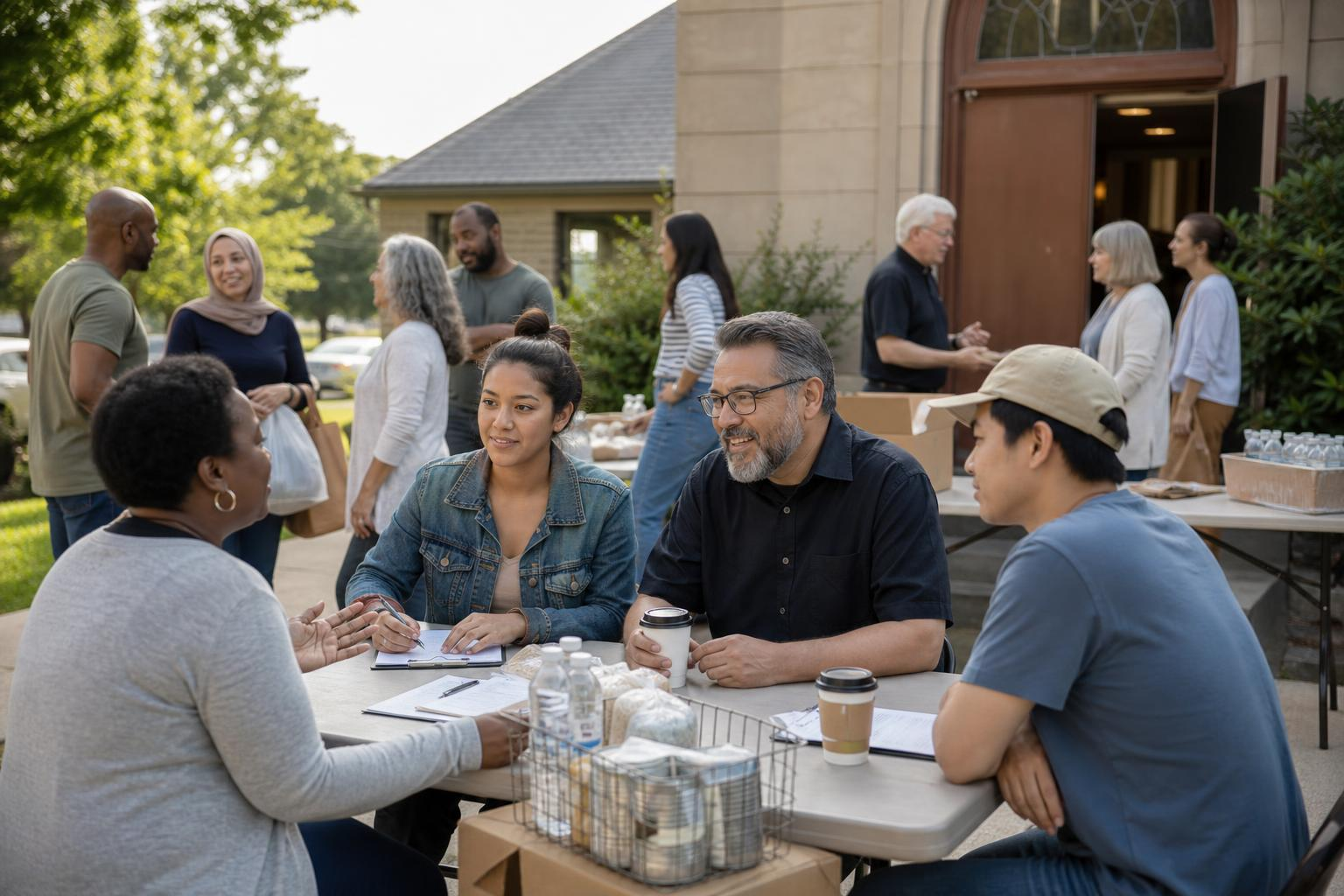
When you want to start a community outreach project, the best first move is usually not fundraising or publicity. It is listening. Start by identifying one real need, setting a small and clear scope, recruiting a few dependable helpers, and planning how you will protect people’s dignity from the beginning to the end. That simple approach is more likely to help than a big idea that tries to solve everything at once. Community-engaged work is strongest when it centers the people affected, builds trust early, and follows through on what was promised. (upward-mobility.urban.org)
Start with listening, not assumptions
The most common mistake in outreach is choosing a project before learning what people actually need. A small listening step can save time, money, and good intentions that miss the mark. Urban Institute guidance across several community-engagement resources emphasizes starting with community input, learning from residents and service providers, and building trust from the outset. (urban.org)
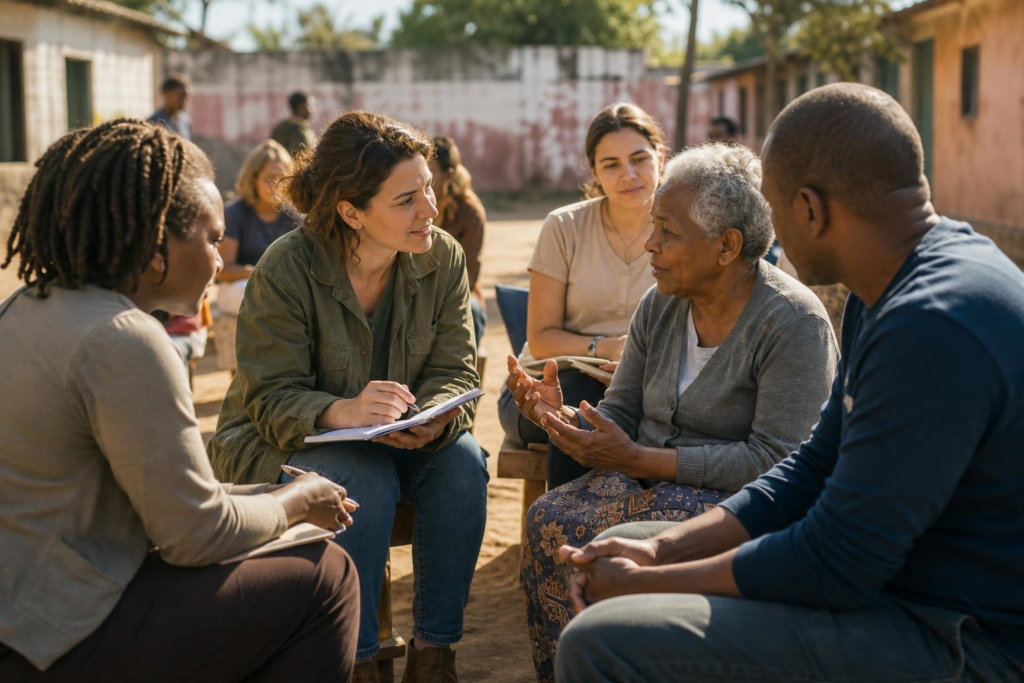
What does listening look like? It can be as simple as talking with neighbors, church members, school staff, tenants, local nonprofit workers, or volunteers who already serve the area. Ask what burden shows up again and again. You are looking for patterns, not polished answers. If several people describe the same barrier, that is a strong clue that you have found a useful starting point. (upward-mobility.urban.org)
Example: You speak with a pastor, a school counselor, and two parents, and each one mentions that families struggle to find basic weekend food support. Short answer: Start with one repeat need.
Define one need and one audience
Once you hear the same concern more than once, narrow the project. A strong outreach effort usually serves one audience, one need, and one clear outcome. That focus makes it easier to recruit helpers, explain the project, and measure whether it is working. Urban’s planning guidance also points to identifying the problem first and then matching the response to the people most affected. (pfs.urban.org)
Ask yourself: Are you serving children, seniors, unhoused neighbors, job seekers, families after a crisis, or a neighborhood with language access barriers? Example: Instead of saying you want to help “the community,” you decide to provide monthly meal bags for seniors living alone in one zip code. Short answer: Narrow scope, clearer help.
If your project touches disaster readiness, family safety, or emergency response, Ready.gov’s community preparedness materials are a helpful reminder that clear planning, communication, and follow-through matter. They are designed to help groups organize practical action rather than react at the last minute. (ready.gov)
Build a simple plan you can actually finish
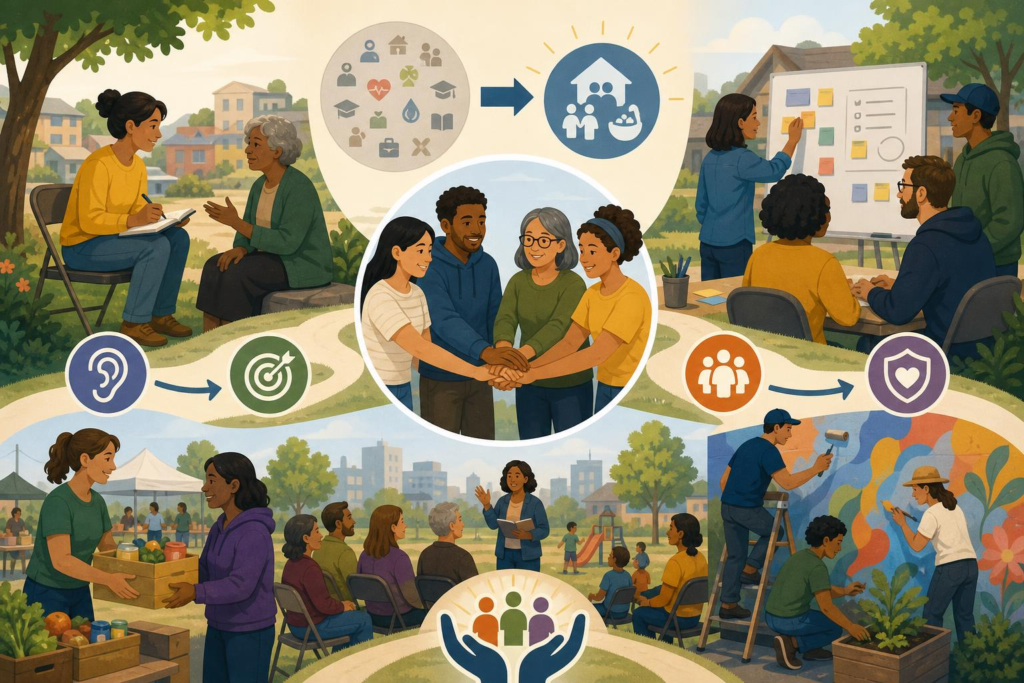
Once the need is clear, write a short plan. Keep it plain and practical. Your plan does not need to be fancy; it needs to be usable by volunteers, ministry leaders, and partners. A good working plan answers five questions: what, who, when, where, and how. Community-engagement sources from Urban Institute repeatedly stress planning with the community, being clear about roles, and keeping participation accessible and respectful. (urban.org)
| Planning step | What to decide | Why it matters |
|---|---|---|
| Need | Choose one specific problem | Prevents scattered effort |
| Audience | Identify who the project serves | Helps you tailor communication and support |
| Scope | Set a realistic size and timeline | Makes the project finishable |
| People | Assign lead roles and helpers | Reduces confusion and burnout |
| Follow-up | Plan one next contact or next step | Builds trust and continuity |
Useful planning question: What is the smallest version of this project that would still genuinely help someone? Example: If your full idea is a monthly clothing drive, the smallest useful version might be a one-day coat collection for families already known by a local school. Short answer: Start smaller, finish stronger.
Recruit a few good helpers and define roles
You do not need a large team to begin. In fact, a small group of dependable people is often better than a crowd with no clear roles. Urban’s guidance on coalition and community design consistently points to the value of involving trusted local partners early, including grassroots groups, service providers, and people who know the community well. (urban.org)
Start with three roles:
- Project lead: keeps the work moving and makes sure decisions are documented.
- Outreach helper: talks with partners, shares updates, and invites participation.
- Logistics helper: tracks supplies, locations, and time-sensitive details.
That is enough to launch many small efforts. As the project grows, add help only where it is needed. Clear responsibility protects volunteers from confusion and protects the people you serve from mixed messages. Urban’s work on volunteer and community engagement also highlights the importance of structure and coordination. (urban.org)
Starter checklist:
- One project lead
- One backup contact
- One local partner
- One simple way to share updates
- One date to review progress
Protect dignity in every step
Respect matters as much as resources. People should never feel singled out, managed, or shamed for accepting help. Community-led guidance from Urban Institute points to centering lived experience, preserving autonomy, and building efforts that reflect the voices of the people most affected. (urban.org)
Practical ways to protect dignity:
- Use neutral, respectful language in flyers and messages.
- Let people opt in rather than being publicly identified whenever possible.
- Avoid making help feel like a test of worthiness.
- Offer choices where you can, even if they are small.
- Keep personal stories private unless someone clearly wants to share.
If your project serves people from different faiths or from no faith, keep the tone welcoming. A good outreach project can reflect your values without requiring everyone to share your beliefs. That kind of respect builds trust in churches, neighborhoods, and civic spaces alike. (urban.org)
Track resources, then follow up
Even a small project benefits from basic tracking. You do not need a complex spreadsheet, but you do need enough visibility to know what came in, what went out, and what still needs attention. Ready.gov’s preparedness resources reinforce the value of organized communication, planning, and action steps; that same discipline helps community outreach stay steady and dependable. (ready.gov)
Track these basics:
- Supplies received
- Supplies distributed
- Volunteer hours
- Partner contacts
- Follow-up dates
Then close the loop. A quick thank-you note, a check-in call, or a short update can make the difference between a one-time action and a trusted ongoing effort. Follow-up is where outreach becomes relationship, and relationship is what keeps community work healthy over time. (upward-mobility.urban.org)
How Ministries of Love can fit into the next step
For readers building outreach through a ministry or faith-rooted network, Ministries of Love can be a useful next stop for practical planning support and community-minded encouragement. If your project is part of a broader ministry effort, a related planning resource such as the community outreach plan may help you organize your next steps without turning a small project into an overwhelming one. If you need a broader preparedness lens for a neighborhood or congregational response, Ready.gov also offers a community preparedness toolkit that can complement local planning. (urban.org)
If your project depends on volunteers, donors, or ministry partners, a simple invitation to get involved may be a natural next step. If readers want to support outreach financially, you can also point them toward cash donation only when that fits the project’s actual needs and no other request would be more appropriate. Keep the ask specific, calm, and transparent. (urban.org)
Need a one-page launch plan? Use this sequence
- Listen: talk with a few community members and local helpers.
- Choose one need: keep the first project narrow.
- Set scope: decide what success will look like.
- Recruit helpers: assign clear roles.
- Protect dignity: make the project respectful and accessible.
- Track resources: keep a simple record of what happens.
- Follow up: close the loop and learn for next time.
Conclusion: start small, stay faithful, and follow through
If you want to start a community outreach project, do not wait for perfect conditions. Begin with listening, choose one need, keep the plan small, and build from there. The strongest outreach efforts are usually not the flashiest; they are the ones that are thoughtful, respectful, and dependable. That is how trust grows, one clear act at a time. (upward-mobility.urban.org)
Next step: pick one person or one neighborhood you already know, and schedule your first listening conversation this week.
Frequently Asked Questions
How do I start a community outreach project with no experience?
Start small and listen first. Choose one local need, ask a few people what would actually help, and build a simple plan before you recruit volunteers.
What is the first step in a community outreach project?
The first step is listening to the community. That helps you avoid guessing and gives you a clearer idea of what problem to address.
How big should a first outreach project be?
It should be small enough to manage well. A first project is usually best when it serves one audience, one need, and one clear outcome.
How do I keep outreach respectful and dignified?
Use respectful language, offer choices when possible, and avoid making people feel judged. Good outreach supports people without putting them on display.
Do I need a large budget to begin?
No, you do not need a large budget to begin. A careful plan, a few helpers, and a focused need can go a long way.
Leave a Reply