
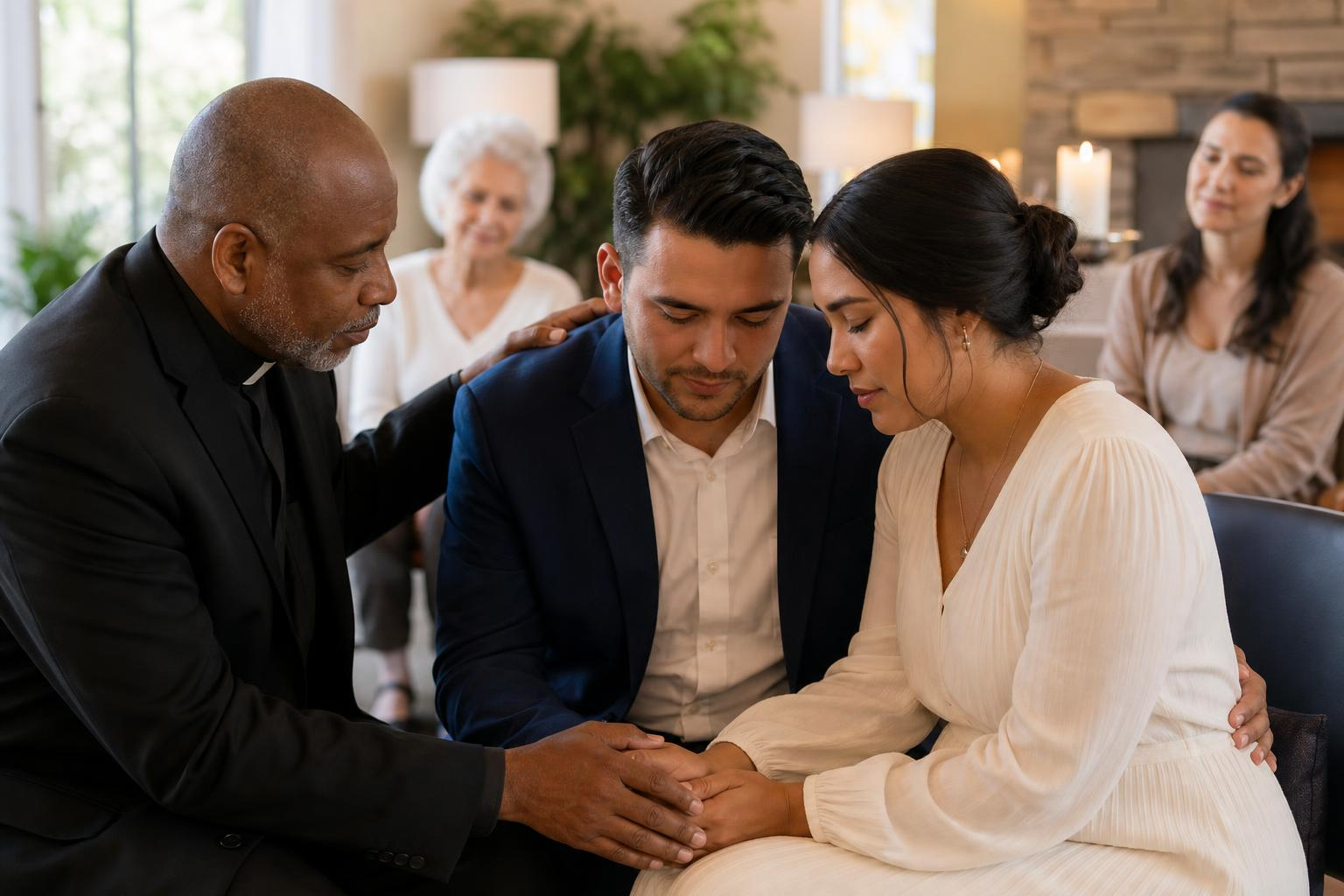
Spiritual support life moments is really about showing up with steadiness, respect, and care when someone is celebrating, grieving, changing, or waiting for what comes next. If you are a minister, volunteer, friend, or family member, the most helpful support is usually not flashy. It is calm presence, thoughtful words, and practical help that fits the moment.
This guide focuses on how to support someone well without overcomplicating it. You will find plain-language guidance for celebrations, transitions, and hard seasons, plus simple ways to listen, pray, or help without taking over. For a broader look at ceremony planning and faith-filled support, you may also want to see the civil wedding ceremony guide and the wedding vows and speeches guide.
What spiritual support looks like in real life
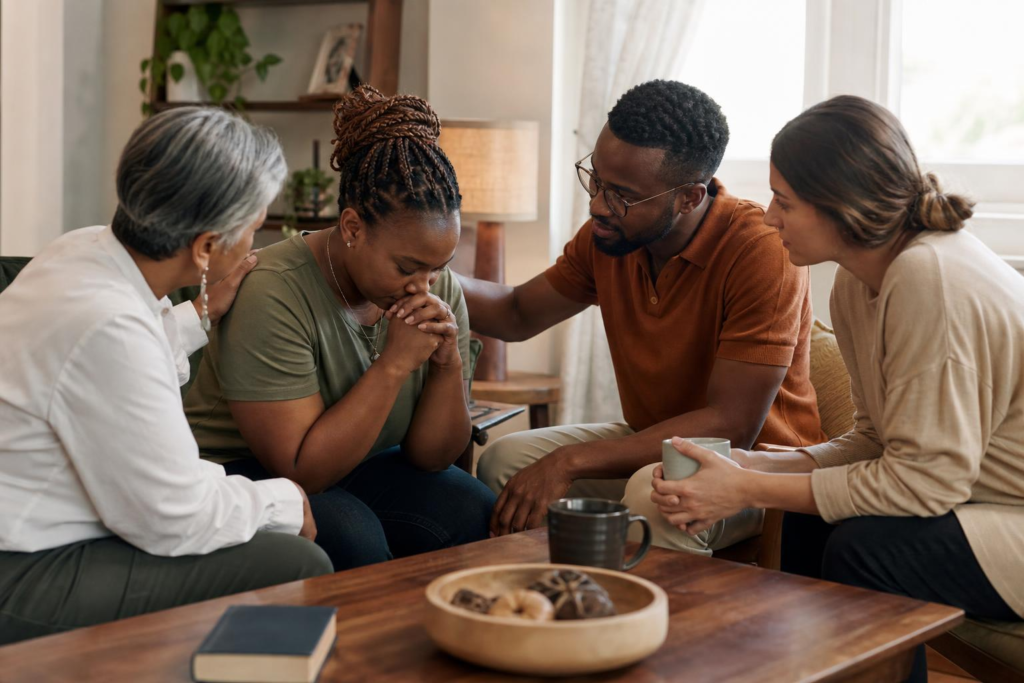
Spiritual support is not one script or one style. It can mean a prayer, a blessing, a listening ear, a meaningful silence, or helping someone carry a practical burden. Public-health guidance on social connection consistently points to the value of supportive relationships, simple check-ins, and feeling heard during stress. (cdc.gov)
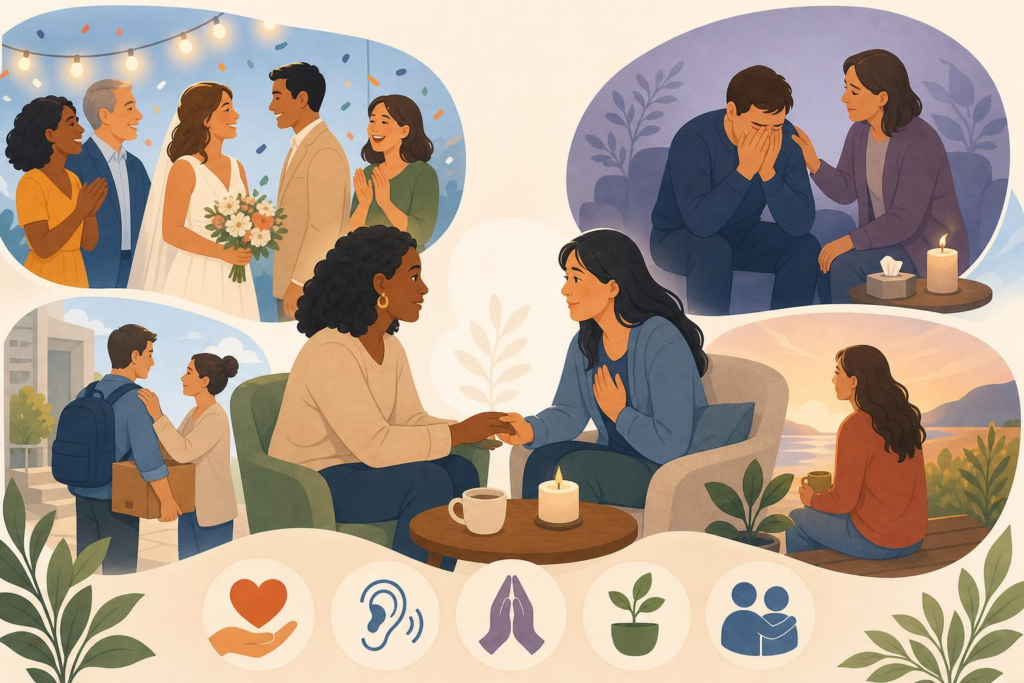
That matters because life moments rarely fit neat categories. A wedding can bring joy and family tension. A transition can bring gratitude and fear. A loss can bring questions of faith alongside exhaustion. Good spiritual care respects that complexity instead of rushing to fix it.
Use this guiding mindset
Ask: What does this person need most right now—presence, prayer, privacy, practical help, or a calm word?
Example: A couple planning a small civil ceremony may want a blessing and a quiet, respectful atmosphere more than a long talk about tradition.
Short answer: Match your support to the moment.
How to offer support without overwhelming the person
When someone is in a meaningful life moment, too many questions can feel like pressure. A better approach is to offer choices that are easy to answer and easy to decline. CDC guidance on supportive conversations emphasizes listening, validation, and simple phrases that help people feel heard. (cdc.gov)
Try these gentle openings
- “I’m glad to be here with you.”
- “Would you like me to listen, pray, or help with something practical?”
- “There’s no wrong way to feel about this.”
- “If you want quiet company, I can do that too.”
For ministers and volunteers, that kind of clarity lowers pressure for everyone. It keeps the focus on care, not performance.
Spiritual support life moments during celebrations
Celebrations still need support. Weddings, blessings, ordinations, baby dedications, anniversaries, and milestone birthdays can stir up gratitude, grief, family history, and expectations all at once. The goal is to honor the joy without ignoring the weight behind it.
What helps during joyful moments
- Keep the blessing specific. Name the occasion, the people, and the hope you have for them.
- Respect the couple or family’s tone. A joyful but simple ceremony may feel more fitting than a highly formal one.
- Protect the moment from noise. Help reduce last-minute pressure, unnecessary commentary, and religious assumptions that do not fit the people involved.
- Make room for different faith backgrounds. Not every guest shares the same beliefs, and not every family wants the same language.
If you are supporting a couple through a civil ceremony, remember that couples often want clarity about the meaning of the day, the tone of the words, and who will speak. A civil ceremony is generally understood as a marriage ceremony without religious rites, but the exact legal and ceremonial requirements vary by location and should be verified locally. That topic is covered in more detail in the broader civil wedding guide. (cdc.gov)
How to support someone in a hard season
When the life moment is painful, spiritual support should get quieter, kinder, and less explanatory. Grief, family strain, illness, loneliness, and major change can all affect a person’s sense of safety and connection. NIH and CDC resources note that coping with stress often improves with support, meaningful relationships, and connection to help when needed. (nih.gov)
Do less talking, more steadying
Helpful: “I’m here. You do not have to carry this alone.”
Less helpful: quick explanations, forced positivity, or spiritual statements that make the person feel blamed for struggling.
Simple care checklist for hard moments
- Check whether they want company.
- Offer one practical task.
- Follow up later, not just on the first day.
- Respect silence.
- Encourage additional support if distress is deep or ongoing.
If someone seems overwhelmed, unable to function, or in crisis, encourage professional support and immediate crisis resources. NIMH and CDC both point people to 988 in the United States for crisis support. This is not a substitute for emergency care when someone is in immediate danger. (nimh.nih.gov)
What to say, what to avoid, and how to stay respectful
Words matter, but tone matters almost as much. In faith-rooted settings especially, people can hear whether you are trying to serve them or manage them. A calm voice, open posture, and honest language often say more than a polished speech.
Helpful language
- “I’m honored to be here.”
- “Tell me what would feel supportive.”
- “I can pray with you if that would be welcome.”
- “You are not alone in this.”
Language to avoid
- Anything that shames grief, fear, or uncertainty.
- Anything that assumes everyone shares the same beliefs.
- Anything that turns a person’s hard moment into a lesson for the room.
That is especially important when supporting couples, ministers, donors, volunteers, or guests from different backgrounds. Respect is not watered-down faith; it is faithful care that makes room for the person in front of you.
Practical support that often means more than advice
People often remember who helped them solve a small problem in a big moment. Bringing water, managing timing, printing a program, or keeping an eye on the children can be more supportive than a long speech. CDC guidance on social connection also notes that small acts of connection can make a meaningful difference. (cdc.gov)
| Need you notice | Support that fits | Why it helps |
|---|---|---|
| They seem nervous before a ceremony | Quiet reassurance, water, and a simple timeline | Reduces pressure and helps them feel grounded |
| They are grieving during a celebration | Acknowledge the mixed emotions without forcing cheerfulness | Makes room for honesty and dignity |
| They are making a major transition | Offer follow-up help after the event | Support continues after the spotlight fades |
| They have limited resources | Focus on meaning, not expense | Affirms that a meaningful moment does not require a costly one |
Planning question: What would feel most meaningful and least stressful for the person you are supporting?
Example: They may want a short prayer, a simple meal afterward, and one trusted friend nearby instead of a crowded reception or a lot of public speaking.
Short answer: Choose calm, fitting support.
How Ministries of Love can fit into this kind of care
Ministries of Love serves couples, ministers, churches, venues, donors, and volunteers with compassionate, practical resources. In a moment like this, that means helping people think clearly about ceremony support, meaningful words, and accessible celebration without making financial strain feel like failure. If someone is planning a civil ceremony, a blessing, or another life milestone, the organization’s broader resources can help them take the next step with steadiness.
For readers who need a next step, the most useful place to start may be get support if they are looking for help, or get involved if they want to serve others. If a reader wants to help make meaningful celebrations more accessible, cash donation may be a practical option where appropriate. Any donation or support program details should be confirmed before use. (nih.gov)
When to pause and ask for more help
Sometimes the kindest support is noticing that your role has limits. If someone’s distress is prolonged, severe, or getting worse, spiritual presence alone may not be enough. Encourage them to reach out to a qualified mental health professional, trusted faith leader, or crisis resource. NIMH and CDC both emphasize that support and professional help can work together when a person is struggling. (nimh.nih.gov)
That does not mean you failed. It means you recognized the difference between companioning someone and trying to carry what should not rest on your shoulders alone.
Conclusion: keep it calm, kind, and honest
At its best, spiritual support life moments is simple: show up, listen well, speak gently, and help in ways that actually fit the person and the moment. Do not overcomplicate it. Most people remember the calm presence, the respectful words, and the practical help far more than any polished speech.
If you are supporting someone now, start small. Offer one clear act of care, one sincere sentence, and one follow-up check-in. That is often enough to make a hard or holy moment feel a little less lonely.
FAQs
- What is spiritual support in a life moment?
- It is caring presence, respectful words, prayer when welcome, and practical help during a celebration, transition, or difficult season.
- How do I support someone without saying the wrong thing?
- Keep your words simple, honest, and kind. Ask what would help most instead of assuming you know the answer.
- What should I do if someone does not want prayer or religious language?
- Respect that boundary immediately. You can still offer warmth, help, and steady presence without using faith language.
- How do I support a couple during a civil ceremony?
- Focus on their wishes for the tone, wording, and flow of the day, and verify any local requirements separately before relying on them.
- When should I encourage extra help?
- Encourage more support when distress feels severe, lasts a long time, or affects safety, daily functioning, or hope.
Frequently Asked Questions
What is spiritual support in a life moment?
It is caring presence, respectful words, prayer when welcome, and practical help during a celebration, transition, or difficult season.
How do I support someone without saying the wrong thing?
Keep your words simple, honest, and kind. Ask what would help most instead of assuming you know the answer.
What should I do if someone does not want prayer or religious language?
Respect that boundary immediately. You can still offer warmth, help, and steady presence without using faith language.
How do I support a couple during a civil ceremony?
Focus on their wishes for the tone, wording, and flow of the day, and verify any local requirements separately before relying on them.
When should I encourage extra help?
Encourage more support when distress feels severe, lasts a long time, or affects safety, daily functioning, or hope.
Leave a Reply