
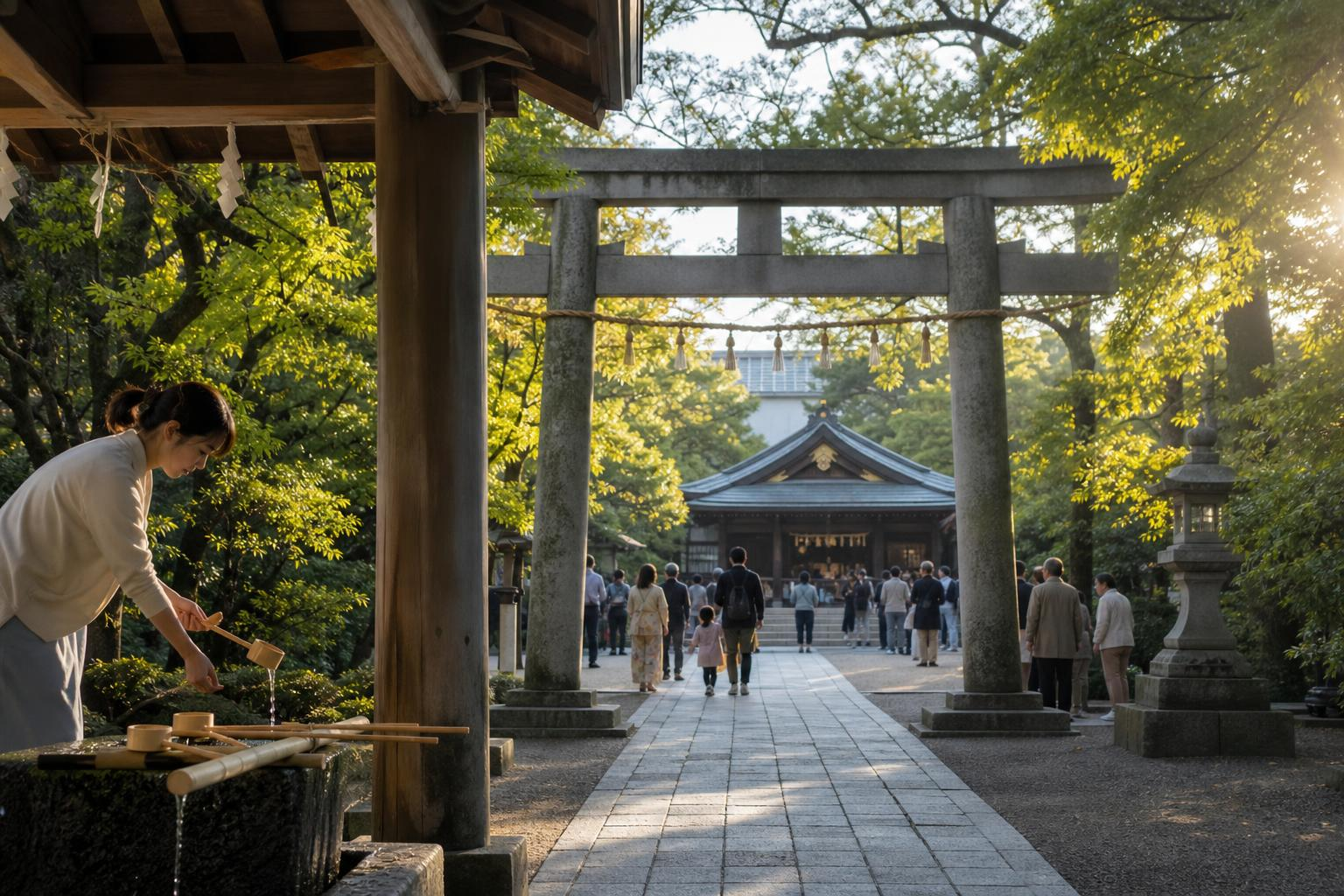
Shinto is often described as a tradition shaped by place, relationship, and care. For readers looking for the phrase Shinto sacred place community, the heart of the tradition is not a single rule or one uniform practice, but a network of local shrines, family practices, seasonal observances, and communal rituals that vary across Japan and in Japanese communities around the world. Academic and interfaith resources describe Shinto as indigenous to Japan, with sacred presence understood in places, nature, shrines, and community life. (pluralism.org)
What Shinto means in everyday life
Shinto is commonly translated as the “way of the kami,” though the word kami does not have a perfect English equivalent. In broad terms, kami may be understood as sacred presence, divine power, or spirit associated with particular places, forces of nature, and shrines. This helps explain why sacredness in Shinto is often tied to a location rather than to a single written creed. (pluralism.org)
People approach Shinto in many ways. Some families keep a household shrine, some visit a neighborhood shrine for seasonal festivals, and some participate mainly at life-cycle events or community ceremonies. Because Shinto is lived in diverse ways, it is best to avoid assuming that one practice represents every Shinto practitioner. (pluralism.org)
Why sacred place matters
In Shinto, place is often experienced as sacred when it is cared for, marked, and approached with respect. Shrines, forests, rivers, waterfalls, and other natural settings may be treated as sites where kami are present or honored. Pluralism Project materials describe torii gates as markers of entry into sacred space and note that ritual acts like handwashing help prepare worshippers to approach the shrine. (pluralism.org)
This emphasis on place can also extend beyond famous shrines. Academic resources describe shrine life in Japan and in diaspora communities as connected to daily routines, neighborhood identity, and gatherings that help people feel rooted in a shared space. That does not mean every place is equally sacred in the same way; rather, sacredness is often understood through relationship, use, and reverent care. (pluralism.org)
Purity, purification, and a sense of renewal
Purification is a central theme in Shinto practice. The Pluralism Project describes rites such as harai, in which a priest uses a wand with paper streamers, and misogi, in which participants wash with water. These practices are presented as ways of sweeping away impurity or misfortune and restoring clarity and harmony. (pluralism.org)
Importantly, purification in Shinto should not be reduced to moral judgment. In many descriptions, it is about preparing for encounter, resetting a space, or entering a moment of attention. That makes the theme especially meaningful for communities seeking calm, respect, and a shared rhythm of care. (pluralism.org)
Community as a living part of Shinto
Shinto is not only about individual devotion. It is also sustained through community festivals, shrine upkeep, seasonal gatherings, and shared offerings. Pluralism Project materials note that shrine life can involve community coordination and public ceremonies, including purification rites for buildings, new construction, and other beginnings. (pluralism.org)
In this way, community is not an accessory to Shinto; it is part of how sacred place is maintained and experienced. People gather, participate, and support the shrine or sacred site together, reinforcing the sense that spiritual life is embedded in ordinary communal care. (pluralism.org)
A respectful way to learn about Shinto
If you are introducing Shinto in a church, classroom, interfaith group, or community setting, a respectful starting point is to describe it in its own terms and avoid exoticized language. Use simple explanations, name the diversity of practice, and acknowledge that Shinto is deeply connected to Japanese history, culture, and place. (pluralism.org)
For a concise academic overview, you can begin with these verified resources:
Practical next steps for learners and community leaders
- Read one academic overview of Shinto before teaching or sharing about it publicly.
- Use careful language such as “some Shinto practitioners” instead of universal claims.
- When discussing shrine life, note the role of place, ritual purity, and community participation.
- Invite questions that encourage curiosity rather than stereotype.
Planning question
How might you introduce Shinto in a way that honors sacred place and community without assuming every practitioner follows the same customs?
Example: You might say that Shinto includes a variety of shrine-based and household practices, and then share one or two respectful examples from trusted academic sources.
Short answer: Teach with nuance and respect.
Conclusion
Shinto’s sacred places, purification practices, and communal life offer a rich example of how spirituality can be grounded in the care of a location and the relationships around it. When introduced thoughtfully, it can help readers understand that sacredness is often lived through attention, renewal, and community rather than through spectacle or assumptions.
Frequently Asked Questions
What is the main idea behind Shinto sacred place community?
It refers to the way Shinto connects sacredness with places, purification practices, and shared community life, especially around shrines and local observances.
Does Shinto have one uniform set of practices?
No. Shinto is internally diverse, and practices can differ by region, shrine, family, and community context.
Why is purification important in Shinto?
Purification is often understood as preparation, renewal, and the clearing of impurity or misfortune before entering a sacred space or beginning a ritual.
Are shrines the only sacred places in Shinto?
No. Academic sources describe sacred presence in shrines, natural settings, and other places that are approached with reverence and care.
Leave a Reply