
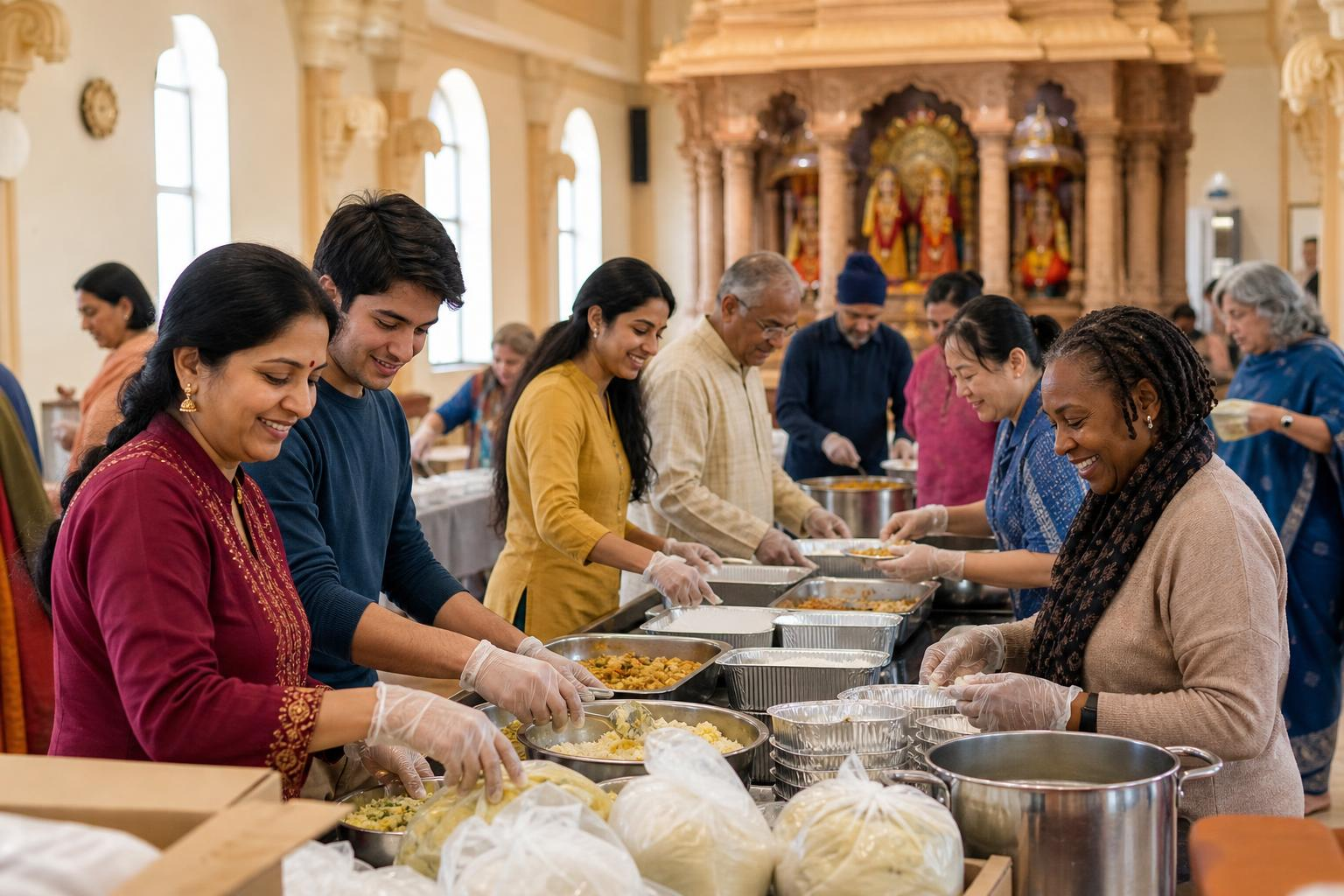
Seva selfless service is one of the most widely recognized Hindu ideas about serving others with humility, care, and no expectation of reward. In plain terms, seva means service offered for the good of others, often as part of spiritual practice, community duty, or devotion. But Hinduism is internally diverse, so people may understand and practice seva in different ways depending on lineage, region, temple, family, and personal conviction. This guide explains the idea clearly, shows how it differs from general charity, and offers practical ways to approach it respectfully. The broader Hindu context and its diversity are well documented by the Pluralism Project and the Hindu American Foundation. (pluralism.org)
What seva means in everyday life
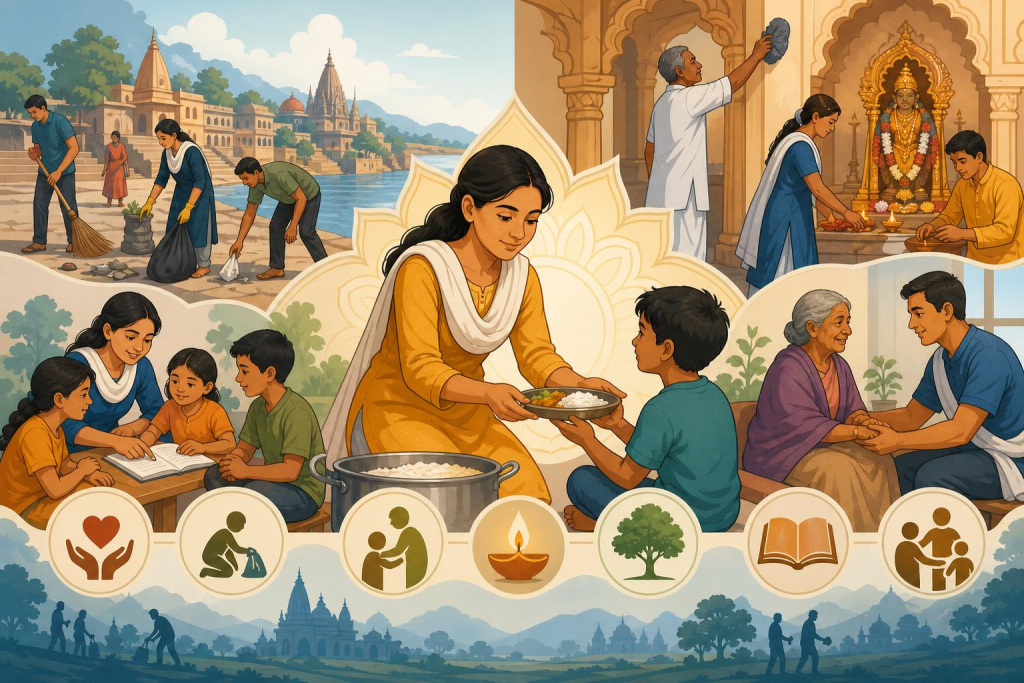
Seva is usually understood as selfless service: giving time, skill, labor, attention, or resources in a way that is meant to benefit others rather than enhance the giver’s status. In Hindu communities, that service may be expressed through temple volunteering, feeding guests, caring for elders, helping at festivals, supporting disaster relief, teaching, or public service. The important point is not just that good is done, but that it is done with a spirit of humility and without ego-centered recognition. (pluralism.org)
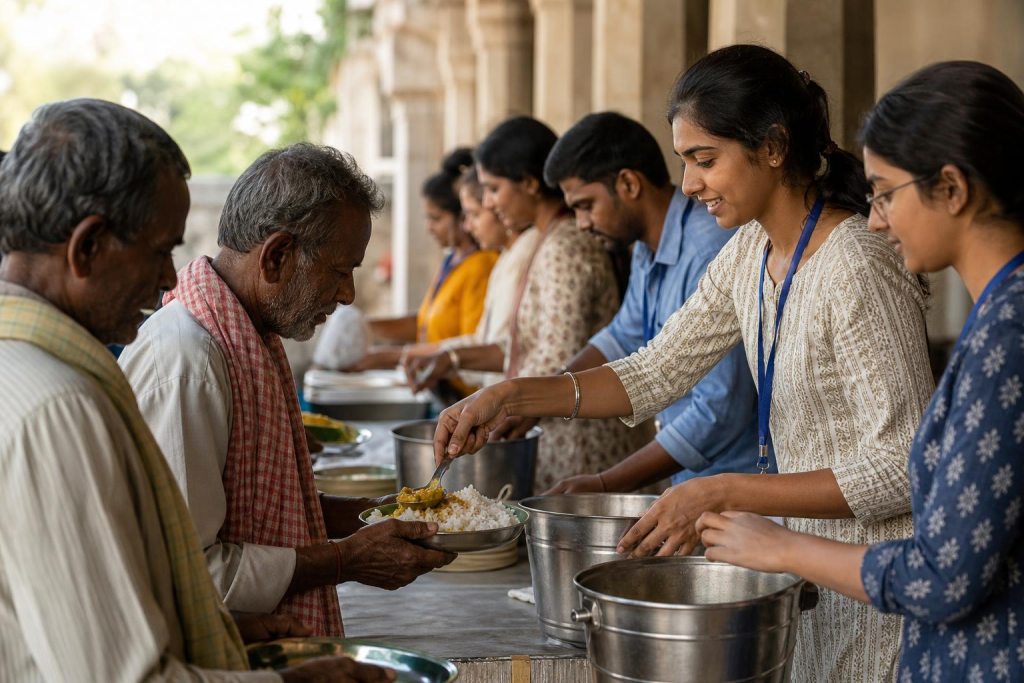
That said, not every Hindu community emphasizes seva in exactly the same way. Some groups frame it as devotion, some as dharma, some as karma yoga, and some as a practical form of community responsibility. The shared thread is the belief that service can be spiritually meaningful, not merely socially useful. (hinduamerican.org)
Seva selfless service and the Hindu view of duty
Many Hindus connect seva with dharma, the idea of right conduct or responsibility, and with karma yoga, a path of disciplined action. In that framework, service is not only something kind to do when convenient; it can be part of a faithful life. The Hindu American Foundation describes Hindu values in terms that include selflessness, truthfulness, kindness, and collaboration, which helps explain why service is often treated as a spiritual discipline rather than a side activity. (hinduamerican.org)
This helps distinguish seva from ordinary volunteering. Both can be generous, but seva usually carries an added sense of inward intention. A person may ask: Am I serving because it is useful, because it is expected, because it is part of worship, or because it helps me be less self-centered? Different Hindus will answer that differently, and that diversity should be respected. (pluralism.org)
How seva differs from charity, volunteering, and praise
Seva can overlap with charity and volunteering, but it is not identical to either. Charity often emphasizes giving money or goods. Volunteering often emphasizes offering time and labor. Seva may include both, but it usually adds an inner discipline: service offered with humility, without attachment to applause, and often with the intention of honoring God, community, or the sacredness of human life. (pluralism.org)
Here is a simple way to compare the ideas in everyday terms. This is a qualitative guide, not a hard rule, because communities differ. (pluralism.org)
| Practice | Main emphasis | Common example | What makes it distinct |
|---|---|---|---|
| Charity | Giving resources | Donating food or money | Focuses on the gift itself |
| Volunteering | Offering time or skill | Helping at a community event | Focuses on useful service |
| Seva | Selfless service with intention | Serving meals at a temple or relief site | Focuses on humility, devotion, and benefit to others |
For readers who want a broader overview of Hindu belief and practice, the Pluralism Project’s Hinduism resource is a strong starting point. It helps place seva within the wider tradition without pretending Hinduism is one uniform thing. (pluralism.org)
How families and communities practice seva
In practice, seva often shows up in ordinary, dependable acts. A family might cook for neighbors. A congregation might organize food distribution. A student group might host a service day. A temple might coordinate meal service, educational support, or disaster relief. The Pluralism Project notes service-oriented activity in Hindu spaces and on college campuses, including opportunities that combine learning with community service. (pluralism.org)
That matters because seva is not only for large institutions or highly religious people. In many settings, it is a habit of attention: noticing need, stepping in where you can, and doing useful work without needing praise. It can be quiet and small. It can also be organized and public. Both can be faithful expressions, depending on the tradition and context. (hinduamerican.org)
Simple seva-minded checklist
- Notice a real need before offering help.
- Choose a task you can complete well.
- Serve without expecting recognition.
- Respect the customs of the community you are helping.
- Follow through more than you announce.
Planning a service project with respect
If you are planning a seva project for a temple, interfaith group, campus, wedding community, or neighborhood effort, start with humility and clarity. Ask what the community actually needs, who is already doing the work, and what cultural or religious norms should be observed. The Pluralism Project’s research guidance emphasizes respectful observation, listening, and learning from communities on their own terms. That same approach fits well when planning service. (pluralism.org)
What does your community actually need right now?
Example: A small temple might not need a big publicity campaign; it may need people to set up chairs, cook, clean, translate, or drive elders to events. Listening first prevents wasted effort and makes the service more genuinely helpful.
Short answer: Ask before acting.
If you are organizing service in a mixed-faith setting, explain the goal plainly and avoid using religious language in a way that pressures people to agree with beliefs they do not share. Good seva can be welcoming without being vague, and purposeful without being pushy. (pluralism.org)
What outsiders should know about seva
For non-Hindus, the safest approach is to treat seva as a concept to learn from, not a slogan to borrow casually. If you are invited to a Hindu event, ask how service is understood there. If you are writing, teaching, or speaking about Hindu traditions, avoid turning seva into a generic synonym for “being nice.” It is richer than that, and in many communities it is tied to ethics, devotion, duty, and identity. (hinduamerican.org)
At the same time, seva can be a bridge. It reminds people across faiths that dignity is often expressed through practical care. That is one reason Hindu organizations and scholars often present seva as something that can strengthen society, not just the religious life of one group. (pluralism.org)
For readers who want to explore Hindu diversity more broadly, the Hindu American Foundation and the Pluralism Project both offer useful entry points. They are especially helpful when you want a view that is rooted in Hindu community voices and scholarly context. (hinduamerican.org)
Where Ministries of Love fits in
Seva resonates with Ministries of Love because it reflects a simple truth: meaningful care is often practical care. Whether a community is supporting couples, ministers, volunteers, or neighbors in need, the work is strongest when it is done with dignity, steadiness, and compassion. If your next step is community support rather than planning information, you can begin here: get support, or if you want to help others, explore get involved. For those who are able and wish to contribute materially, cash donation is another possible next step. Those links are simply starting points; any specific program should be verified before use.
For readers who are also preparing a ceremony, the broader guides on civil wedding ceremony basics and wedding vows and speeches may be helpful for planning with clarity and care. (pluralism.org)
Seva selfless service: a steady way to think about good work
At its best, seva selfless service is about moving through the world with less ego and more usefulness. For many Hindus, that is not a decorative idea; it is a daily discipline. For outsiders, it is a reminder that service can be spiritually serious without becoming self-important. And for communities of every faith and no faith, it offers a practical question worth asking: how can we help in a way that truly lifts someone else? (hinduamerican.org)
If you remember nothing else, remember this: seva is not about performing goodness for display. It is about doing needed work with care, humility, and respect. That is a lesson almost anyone can understand, even if they do not share the same beliefs. (pluralism.org)
Frequently Asked Questions
What does seva mean in Hinduism?
Seva means selfless service. In many Hindu communities, it refers to helping others with humility and without expecting praise or reward.
Is seva the same as volunteering?
Not exactly. Volunteering is about offering time or skill, while seva usually adds a spiritual intention of humility, duty, or devotion.
Do all Hindus understand seva the same way?
No, they do not. Hindu traditions are diverse, so seva may be framed differently depending on community, lineage, region, or personal belief.
How is seva different from charity?
Charity usually emphasizes giving money or goods, while seva often emphasizes the spirit behind the act as well as the helpful action itself.
Can someone outside Hinduism practice seva?
Yes, many people can practice service in a seva-like spirit. It is best to do so respectfully and without claiming authority over Hindu tradition.
Leave a Reply