

Love after disagreement is possible. If you are trying to practice kind disagreement, the goal is not to pretend you agree. It is to tell the truth without contempt, protect dignity, and know when a conversation needs to stop. Healthy relationships can include hard topics, but research from the APA notes that destructive patterns like criticism, contempt, and withdrawal can damage relationships, while constructive listening and kindness help couples work through disagreements. (apa.org)
This guide is for couples, ministers, family members, and community helpers who want a steadier way to disagree. It also fits faith-rooted ministry life, where people often carry real convictions and still want to love each other well. We will keep the focus practical: how to speak honestly, how to set limits, and how to recognize when dialogue is unsafe. For a broader foundation on civil and respectful conversation, you may also want the Ministries of Love guides on civil wedding ceremony basics and vows and speeches.

What kind disagreement really means
Kind disagreement means you can say, “I see it differently,” without saying, “You are foolish for seeing it that way.” It keeps the conversation on the issue, not on attacking the person. That matters because relationship research consistently warns against contempt, name-calling, hostility, and withdrawing from the discussion as patterns that can harm connection. (apa.org)
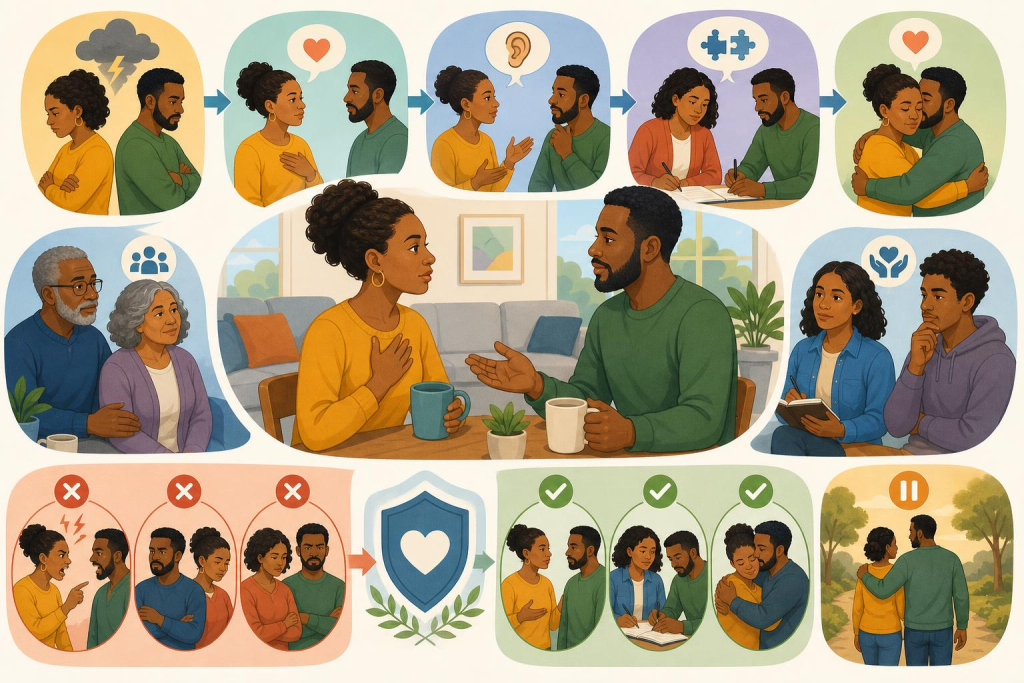
In plain terms, kind disagreement does three things at once:
- Names the truth — you do not fake agreement.
- Protects dignity — you do not belittle, mock, or shame.
- Preserves relationship — when possible, you keep the door open for future conversation. (greatergood.berkeley.edu)
How to disagree honestly without contempt
Honesty does not require sharpness. The APA’s relationship guidance emphasizes that difficult topics should be discussed kindly, and that constructive strategies like listening and understanding the other person’s feelings are healthier than yelling or personal criticism. (apa.org)
Try this simple pattern
- Name your view: “I do not see it that way.”
- Name your reason: “I’m concerned about how this affects the family.”
- Name your respect: “I still want to hear your perspective.”
- Name the next step: “Can we talk again after dinner?”
This approach works because it separates the person from the disagreement. It says, in effect, “I can oppose this idea and still value you.” That distinction is especially important in marriages, ministry teams, and church communities, where people often need to stay connected even when they do not reach agreement. (apa.org)
Questions to ask before the conversation starts
Before you begin, it helps to ask a few grounding questions. These are not tricks; they are tools for keeping the talk human.
1. What is the real issue?
Example: “We are talking about money, but underneath that I think we are really talking about fear, fairness, and being heard.”
Short answer: Find the deeper concern.
2. What outcome do I actually want?
Example: “I do not need to win this argument. I need us to understand each other and decide what we can live with.”
Short answer: Aim for understanding.
3. Is this a good time to talk?
Example: “We are both tired and irritated, so this may not be the best moment for a serious decision.”
Short answer: Timing matters.
The APA notes that when people are very upset, it may not be a good time to discuss the issue, and a peaceful pause can help. That is not avoidance; it is wise pacing. (apa.org)
A helpful comparison: constructive vs. harmful disagreement
| Constructive choice | Harmful pattern | Why it matters |
|---|---|---|
| Speak directly and respectfully | Criticism, sarcasm, or name-calling | Protects dignity and lowers defensiveness (apa.org) |
| Listen to understand | Interrupting or shutting down | Keeps the conversation from becoming a power struggle (apa.org) |
| Take a pause when flooded | Pressing on while angry | Helps people think clearly and avoid harm (apa.org) |
| Set a boundary if needed | Forcing continued contact in unsafe conditions | Protects safety when dialogue is not possible (apa.org) |
The point of this table is simple: disagreement is not the problem by itself. The way we handle it is what either strengthens trust or wears it down. (apa.org)
How to set boundaries without shutting people out
Boundaries are not a punishment. They are a way of saying, “I am willing to stay in relationship, but not at the cost of my well-being.” That may mean pausing a talk, limiting the topic, or choosing written communication for a while. APA resources on relationships and violence make clear that harmful behaviors, threats, manipulation, and abuse are not acceptable and require safety to come first. (dictionary.apa.org)
Boundary checklist
- State what behavior you will not stay for.
- Say what you will do instead.
- Keep the tone calm and brief.
- Follow through consistently.
Example: “I want to keep talking about this, but I will not continue if we start insulting each other. If that happens, I’m going to step away and come back later.”
Short answer: Boundaries protect connection.
If you are in a church, ministry, or family setting, this can feel awkward at first. Still, clear limits often make future conversation safer, not colder. They give everyone a shared frame for what respectful dialogue looks like. (apa.org)
When dialogue is unsafe and you should stop
Not every disagreement is a healthy conversation waiting to happen. Some situations are unsafe, manipulative, or abusive. The APA is direct that violence, threats, coercive control, and verbal abuse are not acceptable in relationships. (dictionary.apa.org)
Stop the conversation and get help if any of the following are true:
- Someone is threatening harm.
- There is ongoing humiliation, intimidation, or coercion.
- You feel afraid to speak honestly.
- The other person ignores every boundary you set.
- The conflict is being used to isolate, control, or punish you. (dictionary.apa.org)
In those cases, kindness does not mean continued access. Sometimes the most loving move is distance, support, and outside help. If you need a next step, Ministries of Love’s Get Support page is a reasonable place to look for practical ministry-oriented help. For state-specific officiant or marriage-law questions, the internal starting point is OrdainedPro Maps, with human review required before any legal or jurisdiction-specific use.
How ministries and community helpers can model kind disagreement
Churches, couples’ leaders, volunteers, and donors often set the tone for how disagreement feels in a community. A calm, truthful, respectful style can make people feel safer bringing concerns forward. Greater Good’s empathy resources emphasize understanding another person’s perspective as a key part of feeling heard and expressing pain without blame. (greatergood.berkeley.edu)
That means leaders can help by doing a few simple things:
- Model measured language instead of public shaming.
- Invite clarification before correction.
- Separate values from personality so disagreement stays about the issue.
- Normalize repair after conflict.
- Refer out when the situation involves abuse, coercion, or persistent fear. (dictionary.apa.org)
For ministries of love and practical wedding support, this is one more way to serve people well: not by pretending every couple agrees on everything, but by helping them communicate with honesty, dignity, and care. That same spirit also fits community outreach and volunteer work. If you want to help make meaningful celebrations more accessible, a next step is Get Involved. If your interest is giving, Cash Donation may be a suitable option to review. Any program details, eligibility, or availability should be confirmed on the live site before use.
What to do next if you want healthier conversations
If you are trying to practice kind disagreement this week, keep the first step small. Choose one conversation, one boundary, or one sentence you can say more gently. The aim is progress, not perfection. The APA’s relationship guidance consistently points toward constructive communication, understanding, and timely pauses when emotions run high. (apa.org)
A simple plan:
- Pick one topic you need to discuss.
- Decide the main point in one sentence.
- Choose a respectful time and place.
- Use a boundary if the talk turns unsafe.
- Return later only if it is genuinely workable.
If you are engaged, married, serving in ministry, or helping couples in your community, remember this: disagreement is not failure. What matters is whether you can stay truthful, kind, and safe while you work through it.
Frequently Asked Questions
What does kind disagreement mean in a relationship?
Kind disagreement means you tell the truth without mocking, shaming, or belittling the other person. It lets you hold your view while still protecting the relationship and the other person’s dignity.
How do I disagree without sounding rude?
Start with your view, give a brief reason, and use calm language. A respectful tone, clear words, and a willingness to listen usually matter more than finding a perfect script.
Is it okay to take a break during an argument?
Yes, taking a break is often wise when emotions are running too high. A short pause can help both people think clearly and return to the conversation more safely.
When is disagreement not safe anymore?
Disagreement is not safe when there are threats, coercion, intimidation, humiliation, or abuse. In those cases, stop the conversation and get outside support.
How can a couple stay close if they do not agree?
A couple can stay close by separating the issue from the person, listening to understand, and repairing after conflict. Shared respect matters more than pretending every difference is solved.
Leave a Reply