
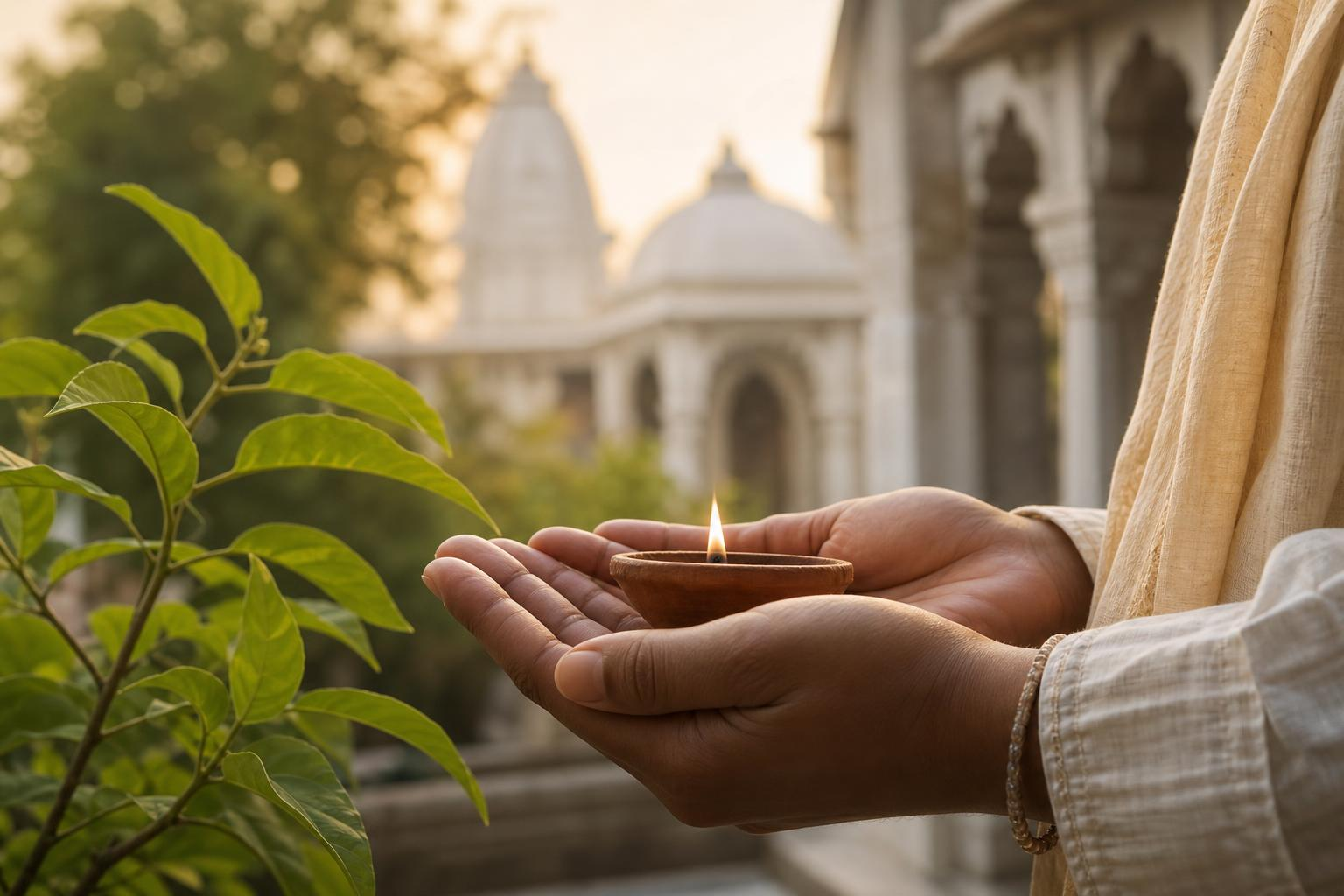
Jain compassion and nonviolence is a way of living that asks a person to reduce harm, practice self-discipline, and treat every living being with care. In Jain traditions, this commitment is often described through ahimsa, or nonviolence, and it can shape food choices, work, speech, spiritual practice, and how people relate to animals and the natural world. Jains are not all the same, though. Practice varies by family, region, diaspora setting, and personal conviction, so the wisest approach is to listen first and avoid assumptions. (pluralism.org)
This guide offers a respectful, practical overview for anyone who wants to understand Jain values without flattening them into a trend or slogan. If you want a broader religious overview, you can also begin with the Pluralism Project’s Jainism overview. (pluralism.org)
What Jain compassion and nonviolence means
At its core, Jain ethics center on minimizing harm to living beings. That sounds simple, but it reaches into many ordinary decisions: what one eats, how one speaks, the professions one chooses, and how carefully one moves through the world. The Pluralism Project describes Jainism as a tradition with deep ethical and devotional life, and it also notes the presence of Jain communities in the United States, where practice may look different from place to place. (pluralism.org)
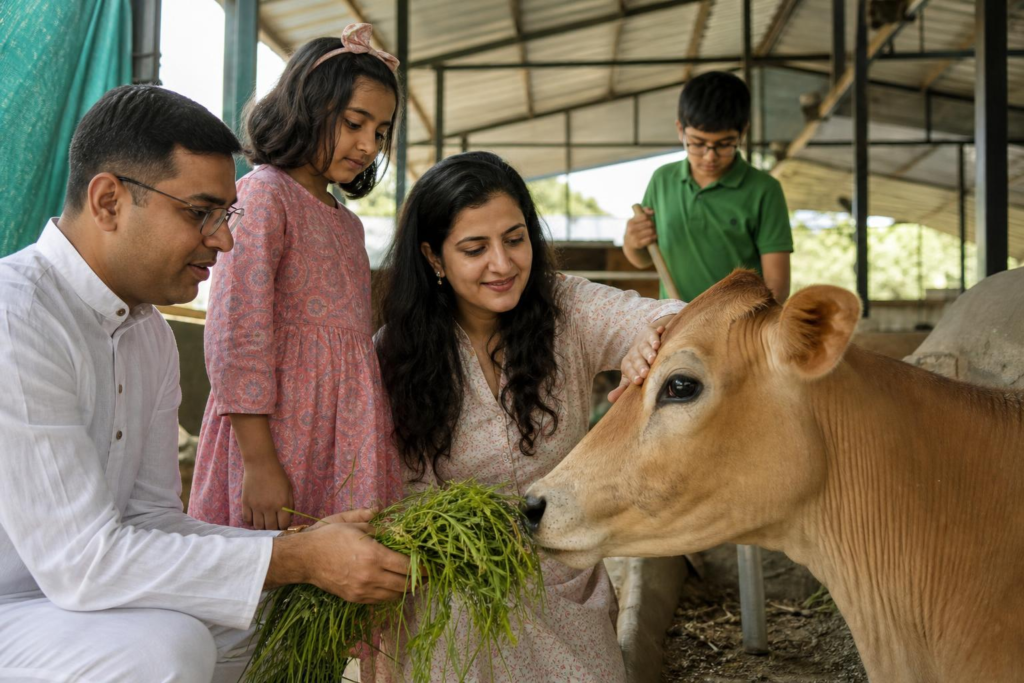
In plain language, Jain compassion is not just feeling kind. It is a disciplined effort to act with restraint, humility, and awareness of consequences. For many Jains, compassion includes animals, insects, plants, and even small forms of life that other people may not think about day to day. That broad concern for life is one reason Jain teaching is often associated with careful eating and a strong respect for all beings. (pluralism.org)
How ahimsa shapes daily life
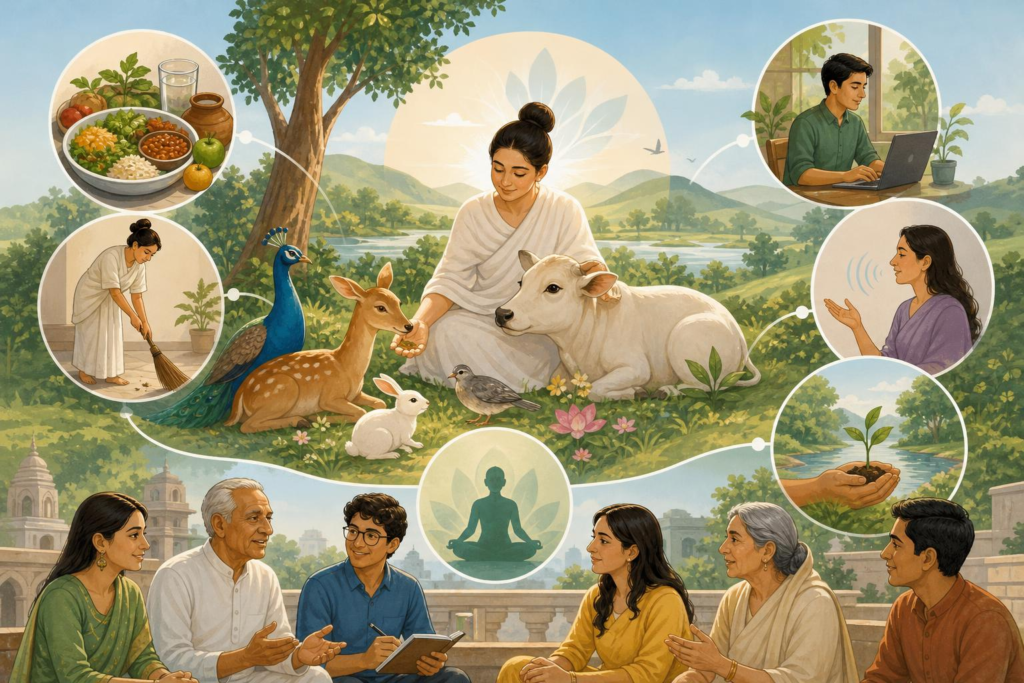
Ahimsa is often translated as nonviolence, but that translation is only a starting point. In many Jain communities, the idea extends beyond avoiding physical harm. It can include avoiding harsh words, careless habits, and unnecessary waste. This is one reason Jain ethics can feel very concrete in everyday life rather than abstract or purely philosophical. (pluralism.org)
Common everyday expressions may include:
- choosing vegetarian or more restrictive diets, depending on the person or sect;
- being mindful about work that could harm living beings;
- practicing patience in speech and conflict;
- showing care for the environment and the creatures that share it.
Important caution: not every Jain household follows the same dietary rules or ritual habits, and outside observers should not treat one pattern as universal. If you are planning an event, a shared meal, or a religiously sensitive conversation, ask directly and respectfully what is appropriate. (pluralism.org)
Jain compassion and nonviolence in worship and community
Jain practice often includes temple-centered devotion, study, fasting or restraint in some forms, and observance periods that encourage reflection and repentance. The Pluralism Project’s overview points to the diversity of Jain life in America, including the development of community centers and temples that support religious learning and fellowship. (pluralism.org)
Community life matters because Jain ethics are not just private ideals. They are shared practices, taught across generations and adapted to new settings. In the diaspora, families may balance tradition with work schedules, school calendars, and local food options. That balancing act is real, and it deserves respect rather than judgment. (pluralism.org)
| Situation | Respectful approach | What to avoid |
|---|---|---|
| Food at an event | Ask about ingredients, preparation, and cross-contact. | Assuming vegetarian food is always enough. |
| Religious language | Use the terms a person uses for their own practice. | Collapsing Jainism into Hinduism or another faith. |
| Questions about beliefs | Invite explanation in the person’s own words. | Treating one Jain perspective as the only Jain perspective. |
| Planning a ceremony or gathering | Confirm what matters locally and personally. | Assuming every temple, family, or region observes the same rules. |
What to know if you are planning around Jain values
If you are a couple, officiant, venue, or volunteer working with a Jain family, the safest path is straightforward: ask early, write things down, and confirm the details before money is spent or invitations go out. For example, food service may need extra care, décor may need to avoid certain symbols or materials, and the ceremony itself may need a quiet, respectful tone that fits the family’s practice.
Planning question: What matters most to your family or guest of honor in this celebration? Example: We are hoping for a ceremony that feels serene, family-centered, and careful about food choices, since a few relatives follow Jain dietary practices. Short answer: Ask early and plan gently.
If you are comparing a Jain-informed gathering with a civil or religious ceremony, it can help to remember that the ceremony’s meaning comes from the people involved, not from how expensive it is. A thoughtful, modest event can be deeply honorable. If you are also researching civil wedding basics, our broader guide on civil wedding ceremony planning may help you think through structure, timing, and local verification steps. (pluralism.org)
Common misunderstandings to avoid
Because Jainism is sometimes discussed only briefly in general religion articles, it gets misunderstood easily. The most common mistake is to treat it as a wellness trend, a diet label, or simply “the nonviolent religion.” That kind of shorthand misses the depth of Jain philosophy, devotion, and lived community. Jain teachings are not a shortcut for being trendy; they are part of a serious religious tradition. (pluralism.org)
Another mistake is to assume that all Jain people live exactly the same way. Some are highly observant in one area and flexible in another. Some families follow strict food rules, while others adapt more readily to life in schools, hospitals, travel, or mixed-faith households. Respecting that range is part of respecting the tradition itself. (pluralism.org)
How Ministry-minded communities can respond with care
Faith-rooted ministries that serve couples and families can honor Jain guests by making room for conscience, food needs, and religious difference without making anyone feel singled out. That may mean offering ingredient transparency, giving families space to explain preferences, or simply avoiding rushed assumptions. Compassion is often communicated through small acts of listening.
At Ministries of Love, that kind of hospitality fits our wider commitment to making meaningful celebrations more accessible and respectful. When appropriate, we encourage couples and community helpers to ask for support early rather than waiting until a problem becomes expensive or stressful. If you are looking for a practical next step, our support page may be useful for planning conversations and care-centered help. If you want to serve others, you can also explore ways to get involved. (pluralism.org)
Quick respect checklist
- Ask how the family describes its own tradition.
- Confirm food, ceremony, and seating preferences early.
- Avoid lumping Jainism into another religion.
- Keep language warm, plain, and non-assumptive.
- Review any local or jurisdiction-specific details before publishing or planning.
When to ask for human review
Some topics should always be checked by a person who knows the local community, the setting, or the law. That includes officiant authority, marriage-law questions, nonprofit or tax language, donation handling, accessibility, pricing, inventory, vendor claims, and any state-specific requirements. This article offers cultural guidance, not legal or financial advice, and it should not be treated as a substitute for local verification. (pluralism.org)
If your work touches marriage paperwork or officiant preparation, a cautious internal starting point is OrdainedPro Maps, but any legal claim still needs primary-source review before publication. That is especially important when states, counties, or municipalities may have different rules. (pluralism.org)
Conclusion
Jain compassion and nonviolence ask a person to live carefully, not casually. That care shows up in food, speech, worship, community, and the everyday choice to reduce harm. If you remember one thing, let it be this: the most respectful response is to listen closely, ask plainly, and avoid turning a deep faith into a stereotype. When you do that, you make more room for real understanding, and for real dignity too. (pluralism.org)
Frequently Asked Questions
What does Jain compassion and nonviolence mean in simple terms?
It means trying to reduce harm in thought, speech, and action. In Jain life, that often reaches into food, work, and everyday conduct.
Is Jain nonviolence just about not hurting people?
No, it usually extends beyond people. Many Jains also consider animals, insects, plants, and other living beings in their ethical choices.
Do all Jains follow the same rules?
No, they do not. Jain practice varies by family, sect, region, and personal commitment, so it is best to ask rather than assume.
What should I ask before planning food for a Jain guest or couple?
Ask about ingredients, preparation methods, and cross-contact. Some guests may also have preferences about root vegetables, alcohol, or shared serving practices.
Can I treat Jainism like a wellness philosophy?
No, that would flatten a serious religion. Jainism is a deep religious tradition with philosophy, ritual, community, and a long history.
Leave a Reply