
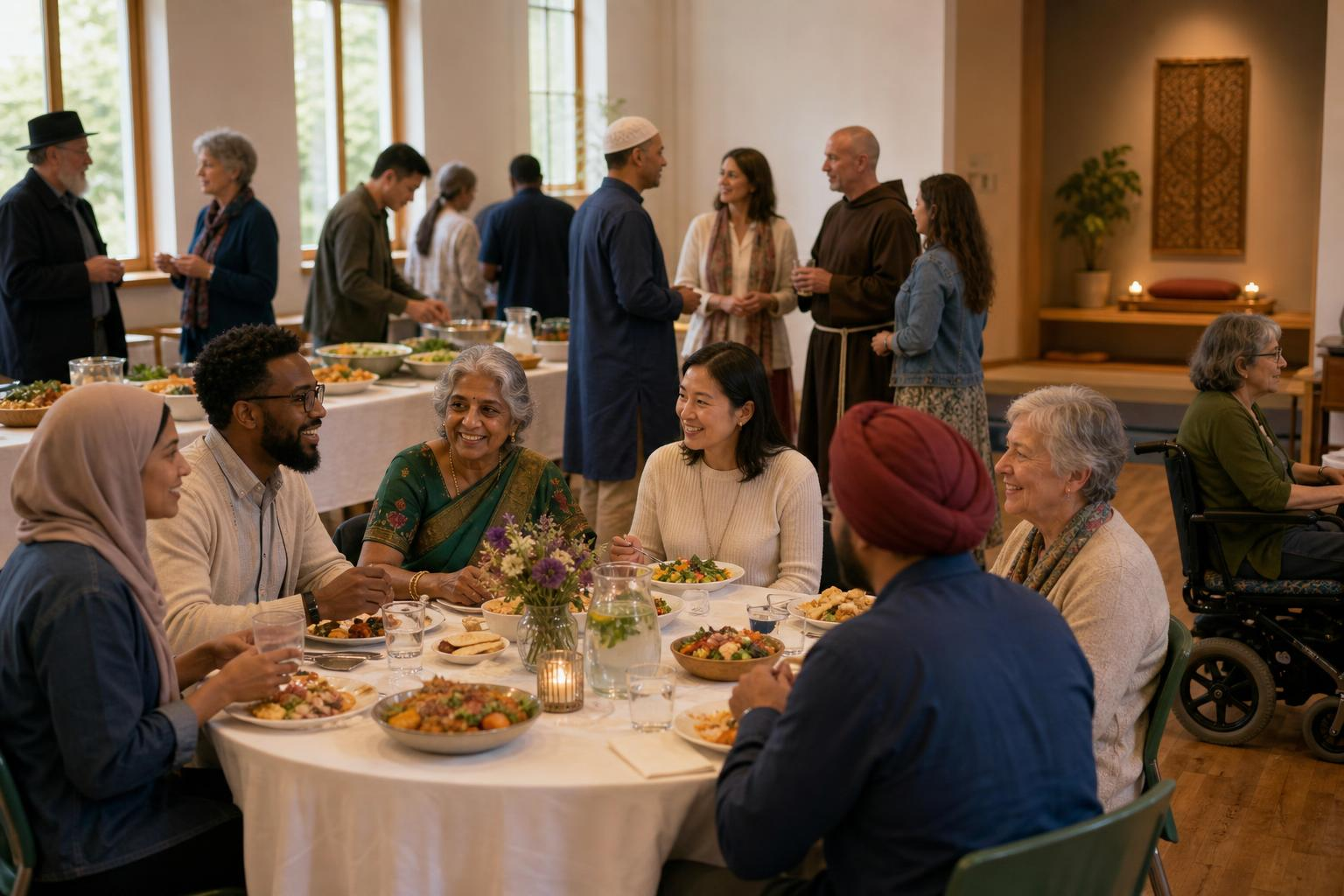
Interfaith hospitality is the practice of welcoming guests across cultures and faiths with care, curiosity, and respect. In plain terms: ask before you assume, plan for different needs, and make space for people to participate without pressure. That usually means thoughtful food choices, a quiet prayer or reflection space, clear guidance about clothing and alcohol, accessible seating and restrooms, and scheduling that avoids obvious conflicts when you can. This guide gives you a practical way to do that without overcomplicating it. It also notes where local, religious, or venue-specific details should be checked before you finalize plans. (studentlife.mit.edu)
What interfaith hospitality really means
At its heart, interfaith hospitality means creating a setting where guests do not have to guess whether they belong. You are not trying to flatten everyone into one tradition or make every custom the same. You are simply removing avoidable barriers so people can eat, sit, pray, speak, and celebrate with dignity. Organizations that work in interfaith settings repeatedly emphasize the same idea: hospitality gets better when hosts make room for difference instead of expecting guests to adapt silently. (uri.org)
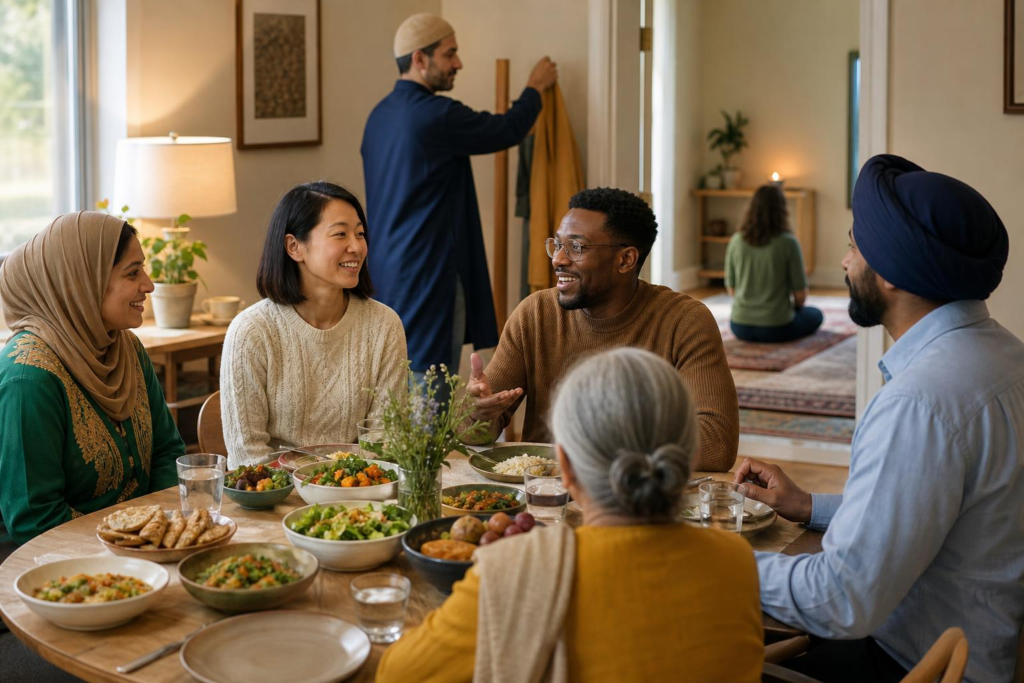
Why this matters: when people feel considered, they are more likely to relax, join in, and remember your gathering as safe and thoughtful. That is true whether you are planning a wedding, a church meal, a community event, or a family celebration. And it does not require a large budget; it requires attention. (fullerstudio.fuller.edu)
Start by asking rather than assuming
Different faiths, cultures, and even families within the same faith may observe practices differently. That is why a short, calm question works better than a long list of assumptions. You can ask guests whether they have food restrictions, prayer needs, clothing preferences, mobility needs, or concerns about music, alcohol, or timing. Universities that plan inclusive events recommend asking early enough that requests can still be honored, and they also note that a single tradition may include multiple levels of observance. (studentlife.mit.edu)
Useful planning question: What would help your guests feel fully respected and comfortable? Example: We are planning a small ceremony with relatives from different faith backgrounds, and we want to know whether anyone would appreciate a quiet room, a certain meal, or a heads-up about attire. Short answer: Ask early, then plan simply.
- Ask about food restrictions.
- Ask about prayer or quiet space.
- Ask about accessibility needs.
- Ask about alcohol comfort levels.
- Ask about attire expectations.
Plan food with care and clarity
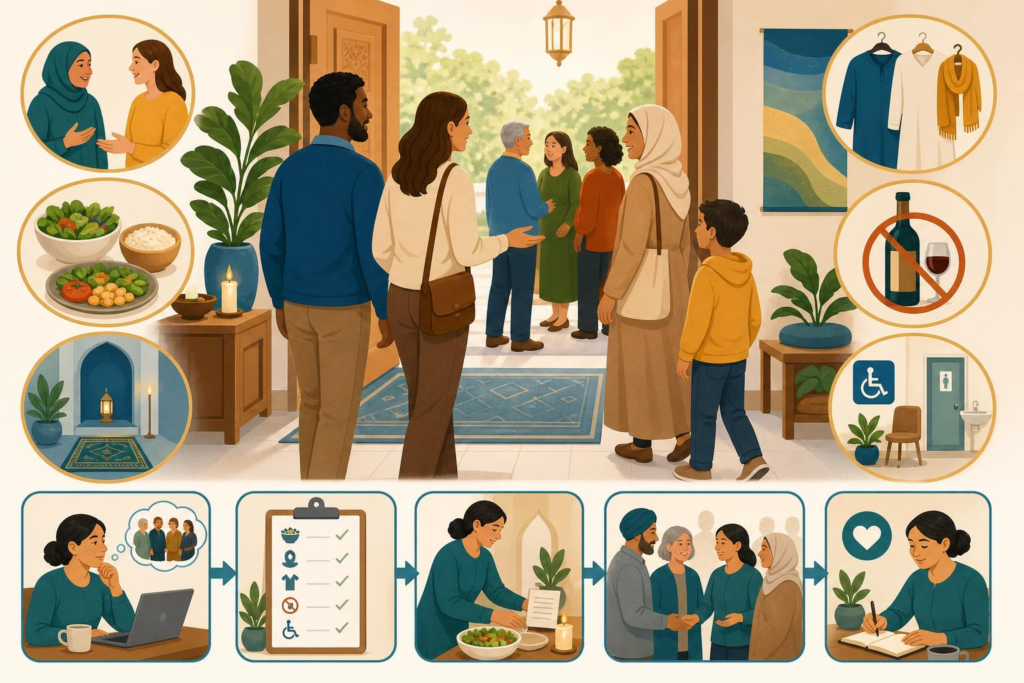
Food is often where interfaith hospitality becomes visible very quickly. Some guests may keep kosher or halal, avoid alcohol, eat vegetarian or vegan food for religious or ethical reasons, or need ingredient lists to feel safe. A respectful approach is to offer clearly labeled dishes, include a few broadly inclusive options, and avoid making guests explain themselves at the buffet line. MIT’s inclusive event guidance specifically highlights kosher, halal, and vegan options as a straightforward way to help more people feel included. (studentlife.mit.edu)
Do not guess at what a tradition allows. Instead, ask the guest or family member what is helpful, then confirm with the caterer if needed. For example, some guests may be comfortable with certain preparations while others are not. Labels and ingredient notes reduce awkwardness and help guests make their own choices. (studentlife.mit.edu)
| Planning choice | Why it helps | Good practice |
|---|---|---|
| Label dishes clearly | Reduces uncertainty and embarrassment | Mark common allergens and dietary categories |
| Offer a few neutral options | Helps guests with varied observances | Include vegetarian or vegan choices |
| Ask before serving alcohol | Avoids discomfort for guests who abstain | Keep one alcohol-free beverage station |
| Confirm with the guest, not the guess | Respects internal diversity within faiths | Use a short pre-event questionnaire |
Make room for prayer, reflection, and quiet
A small, private, and respectful space can make a big difference. Some guests may need a place to pray, meditate, reflect, breastfeed, take medication, or simply regroup for a few minutes. Inclusive event guidance from MIT and Duke recommends identifying quiet rooms, prayer spaces, and other private areas ahead of time, and one university interfaith room policy explicitly describes a room for prayer, meditation, and religious observance. (studentlife.mit.edu)
You do not need a formal chapel to be hospitable. A side room with a chair, good lighting, and a sign can be enough. If guests from different faiths are attending, keep the space flexible and uncrowded. If orientation matters for prayer, let guests know what the room offers and what it does not. That avoids confusion and helps people use the room comfortably. (fullerstudio.fuller.edu)
Keep the space practical
Think in small details: Is there a chair? Is the door private? Is the room quiet? Is there a clear sign? Is it easy to reach? Those basics matter more than decoration. If a room will be shared, give guests a gentle heads-up so they can decide whether it works for their needs. (medschool.duke.edu)
Address accessibility, greetings, clothing, and alcohol with tact
Accessibility: choose venues with ramps, elevators, accessible restrooms, and seating that works for wheelchairs or walkers when possible. Event planners at MIT and Duke both emphasize checking access routes, parking, restroom locations, and accommodation needs early. That is not just a disability issue; it is a dignity issue. (institute-events.mit.edu)
Greetings: let guests opt in to hugs, handshakes, bows, verbal greetings, or no physical greeting at all. A warm smile and a simple welcome can be more respectful than a gesture a person did not ask for. That is especially useful when you know guests come from different cultural or religious backgrounds. (uri.org)
Clothing: when your event has a dress code, make it clear and practical. Use descriptive language such as “semi-formal,” “modest if preferred,” or “comfortable and respectful attire,” and avoid phrasing that shames covered, uncovered, traditional, or nontraditional dress. If head coverings, shoes, sleeves, or other items may matter in a sacred space, say so kindly in advance. This is a planning courtesy, not a test of belonging. (uri.org)
Alcohol: if alcohol is served, offer nonalcoholic choices that feel equally thoughtful. Keep the alcohol-free option visible and easy to reach. If you are unsure whether alcohol should be served at all, ask the hosts, the couple, or the community leaders involved. Do not assume that a celebratory drink is welcome just because it is common elsewhere. (studentlife.mit.edu)
Schedule with awareness of sacred time and real-life constraints
Timing matters. If you are planning around religious or cultural observances, check calendars early and build in a buffer for travel, prayer, setup, and rest. Duke’s event guidance recommends avoiding obvious clashes with religious holidays and festivals when possible, and MIT’s guidance notes the value of considering observance schedules and prayer times when planning events. (studentlife.mit.edu)
Practical approach: choose a start time that does not force guests to arrive rushed, hungry, or flustered. For longer gatherings, think about breaks. For ceremonies that run through the middle of the day or into the evening, a brief pause can help guests who need to pray, eat, or regroup. That small adjustment often prevents a lot of strain. (studentlife.mit.edu)
- Check sacred days and holidays.
- Leave time for arrival and parking.
- Build in a quiet break if needed.
- Avoid overly tight ceremony schedules.
How Ministries of Love can help you plan with compassion
Ministries of Love serves couples, ministers, churches, venues, donors, and volunteers with practical support for meaningful celebrations. If you are planning a ceremony that needs a clearer structure, a better understanding of civil wedding basics, or help with vows and speeches, a good next step is to start with the broader guides and then adapt them to your guests’ faith and cultural needs. You can also use the organization’s support pathways when you are looking for compassionate help or want to get involved in making weddings more accessible. (studentlife.mit.edu)
Helpful related resources: the civil wedding ceremony guide can help with ceremony structure, and the wedding vows and speeches guide is useful when you want language that feels welcoming without being overly formal. If you need a practical next step for support, visit Get Support or learn how to Get Involved. For those who want to help make celebrations more accessible, the cash donation page may be a useful starting point. Availability and details should be confirmed before relying on any program. (studentlife.mit.edu)
Common mistakes to avoid
Do not: use one tradition as the template for everyone else. Do not force guests to explain private practices in public. Do not treat accessibility as an afterthought. Do not serve food or alcohol without a clear plan for those who abstain. And do not schedule so tightly that people cannot participate comfortably. Those mistakes are avoidable, and fixing them usually costs far less than the relational damage they can create. (studentlife.mit.edu)
If you remember nothing else, remember this: interfaith hospitality is not about perfection. It is about making sincere, informed, and respectful room for others. That is usually enough to be felt deeply. (uri.org)
Conclusion: welcome people the way you would hope to be welcomed
Good interfaith hospitality is steady, humble, and concrete. Ask instead of assume. Offer food people can trust. Make room for prayer and quiet. Plan for accessibility. Be clear about greetings, clothing, alcohol, and timing. Then keep learning from the guests themselves. That is how a gathering becomes more than an event; it becomes a place of care. If you are unsure about a specific religious, legal, or venue requirement, pause and verify it with the people directly affected or with a qualified local source before publication or final planning. (studentlife.mit.edu)
Video suggestion
No verified YouTube video was supplied in the admin notes, and I did not confirm one from a credible organization that cleanly matched this topic without guessing. For publication safety, leave this section out or add a verified video later.
Frequently Asked Questions
What does interfaith hospitality mean in simple terms?
It means welcoming people from different faiths and cultures in ways that respect their needs. That usually includes thoughtful food, accessible space, clear communication, and room for prayer or quiet.
How do I host guests from different religions without offending anyone?
Ask early and keep your plans flexible. A short pre-event question about food, prayer, clothing, and alcohol is usually more respectful than guessing what everyone wants.
What kind of food works best for an interfaith gathering?
Food that is clearly labeled and includes a few broadly inclusive options works best. Offer choices such as vegetarian, vegan, kosher-friendly, halal-friendly, or alcohol-free items when appropriate, and confirm details with guests when possible.
Do I need a prayer room for an interfaith event?
Not always, but a quiet room is often very helpful. A private, simple space with a chair and clear sign can support prayer, meditation, or a brief reset.
Can I serve alcohol at an interfaith celebration?
Yes, sometimes you can, but you should not assume it is welcome for everyone. Offer strong nonalcoholic options and check with the hosts or guests if alcohol could create discomfort.
How do I make sure guests with disabilities feel included?
Choose an accessible venue and ask about mobility, seating, parking, restroom, and sensory needs ahead of time. Accessibility works best when it is planned from the start rather than added at the last minute.
Leave a Reply