

How to apologize for offensive comment is really about one thing: repairing harm without making the moment about your discomfort. A good apology is simple, honest, and changed by action. Start by naming what you said, why it hurt, and that you understand the impact. Then stop talking, listen, and ask what repair would help. You do not need a dramatic speech; you need accountability, humility, and follow-through. That approach is especially important when the comment touched on race, religion, gender, disability, sexuality, culture, body size, or another identity someone has a right to protect.
This guide gives you a practical apology framework you can use with a partner, friend, coworker, family member, guest, or community member. It also helps you avoid the common trap of apologizing for being “misunderstood” instead of apologizing for the harm itself. The goal is not to win the conversation. The goal is to make things as right as you can and do better next time. Research on effective apologies emphasizes that repairing impact matters more than defending intention, and relationship guidance from APA also underscores the importance of communication and respect in healthy relationships. (greatergood.berkeley.edu)

How to apologize for offensive comment without making it worse
When you have said something ignorant, the safest first move is usually not explanation. It is acknowledgment. A clean apology names the harm, accepts responsibility, and does not ask the injured person to comfort you. The basic pattern looks like this: What I said was hurtful. I understand why it landed badly. I am sorry. I will do better.
That may sound plain, but plain is often best. People usually want to know whether you understand what happened, whether you can tolerate discomfort without becoming defensive, and whether they can trust your behavior going forward. A sincere apology can help repair a relationship, but only if it is paired with changed conduct. (greatergood.berkeley.edu)
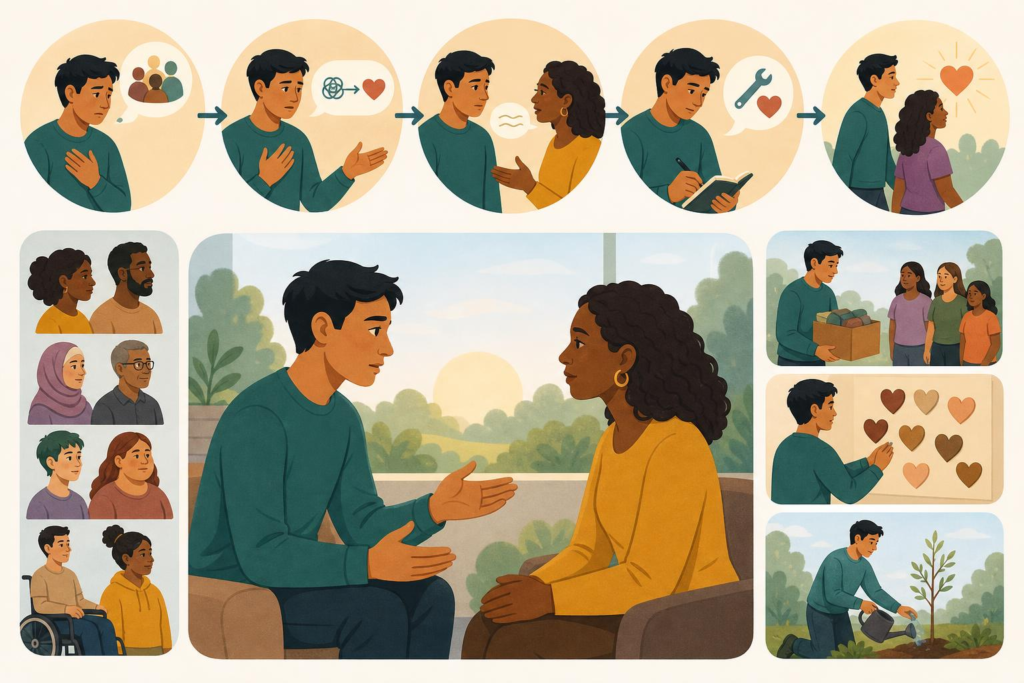
Use this apology framework: name, own, listen, repair, learn
Think of the apology as five steady steps. You do not need fancy language; you need honest language.
- Name the harm. Say what you said or did, in simple words.
- Own it. State that you were wrong, careless, or ignorant, without shifting blame.
- Listen. Let the other person describe the impact if they want to.
- Repair. Ask what would help, and do what you reasonably can.
- Learn. Change the habit, assumption, or pattern that led to the comment.
This structure lines up with effective-apology guidance: express remorse, acknowledge the negative impact, and make the situation right. It also helps keep your apology from becoming a speech about your good intentions. Good intentions matter, but they do not erase the effect of hurtful words. (greatergood.berkeley.edu)
Quick apology checklist
- Did I name the exact comment or behavior?
- Did I avoid defending myself?
- Did I acknowledge the hurt caused?
- Did I give the other person space to respond?
- Did I say what I will change next time?
What to say — and what to avoid
Here is the kind of apology that usually lands well: “I said something ignorant and hurtful. I understand that it was offensive, and I’m sorry. I’m going to listen and learn so I don’t repeat it.”
Here is what to avoid: “I’m sorry if you were offended,” “That’s not what I meant,” “I was joking,” or “You know I’m not like that.” Those lines often shift the focus back to your feelings and away from the hurt you caused. Even when you meant no harm, the apology should center the impact, not your intent. (greatergood.berkeley.edu)
Useful rule of thumb: the more serious the harm, the fewer words you should use before you listen. If the person is upset, their reaction is not a problem to talk over; it is information to take seriously.
When someone needs time, give them time
Not every hurt person will accept an apology right away, and some may never want the relationship restored in the same way. That does not automatically mean your apology failed. Sometimes the first repair is simply respecting their pace. If they need distance, say you understand and that you will honor it.
That can sound like: “I hear you. I understand if you do not want to talk right now. I’m sorry for what I said, and I’ll give you space.” Then stop there. Do not pressure them to reassure you, forgive you, or explain their pain a second time just so you can feel better.
How to repair harm after an ignorant comment
Repair is where apology becomes meaningful. In some cases, repair may be private: changing your language, correcting a misunderstanding, or learning from credible sources. In other cases, repair may be public: clarifying to the same group of people, correcting the record, or making room for someone else’s voice if your comment affected a wider circle.
Before you promise anything, ask yourself: What repair is actually mine to offer? If you embarrassed someone publicly, you may need to acknowledge that publicly. If you repeated a stereotype, you may need to stop repeating it and learn why it harms people. If you spoke over someone, you may need to step back and let them lead the next conversation.
A repair is strongest when it is specific. “I’ll do better” is a start, but “I will not repeat that joke, and I will read and listen before speaking on that topic again” is clearer and easier to trust. That kind of follow-through matters because relationships are repaired through action, not only words. (greatergood.berkeley.edu)
| Approach | What it sounds like | Likely effect |
|---|---|---|
| Accountable | “I said something hurtful, and I’m sorry.” | Centers the harm and opens repair. |
| Defensive | “You took it the wrong way.” | Usually deepens the wound. |
| Minimizing | “It was just a joke.” | Makes the other person feel dismissed. |
| Growth-oriented | “I will learn and change that habit.” | Builds trust over time. |
How to apologize in family, ministry, or community settings
When the comment happened in a family gathering, church group, volunteer team, or ministry setting, the apology can affect more than one relationship. In those settings, a thoughtful response protects dignity and reduces gossip. Keep the apology direct, avoid trying to rally supporters, and do not make the injured person manage the group’s discomfort.
If you are a couple: an offensive comment can reopen old hurts about trust, respect, or family dynamics. A partner may need to hear not only that you are sorry, but also that you understand how the comment affected safety in the relationship. APA’s relationship guidance points toward communication and mutual respect as core parts of healthy connection. (apa.org)
If you are a volunteer, leader, or minister: your apology should be especially careful because people may feel pressure to forgive you quickly. You can acknowledge your role, ask how to repair the moment, and then give people space. That posture is often more healing than a polished speech.
Planning question: What kind of repair would actually help the person or group you hurt? Example: You may need to make a private apology first, then correct the statement publicly if the comment spread beyond the original conversation. Short answer: Match the repair to the harm.
Faith-rooted wisdom, without pretending everyone shares the same practice
Many faith traditions value humility, repentance, truth-telling, and restoration. That said, communities differ in how they name repentance, confession, forgiveness, and reconciliation. Do not assume every person wants the same style of apology, or that one tradition speaks for all believers. The safest approach is simple: be honest, be respectful, and let the other person’s experience guide the conversation.
For Ministries of Love, that spirit matters because relationships are often healed through patience, gentleness, and concrete support. When people are learning how to repair hurt, they often need more than a phrase. They need a path back toward trust, and sometimes they need help finding the right words, the right boundary, or the right next step. That is where compassionate, practical support can make a real difference.
If this apology is connected to a wedding, ceremony, or ministry setting, you may also find it helpful to read the broader wedding vows and speeches guide for tone, clarity, and public speaking support. For broader civil ceremony context, the civil wedding ceremony guide may also be useful when you are planning words for an important public moment. If you need encouragement or community support, consider the next step at get support. If you want to serve others, explore get involved.
Conclusion: a sincere apology is short, honest, and changed
The best way to apologize for an offensive comment is to name the harm, avoid excuses, listen well, repair what you can, and change the behavior. That is not weakness. It is maturity. And in family life, friendship, ministry, and community, maturity is often what makes healing possible.
If you need a simple script, use this: “I’m sorry for what I said. I understand it was hurtful. I’m listening, and I will do better.” Then let your next choices back up your words. That is how trust starts to return, one honest step at a time.
Frequently Asked Questions
How do I apologize for an offensive comment without sounding fake?
Keep it short, specific, and responsibility-based. Say what you said, acknowledge the harm, and avoid phrases that shift blame or ask the other person to manage your feelings.
Should I explain what I meant after I apologize?
Only if it helps repair the harm and does not sound like an excuse. A brief explanation can be useful later, but the apology should come first and center the impact.
What if the person does not accept my apology?
Respect that outcome and give them space. An apology is not a demand for forgiveness; it is an offer of accountability and repair.
Is it okay to apologize by text?
Yes, if that is the safest or most practical first step. A text apology should still be clear, direct, and accountable, and a deeper conversation may follow later if welcomed.
How do I stop making the same ignorant comment again?
Learn where the comment came from, listen to the people affected, and change the habit that led to it. Real apology includes a plan for different behavior next time.
Leave a Reply