
Healthy touch and consent is simply this: before hugging, hand-holding, comforting, or offering any physical reassurance, ask permission every time and respect the answer. That keeps care tender instead of tense, and it helps couples, ministers, volunteers, and guests feel safe, seen, and respected. It also matters in faith settings, where touch can be meaningful but should never be assumed. For anyone planning a ceremony, pastoral visit, or community gathering, the safest habit is to ask clearly, notice cues, and make room for different comfort levels. RAINN’s consent guidance and the ADA’s communication guidance both support that kind of careful, person-centered approach. (rainn.org)
What healthy touch and consent means in everyday care
Healthy touch and consent means physical contact is invited, understood, and freely chosen—not guessed, pressured, or assumed. That applies to a greeting hug, a reassuring hand on the shoulder, helping someone stand, or holding hands during prayer or grief. Consent should be specific to the moment; a “yes” yesterday does not automatically mean “yes” today. RAINN’s guidance emphasizes that consent is active and can be withdrawn, while the ADA reminds organizations to consider how each person communicates and what support helps them participate effectively. (rainn.org)

In practice, this means we do not rely on body language alone when clarity is possible. A warm smile may invite connection, but it is still wiser to ask. That is especially true in communities where touch is common, because familiar customs can make assumptions feel harmless when they are not. A gentle check-in protects trust. (rainn.org)
Ask permission every time, not just once
One of the clearest habits in healthy touch and consent is to ask each time a touch is offered. People’s comfort can change based on stress, grief, trauma, health, sensory overload, medication, culture, or simply the kind of day they are having. A person who welcomed a hug at the rehearsal may still prefer a handshake at the ceremony or no touch at all after the service.
What does asking every time look like? Example: “I’d like to offer a comforting hand on your shoulder—would that be okay?” Short answer: Ask each time, clearly. If the answer is no, respond with the same warmth you would give to yes. That keeps dignity intact and prevents anyone from feeling they must explain or defend their boundary. (rainn.org)
Why repetition matters
Repeated asking is not awkward when done kindly. It is respectful. It also helps avoid the common mistake of treating silence, hesitation, or politeness as agreement. If someone says, “Maybe later,” that is not a green light. The safe response is to step back and let the person choose if and when to revisit the offer. (rainn.org)
Healthy touch and consent in faith, wedding, and community settings
Faith communities often value embodied care: blessing prayers, welcome hugs, hands joined in prayer, and the physical presence that says, “You are not alone.” Those practices can be beautiful. They also need guardrails. In a wedding or ministry setting, the goal is not to eliminate touch; it is to make touch trustworthy. Ministries of Love’s broader civil ceremony and vows resources can help couples and officiants plan meaningful moments, while this article focuses on the simpler question of how to offer touch well. If you need a broader ceremony guide, see the civil wedding ceremony guide and the wedding vows and speeches guide.
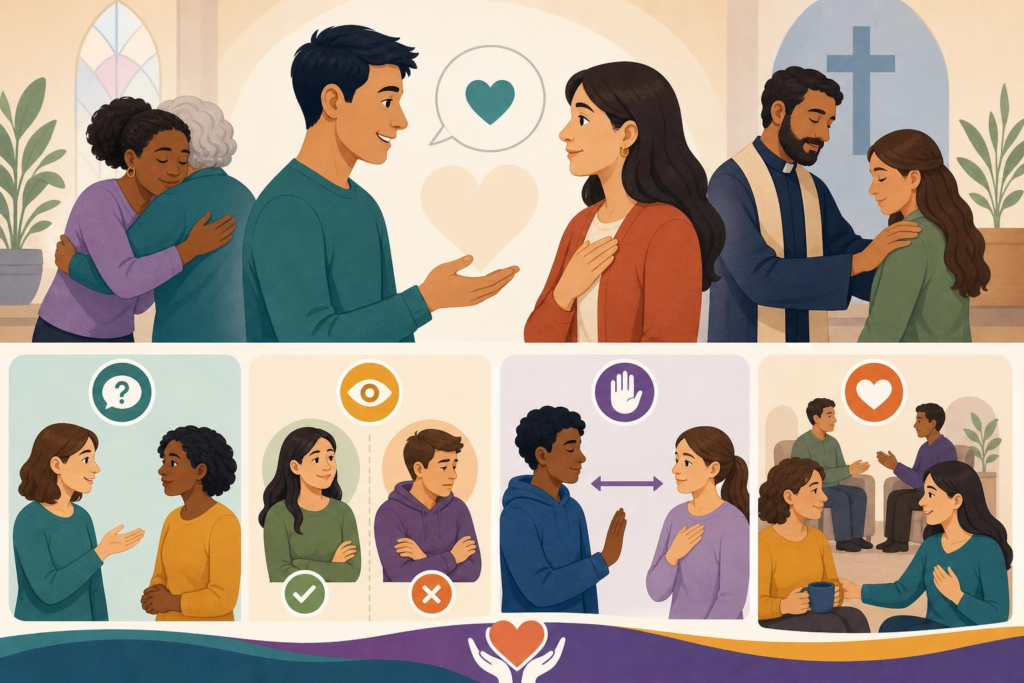
Different communities have different norms. Some families hug freely. Some prefer no touch across gender lines. Some use bows, a hand over the heart, a nod, or spoken blessings instead of contact. None of those differences make someone cold or unfriendly. They are simply part of how people protect dignity and express care. The respectful move is to ask and adapt rather than expect everyone to match one norm. (rainn.org)
| Touch option | Best use | Consent note |
|---|---|---|
| Handshake | Formal greeting when touch is welcome | Still ask if the setting or person is new to you |
| Hug | Warm celebration or comfort | Ask before every hug; keep it brief unless invited otherwise |
| Hand-holding | Support during prayer, vows, grief, or anxiety | Check in first; some people love it, some do not |
| Shoulder touch or pat | Quick reassurance | Use caution; this can feel intrusive if uninvited |
| No touch | Always valid | Respect it without debate or disappointment |
How disability access changes the conversation
Healthy touch and consent also means making communication accessible. Some people cannot easily hear an invitation, speak their preference aloud, or read social cues in the moment. The ADA says covered entities must communicate effectively with people with communication disabilities and should consider the nature, length, complexity, and context of the communication, along with the person’s normal method of communication. That is a practical reminder that asking for consent must be understandable to the person you are asking. (ada.gov)
For a person who uses sign language, speech-to-text, written notes, a text message, or an interpreter may be the best way to make the invitation clear. For someone with low vision, facing the person, speaking plainly, and avoiding rushed gestures may help. For someone with sensory sensitivities or autism, touch may be overwhelming even when the intention is kind. The point is not to guess which accessibility need is present; it is to create room for communication and then follow the person’s lead. (ada.gov)
A simple accessibility habit
When you are unsure, ask: “What is the best way for me to ask your permission?” That question is respectful, practical, and easy to answer. It also tells the person you are willing to adapt rather than assume. (ada.gov)
Trauma awareness: why a kind touch can still feel unsafe
Some people carry a history of trauma, grief, coercion, or unwanted contact. Even a well-meant hug can trigger anxiety or shutdown if it arrives without warning. Trauma-aware care does not require us to diagnose anyone. It requires us to accept that we may not know what another person has lived through, so we should offer choices rather than pressure. That is one reason consent must be asked every time. (rainn.org)
What if someone seems upset and you want to comfort them? Example: “I’m here with you. Would you like a hug, space, or help finding someone you trust?” Short answer: Offer choices, not assumptions. The safest comfort is the kind the person actually wants. If they choose space, honor it immediately. If they choose contact, keep checking in. (rainn.org)
In a ministry setting, that may mean using words first: “You are not alone,” “I’m glad you told me,” or “Take your time.” Sometimes the most caring response is not touch at all. It is steady presence without pressure. That kind of care can be deeply pastoral. (rainn.org)
A practical consent rhythm for ministers, couples, and volunteers
If you lead weddings, support groups, volunteer teams, or hospitality ministries, it helps to have a simple rhythm everyone can remember. This is not about making care stiff. It is about making care reliable.
- Ask before touching.
- Use the person’s preferred communication method.
- Accept no without argument.
- Watch for hesitation, not just yes or no.
- Recheck if the situation changes.
- Offer alternatives like space, water, prayer, or a seat.
Planning question: What kind of physical comfort fits this moment, this person, and this setting? Example: We are planning a ceremony where some guests are affectionate, some are private, and a few may have sensory or trauma-related concerns, so we want a welcoming approach that never puts anyone on the spot. Short answer: Respect first, touch second.
For churches and community ministries, the most useful training is often the simplest: teach greeting alternatives, normalize asking, and remind people that a calm “no thank you” is a complete answer. The goal is a culture where no one has to brace for contact they did not invite. If your team wants to keep building this kind of care, a next step is the get involved page, or the get support page if you need practical help planning safe, welcoming ministry moments.
How to respond well when someone says no
Sometimes the most important part of consent is the response after the answer. If someone declines touch, thank them and move on. No teasing, no guilt, no “Are you sure?” and no making it about your feelings. A good response sounds like this: “Of course. Thanks for telling me.” That one sentence preserves trust. (rainn.org)
It can also help to keep a few non-touch options ready: a smile, a hand over the heart, a verbal blessing, or simply standing nearby. These alternatives let care stay warm without crossing a boundary. In many settings, that is not a downgrade. It is excellence in respect. (rainn.org)
For organizations that want to make their spaces more accessible and responsive, Ministry of Love’s work in compassionate wedding assistance, ordination and ministry guidance, and community outreach can point people toward gentler practices. If you are moved to help expand that kind of support, consider the cash donation page as a possible next step, while remembering that any support program details should be confirmed by the organization before relying on them.
Quick checklist before you offer touch
Use this short check before hugging, touching a shoulder, or holding hands in a ministry, wedding, or care setting:
- Have I asked clearly?
- Did I ask in a way the person can understand?
- Am I ready to accept no kindly?
- Does this person seem to prefer another form of comfort?
- Would no touch still let me care well?
Short answer: If any answer feels uncertain, pause and ask again. That pause is not awkward; it is honorable.
Conclusion: care that feels safe is care that lasts
Healthy touch and consent is not about being cold or overly careful. It is about letting care be both tender and trustworthy. When we ask permission every time, respect cultural differences, account for disability access, and stay trauma-aware, we make room for real comfort instead of assumed comfort. That is good for couples, good for ministers, good for volunteers, and good for the whole community. If you need a broader next step, return to the civil wedding ceremony guide, the vows and speeches guide, or reach out through get support for practical help.
Frequently Asked Questions
What does healthy touch and consent mean in a church or wedding setting?
It means asking before any physical contact and respecting the answer every time. That includes hugs, hand-holding, and comforting touches during emotional moments.
Do I need to ask every time, even if someone hugged me before?
Yes, you should ask every time. Comfort can change from one moment to the next, so a past yes does not guarantee a current yes.
How do I offer comfort without touching someone?
Use words, presence, and choice. You can say, “I’m here with you,” offer water or a seat, or ask whether they want space, prayer, or help.
What if someone has a disability and I’m not sure how to ask?
Ask in the person’s preferred communication method whenever possible. The ADA emphasizes effective communication, so use writing, sign language support, or another accessible method if needed.
What should I do if someone says no to a hug or hand-hold?
Thank them and move on kindly. A simple “Of course” protects trust and keeps the relationship safe.
Leave a Reply