
Planned date: 2026-07-21
Compassion in Buddhism: Meeting Suffering with an Open Heart
Buddhist compassion is often described as a way of meeting suffering with clarity, steadiness, and care. Across Buddhist traditions, compassion can be understood as more than feeling sorry for someone; it can include a wish to respond wisely, reduce harm, and support well-being without losing sight of shared human dignity. Buddhism is internally diverse, so these ideas are expressed differently in Theravada, Mahayana, Vajrayana, and many local cultural forms. Pluralism Project overview of Buddhism and the Dalai Lama’s teachings on compassion both reflect that diversity while pointing to compassion as a meaningful practice in daily life. (pluralism.org)
What Buddhist compassion means
In many Buddhist settings, compassion is connected with recognizing suffering clearly and responding in a way that supports relief rather than escalation. The Pluralism Project describes Buddhism as a tradition that links liberation from suffering with mental attentiveness, moral cultivation, and compassionate service. It also notes that Mahayana Buddhism places special emphasis on the bodhisattva ideal, which centers compassion for the sake of all beings. (pluralism.org)
The Dalai Lama’s public teaching on compassion describes it as a commitment grounded in reason, not only a passing emotion. He writes that people share a desire for happiness and a wish to avoid suffering, and that this recognition can nurture empathy and responsibility. That framing can be helpful for readers from many backgrounds because it presents compassion as both heartfelt and practical. (dalailama.com)
Diversity within Buddhism matters
Buddhism is not one single culture, one single practice style, or one single way of speaking about compassion. The Pluralism Project emphasizes that Buddhism has developed across many regions and includes multiple major streams and school traditions. Some communities lean heavily on meditation, others on devotional practice, chanting, ritual, service, or social action, and many combine several approaches. (pluralism.org)
This matters because compassion may look different from one Buddhist community to another. For one person it may mean quiet meditation and patience in daily relationships; for another it may mean public service, activism, caregiving, or rituals that honor suffering and interdependence. A nonsectarian approach respects these differences instead of assuming that one expression represents everyone. (pluralism.org)
Compassion as a response to suffering
Many Buddhist teachings begin with the reality of suffering, and compassion becomes a way to meet that reality without denial. The Pluralism Project notes that some Buddhist communities understand compassionate service as part of living the Dharma in the world, including care for people and animals, study, meditation, and public action. This perspective can be especially meaningful for readers looking for a spirituality that connects inner life with outward care. (pluralism.org)
Engaged Buddhism is one expression of this idea. The Pluralism Project describes it as Buddhism actively involved in social concerns, grounded in the insight that seeing suffering clearly can strengthen compassionate action. In practical terms, this can mean showing up for a grieving friend, supporting a sick neighbor, volunteering, or advocating for peace and justice in careful, non-harming ways. (pluralism.org)
A practical reflection question
Question: Where in your life could Buddhist compassion help you respond with more steadiness instead of reacting in a hurry?
Example: You may be caring for a stressed family member, a grieving friend, or even yourself during a season of burnout. A compassionate response might be to listen first, pause before offering advice, and choose one small act of support that is realistic today.
Short answer: Pause, listen, and choose one act.
Simple practices for everyday life
- Pause before responding. A short breath can create enough space to answer with care rather than irritation.
- Notice suffering without turning away. You do not need to fix everything to be compassionate.
- Start small. Compassion can be shown through a text message, a meal, a ride, a prayer, or a quiet presence.
- Include yourself. Many readers find that self-compassion helps them stay steady enough to care for others.
- Respect differences. Compassion grows when people are not forced into one mold of belief, culture, or practice.
How communities can practice compassion together
In Buddhist communities, compassion may be expressed through shared meditation, teaching, caregiving, donations, ritual, or social outreach. The Pluralism Project gives examples of Buddhist groups organizing support for people in need and linking devotion with service. Even when communities practice differently, the shared aim is often to reduce suffering and increase wisdom, patience, and kindness. (pluralism.org)
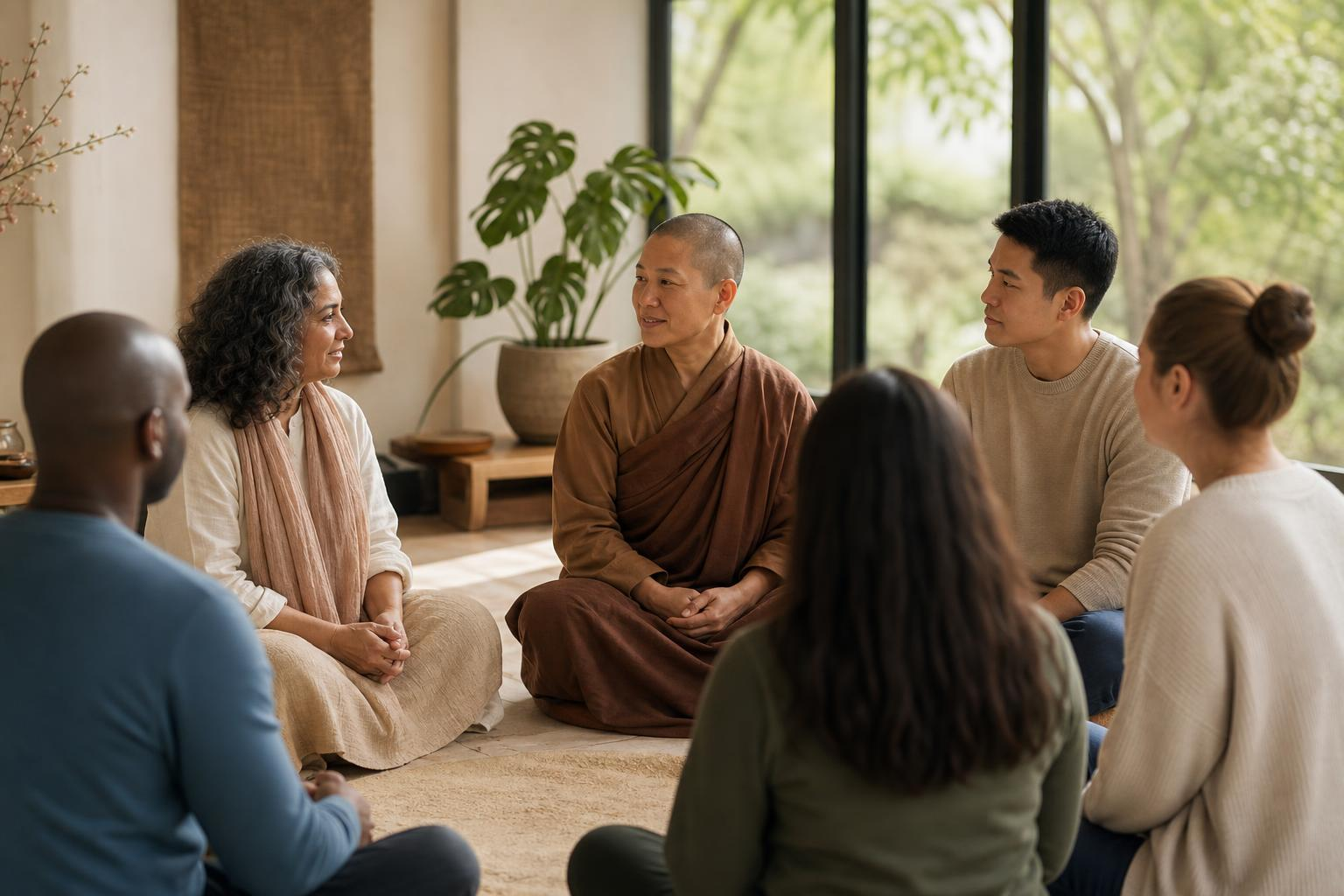
For interfaith or community settings, it can be helpful to remember that Buddhist compassion does not require everyone to use the same language. A compassionate gathering may simply be one where people feel seen, listened to, and treated with dignity. That kind of care can be meaningful across religions and for people with no religious affiliation. (pluralism.org)
Next steps for readers
- Read one short Buddhist teaching on compassion and notice what stands out to you.
- Choose one relationship or situation where you want to practice a calmer response.
- Try a brief daily pause: breathe, name the suffering present, and decide on one kind action.
- If you are part of a faith or community group, ask how compassion is already being lived out there.
Conclusion
Buddhist compassion is both a spiritual ideal and a daily practice. It can mean seeing suffering clearly, honoring interdependence, and responding with care that is wise, patient, and inclusive. However it is practiced, compassion invites people to meet pain with an open heart and a steady presence. (pluralism.org)
Suggested source links
Frequently Asked Questions
Is compassion the same in every Buddhist tradition?
No. Buddhism is internally diverse, and compassion is expressed in different ways across Theravada, Mahayana, Vajrayana, and local cultural traditions. Some communities emphasize meditation, others ritual, service, or social action, and many combine these approaches.
Does Buddhist compassion mean ignoring suffering?
No. In many Buddhist teachings, compassion begins by seeing suffering clearly and then responding in a wise, caring way. It is not denial; it is a disciplined and humane response.
Can people who are not Buddhist practice Buddhist compassion?
Yes, many people of different faiths or no faith at all can learn from Buddhist ideas about patience, kindness, and reducing suffering. These practices can be adapted respectfully without claiming Buddhist identity.
Leave a Reply