
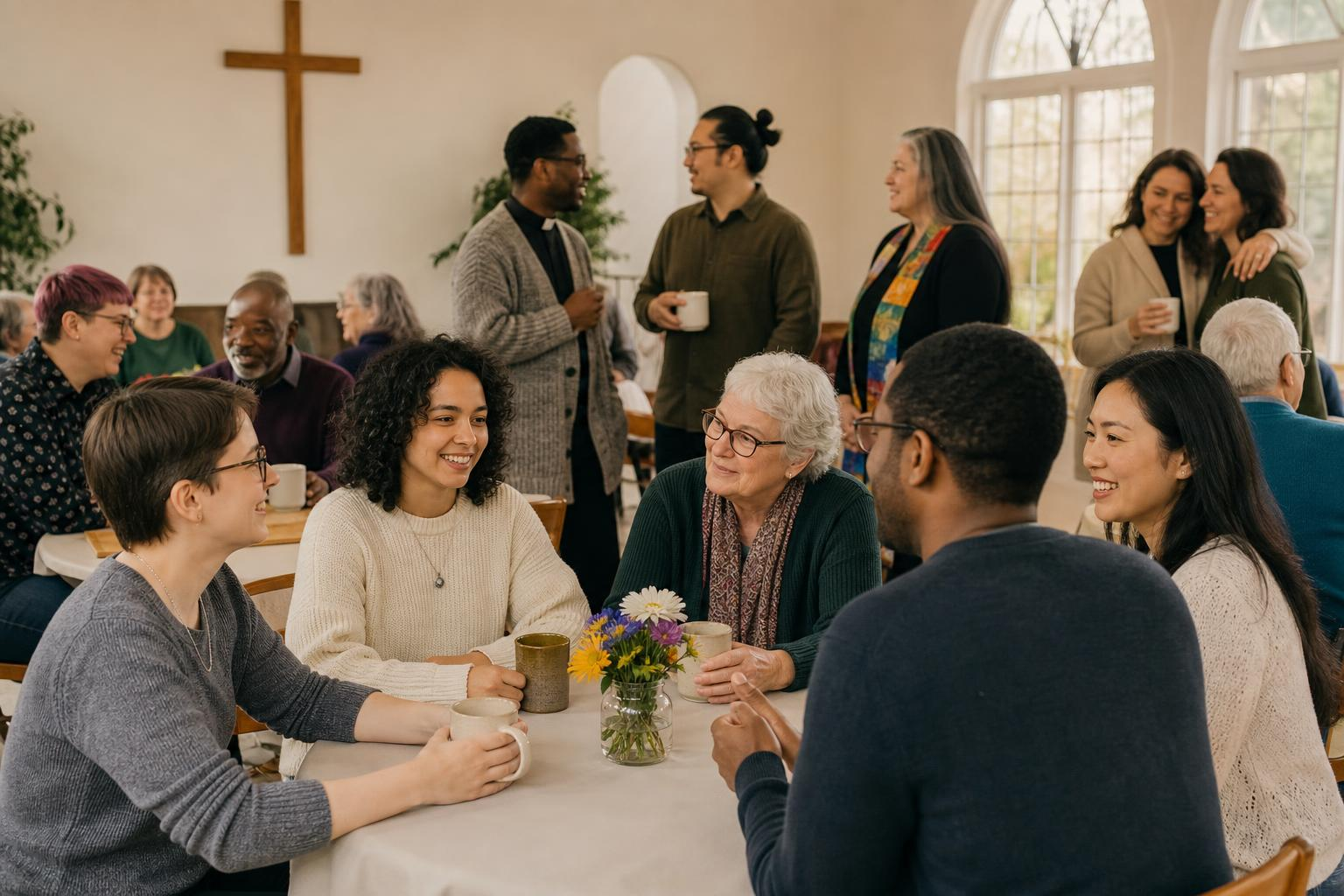
Answer first: Asexual, aromantic, and single people belong in communities of love because human worth is not measured by romance, sex, or marriage. Faith communities can honor friendship, service, spiritual calling, and chosen family without asking anyone to become less themselves. This matters for churches, ministries, couples, and leaders who want their welcome to be more than polite words.
Used well, asexual aromantic faith inclusion is not a side issue. It is a practical way to say, “You are wanted here.” It also helps ministries avoid the quiet message that only partnered, sexual, or married people are fully complete. That message can wound people who are ace, aro, single by choice, single by circumstance, widowed, celibate, or still discerning. The good news is that inclusion is possible, and it often begins with ordinary habits of language, leadership, and care.
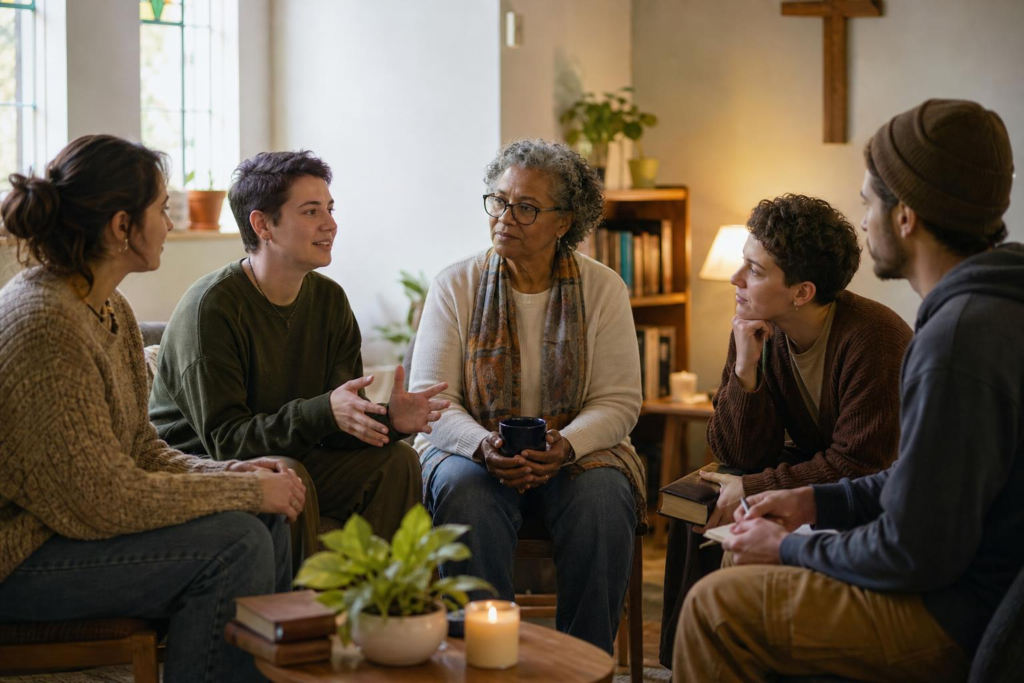
What asexual, aromantic, and single inclusion really means
Asexual usually describes people who experience little or no sexual attraction, and it can include a spectrum of identities. The Trevor Project notes that asexuality is an umbrella term and that ace people may form romantic, platonic, or other meaningful relationships. That is a helpful starting point for faith communities too: love is bigger than sex, and belonging is bigger than couplehood. (thetrevorproject.org)
Aromantic generally describes people who experience little or no romantic attraction. Some aromantic people still want deep companionship, community, or family life; others prefer a more independent path. Being single does not automatically mean someone is lonely, immature, or waiting to be “fixed.”
Faith inclusion means people do not have to hide, explain themselves, or pretend to want the kind of relationship life that others expect. It means ministries leave room for different callings, different households, and different ways of loving.
Why communities of love need more than romance
Many faith traditions already teach that care for neighbor, hospitality, mercy, justice, and service are central. HRC’s faith resources note that many religious communities are becoming more welcoming and that people often seek the chance to live authentically within their own traditions. That larger picture matters here: if a community says love is sacred, it should be able to recognize love that is not romantic or sexual. (hrc.org)
Asexual and aromantic people can be deeply faithful, deeply committed, and deeply relational. Some are married or partnered; some are not. Some want close family-style bonds. Some want spiritual friendship. Some value solitude as part of their calling. None of that makes their devotion less real.
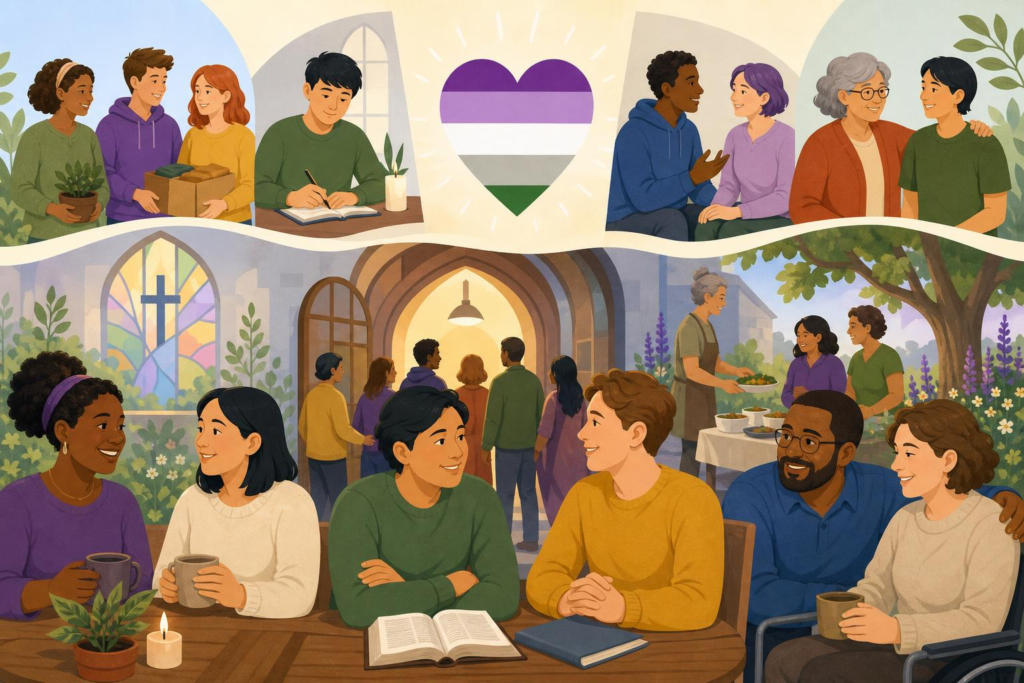
For churches and ministries, this is also a leadership issue. When every sermon, small group, and counseling conversation assumes romance is the goal, ace and aro people can feel invisible. And invisible people often stop volunteering, stop speaking up, or stop coming altogether. A faithful community notices that and adjusts.
How asexual aromantic faith inclusion looks in practice
Inclusion gets real when it shows up in ordinary details. A ministry does not need to solve every theological question at once. It can start by making everyday belonging easier.
Use wider language
Say households, families of choice, close friends, and community members alongside spouses and parents. In announcements, avoid treating weddings, parenting, and dating as the only “adult” milestones worth mentioning.
Broaden the stories you honor
Celebrate service, caregiving, mentoring, prayer, hospitality, artistic work, and steady friendship. These are not backup prizes. They are real forms of love and faithfulness.
Make room for diverse relationship patterns
Some ace and aro people want queerplatonic partnerships, chosen families, or friendships with covenant-like depth. The Trevor Project describes queerplatonic relationships as non-romantic connections with intense emotional bonds beyond traditional friendship. Faith communities do not need to label every relationship, but they should avoid treating these bonds as inferior. (thetrevorproject.org)
Review forms and assumptions
If your ministry uses intake forms, event questions, or support questionnaires, check whether they presume a spouse, boyfriend, girlfriend, or future wedding. Simple wording changes can signal welcome without making anyone explain themselves.
| Common assumption | More inclusive approach | Why it helps |
|---|---|---|
| “Every adult wants a spouse.” | “Adults may build life with a spouse, friend, sibling, or chosen family.” | Recognizes more than one path to belonging. |
| “Romance is the main sign of love.” | “Love can be romantic, platonic, familial, or spiritual.” | Reduces pressure on ace and aro people. |
| “Single people are waiting rooms for marriage.” | “Single people can live full, faithful, meaningful lives now.” | Affirms dignity in the present tense. |
Asexual aromantic faith inclusion in sermons, groups, and pastoral care
Preaching and teaching do not need to mention asexuality every week to be inclusive. They do need to avoid implying that romance is the universal human finish line. A balanced message can honor marriage without idolizing it.
In sermons: connect love to compassion, commitment, justice, generosity, and sacrifice rather than only to romance. When you speak about singleness, frame it as a valid life, not a temporary lack.
In small groups: do not make dating or spouse talk the center of every conversation. Give people permission to answer questions in ways that fit them, or to pass without explanation.
In pastoral care: if someone shares that they are ace or aro, believe them. Thank them for trusting you. Ask what kind of support would actually help, rather than moving straight to advice.
Quick ministry checklist
- Use relationship language that includes friends and chosen family.
- Stop treating marriage as the only sign of maturity.
- Offer ways to belong without dating pressure.
- Respect privacy around identity and orientation.
- Review forms, announcements, and sermon examples for assumptions.
If your congregation wants a broader framework for welcome, the civil wedding ceremony guide can help readers distinguish civil and religious expectations without assuming one is better than the other. For relationship language, vows, and public commitments, the wedding vows and speeches guide can also be a useful companion resource.
How to talk about faith without turning identity into a test
People who are ace, aro, or single often hear a steady stream of questions that sound caring but land as pressure. “When will you settle down?” “Have you met the right person?” “Are you sure?” “Maybe you just haven’t found someone yet.” Those questions can make a person feel like their life is being graded.
A better approach is gentler and more honest. Ask about joy, support, purpose, and belonging. Ask what community looks like for them. Ask how to include the people who matter most in their life. Then listen.
One useful planning question
Question: What kind of belonging would feel most respectful to the person or people you are trying to welcome?
Example: We are planning a ministry event where some guests come with spouses, some come with close friends, and some come alone, and we want everyone to feel seen without being singled out. That could mean seating that is flexible, language that names many kinds of relationships, and no pressure to explain why someone is not partnered.
Short answer: Welcome the whole person.
What churches, donors, and volunteers can do next
If you lead, support, or fund ministry work, inclusion is rarely one big announcement. It is a pattern of small, trustworthy choices.
Churches and ministers: audit bulletin language, membership classes, counseling scripts, and volunteer training. Ask whether ace and aro people would hear themselves in your language or feel erased by it.
Donors: support ministries that serve people as they are, not as someone else thinks they should become. Giving toward hospitality, education, and accessible care can help widen the circle of welcome. If that is your next step, consider the cash donation page as a practical way to help mission-minded work continue.
Volunteers: learn names, pronouns, and relationship terms carefully. Be the person who makes room for someone to be quiet, complicated, or private without treating that as a problem.
Ministries of Love can support this kind of belonging through compassionate wedding assistance, ordination and ministry guidance, community outreach, and efforts to make meaningful celebrations more accessible. For readers who want a practical next step, the Get Support page or the Get Involved page may be a helpful place to begin.
Internal starting point for state-law questions
If your question touches marriage law, officiant requirements, or state-specific ceremony rules, use OrdainedPro Maps as a starting point and verify anything jurisdiction-specific with official government sources before acting on it. Requirements can vary by state and can change, so that part should always be reviewed by a human.
Frequently asked questions
These are the questions people usually ask when they are trying to understand asexual aromantic faith inclusion without making it awkward or heavy.
Conclusion: belonging should not depend on romance
A community of love is strongest when it makes room for people who are asexual, aromantic, single, partnered, married, widowed, or still figuring things out. The point is not to flatten everyone into the same story. The point is to recognize dignity, mutual care, and spiritual worth wherever they appear.
If your ministry can say, with sincerity, “You belong here as you are,” then you are already doing sacred work. Keep going with humility, clarity, and kindness. That is what a more faithful welcome looks like.
Frequently Asked Questions
What does asexual aromantic faith inclusion mean?
It means faith communities welcome people who experience little or no sexual or romantic attraction without treating them as incomplete. It also means honoring friendship, service, chosen family, and spiritual calling as real forms of belonging.
How is a civil wedding different from a religious ceremony?
A civil wedding is a legal marriage ceremony, while a religious ceremony reflects the beliefs and practices of a faith community. The exact rules and who may officiate depend on local law, so couples should verify requirements where they live.
Can someone be asexual and still want a relationship?
Yes, absolutely. An asexual person may want romantic partnership, deep friendship, queerplatonic connection, or other forms of intimacy without sexual attraction being the center.
Can someone be aromantic and still value family and faith?
Yes, definitely. Aromantic people can have strong family ties, close friendships, spiritual commitments, and community roles that are deeply meaningful.
How can a church be more welcoming to single people?
A church can be more welcoming by using inclusive language, avoiding marriage pressure, honoring single adults as fully formed members, and making space for friendships and chosen family.
Should we ask someone if they are asexual or aromantic?
Usually no, unless they bring it up first. Identity is personal, and respectful inclusion works best when people are free to share at their own pace.
Leave a Reply