Planned for: July 15, 2026
Many Faiths, One Welcome: Creating a Community Where Everyone Belongs
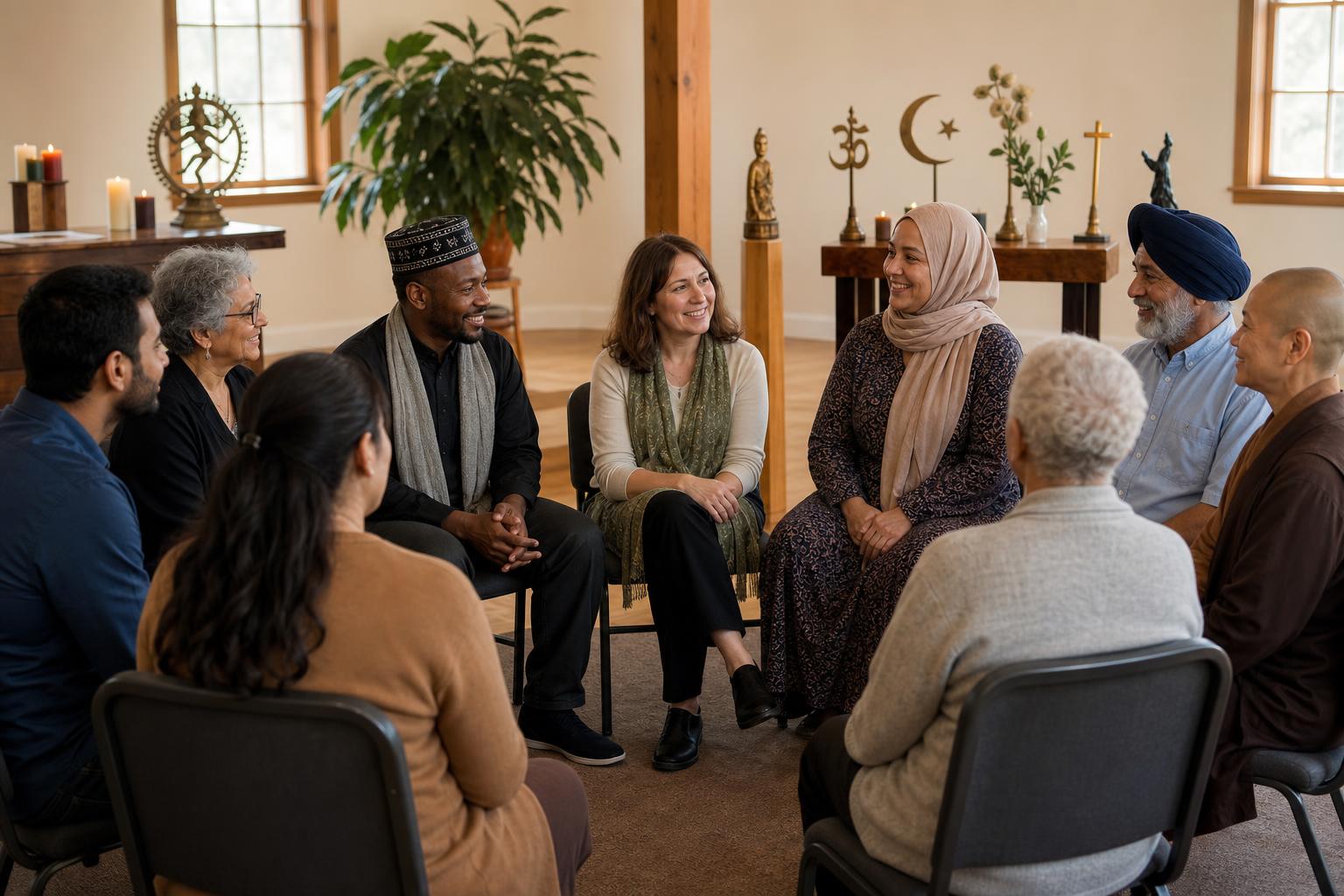
Ministries of Love can be a place where people of many faiths — and people with no faith tradition — feel genuinely welcomed without flattening the differences that matter to them. Interfaith work is not about creating one blended belief system. It is about making room for dialogue, dignity, and shared community while honoring each person’s distinct tradition and conscience. The Pluralism Project describes pluralism as more than diversity alone; it is the active engagement with meaningful differences, including real differences that remain present at the same table. URI likewise describes its work as bridge-building across religions and cultures while respecting the uniqueness of each tradition. (pluralism.org)
What an interfaith welcoming community looks like
An interfaith welcoming community makes space for people to participate without pressure to explain away, hide, or abandon their beliefs. It welcomes Christian, Jewish, Muslim, Hindu, Buddhist, Sikh, Indigenous, and other faith communities, as well as people who are spiritual, searching, doubting, or not religious at all. It also recognizes that every religion is internally diverse, so no single person can speak for an entire tradition. The Pluralism Project emphasizes that dialogue should preserve distinct commitments rather than erase them, and URI’s principles affirm respect for the uniqueness of each tradition and differences of belief and practice. (pluralism.org)
For Ministries of Love, that means welcome should feel both broad and specific: broad enough that everyone is invited, and specific enough that no one feels their identity is being blurred or minimized.
Why respectful difference matters
Healthy interfaith community is not built by pretending differences do not exist. It grows when people can listen, ask honest questions, and remain rooted in their own tradition while learning about others. The Pluralism Project describes dialogue as a process that involves both speaking and listening, and it notes that dialogue reveals common understandings and real differences. URI’s interfaith resources likewise frame inclusion as a practice that values listening, learning, and cooperative action. (pluralism.org)
That matters in practical ministry settings. Couples may come with different faith backgrounds. Families may include people with different beliefs. Volunteers and donors may want to serve in ways that reflect their own convictions while still honoring others. A welcoming community makes room for that reality instead of treating difference as a problem to solve.
Five practices that help everyone feel included
- Use invitation language that is open, not coded. Say who is welcome in plain language, including people of every faith and no faith.
- Ask before assuming. Different traditions may have different expectations around prayer, modesty, food, music, gender roles, sacred objects, and ceremony.
- Offer choice. When possible, provide options for participation so people can engage in ways that fit their conscience and comfort level.
- Honor names and boundaries. Learn preferred names, titles, pronouns, and religious practices. Allow people to decline activities without pressure.
- Make room for quiet respect. Not every gathering needs a shared prayer or statement of belief. Sometimes a moment of silence or a simple blessing of peace is more inclusive.
How to welcome without blending traditions together
One of the most important skills in interfaith ministry is the ability to host people together without turning their traditions into a vague generic spirituality. The Pluralism Project explicitly notes that interfaith work is not a new religion, and URI says it is a bridge-building organization, not a religion. That distinction helps Ministries of Love respect each person’s faith commitments while still creating shared space. (pluralism.org)
In practice, that may mean naming differences carefully. For example, a wedding planning conversation can acknowledge that one partner may want a Christian blessing, another may want a secular reading, and a family elder may prefer a cultural ritual. A welcoming ministry can support those conversations without deciding which tradition matters most.
Practical steps Ministries of Love can take now
- Review your welcome materials for language that might unintentionally exclude people of different faiths or no faith.
- Add a brief statement that honors religious diversity and does not require belief to receive care or support.
- Train volunteers to listen first, avoid stereotypes, and ask respectful follow-up questions.
- Create a simple process for sharing dietary, accessibility, and ceremonial preferences before events.
- Build relationships with local leaders and communities so your welcome is informed by real connection, not assumptions.
Planning question
What would change if your ministry treated difference as a gift rather than a barrier? Example: You might offer multiple ways to participate in a ceremony, ask guests what feels respectful to them, and make sure no one feels pressured to pray, sing, or observe in a way that conflicts with their conscience. Short answer: Difference can deepen belonging.
How this serves couples, ministers, churches, venues, donors, and volunteers
For couples, an interfaith welcoming community can make wedding planning feel calmer and more hopeful. For ministers and churches, it can help pastoral care stay compassionate and honest. For venues, it can support hospitality that is flexible and respectful. For donors and volunteers, it creates a clear way to serve people without expecting them to fit one narrow template of belief or family life.
That kind of welcome is especially important for people who have often felt invisible or misunderstood. An inclusive ministry can affirm that every person deserves care, dignity, and belonging — whether they come with deep faith, mixed faith backgrounds, questions, or none at all.
Helpful next step
If Ministries of Love is strengthening its interfaith hospitality, a good internal starting point is the OrdainedPro map resource here: OrdainedPro Maps. Use it as a planning starting point for outreach and awareness, while keeping any state-specific or legal questions for human review. State marriage-law and officiant-requirement claims should always be checked against a primary government source before publication. (pluralism.org)
Conclusion
A true interfaith welcoming community does not ask people to become the same. It asks them to meet one another with honesty, kindness, and respect. Ministries of Love can help couples, families, volunteers, and faith leaders create that kind of space — one where welcome is real, differences are honored, and everyone belongs.
Frequently Asked Questions
Does interfaith welcome mean all faiths are being blended together?
No. Interfaith welcome should respect the uniqueness of each tradition and avoid creating a new blended religion. The goal is shared space, mutual respect, and honest dialogue.
Can a welcoming community include people with no faith tradition?
Yes. A compassionate community can make room for people who are religious, spiritual, questioning, or not religious at all, without requiring them to change their identity to belong.
How can we honor different beliefs without causing confusion?
Use clear language, ask respectful questions, and offer choices where possible. That helps people participate in ways that fit their conscience and comfort level.
What if families have different religious expectations?
That is common. A good ministry can help families talk through those differences with care, rather than assuming one tradition should override the others.
Leave a Reply